In recent years, the way a workshop works has attracted more and more people looking for faster, more hands-on learning.
Have you noticed how the way people consume content has changed? Demand for dynamic, practical learning has grown enormously.
In fact, the workshop is the most requested type of event on the Even3 platform!
But do you know how to make the most of this opportunity? This is the ideal moment to launch your workshop and attract people who are interested in what you have to teach.
Here’s everything you need to know:
- What a workshop is
- How a workshop works
- 8 tips for creating a great workshop
What Is a Workshop?
A workshop is an interactive, hands-on event where participants come together to learn, discuss, and practice specific skills or knowledge.
Unlike traditional lectures, workshops have active participants. That is, attendees interact, ask questions, and work on projects or activities related to the topic.
Workshops are usually held in person, since that format makes it easier to encourage interaction and give feedback on tasks.
That said, online workshops have become increasingly common due to the high demand for fast, practical learning on the web.
To go digital, simply adapt your materials for an online format. Rely on technology that makes it easier to organize events and, if needed, create smaller groups.
How Does a Workshop Work?
To understand how to organize your workshop, it’s essential to know its basic structure.
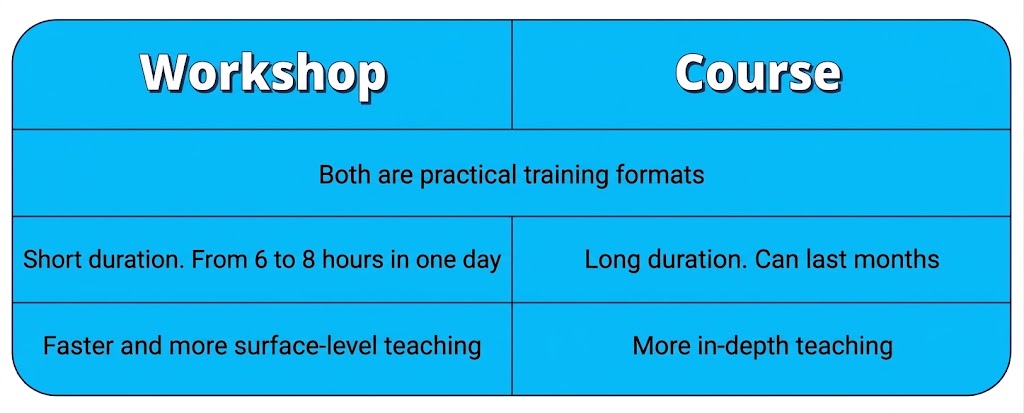
Most workshops take place over a single day, with up to 8 hours of activities, and follow a format that includes:
Introduction
First, the facilitator introduces the workshop.
This means presenting the topic, the goals, the schedule, and the materials participants will need. This is when expectations are aligned with attendees.
For a successful introduction, you need to plan the following in advance:
- Define the topic and goals: Choose your workshop’s topic and the goals you want to achieve carefully. The facilitator will reinforce these throughout the session;
- Target audience: Build a detailed profile of your participants to create a workshop that’s appealing and meets their expectations;
- Logistics planning: Choose the venue, format, date, and time for the event. Don’t forget to organize the materials needed to make it happen.
- Choosing a facilitator: Facilitators or moderators need to be well-equipped to teach the content in the best possible way. The ideal choice will depend on the professional’s experience, your audience’s preferences, and the workshop’s topic;
Theoretical presentation
Next, it’s time to start the session! This is when the facilitator covers the theoretical part of the topic.
This can include a short talk, slide presentations, educational videos, and more.
To do this well, you should put together a:
- Lesson plan: a structure that lays out the workshop’s plan, including the topics to be covered. Include the materials needed for the event, the skills being developed, activities, and the final output.
Hands-on activities
After the theory, we reach the heart of the event: practice.
This is when participants get involved in activities, exercises, or projects that help them apply what they’ve learned.
For your hands-on session to go well, it’s important to sort out a few things beforehand, such as:
- Learning materials: Workshops need materials to make the hands-on portion possible. Be sure to tell participants in advance what materials they’ll need and whether you’ll be providing them.
- Registration: If you’re providing materials, consider the financial impact this will have on your event. If necessary, sell the materials separately or include the cost in the registration fee and be transparent about it with attendees.
Breaks and coffee breaks
If it fits your schedule, breaks can be a great way to hold participants’ attention and break the ice before a group discussion.
For online workshops, breaks are essential after every 2 hours of activities. This helps ensure your participants don’t feel overwhelmed.
It’s also a good idea to encourage networking during breaks, spark conversation with icebreakers, and get creative to boost interaction among participants.
Group discussion
Once participants know each other better, they’ll move into the discussion phase feeling much more comfortable.
This is the moment to share experiences, questions, and insights about the activities they’ve just completed.
Wrap-up and feedback
At the end, the facilitator summarizes the key points, answers any remaining questions, and collects feedback from participants to improve future workshops.
To do this, you can use event evaluation forms linked to certificates. That way, it’s much easier to gather everyone’s impressions.
8 Tips for Organizing a Workshop That Works
1. Sell tickets online: Use an online event management platform to build an online ticket sales page. This creates a secure purchasing environment, gives you more financial control, lets you track sales in real time, and makes promotion easier;
2. Promote your workshop: Convince your target audience to be part of your event! Show up on the channels where they already are and create appealing promotional content for your potential attendees on Instagram, Google, YouTube, email, and more.
3. Engage participants: Use interactive techniques to keep participants engaged, such as building online communities;
4. Be flexible: Be prepared to adjust the schedule and activities as needed;
5. Create a checklist of essential materials for the event: Put together a checklist of materials for participants. If needed, include venue rental, tables and chairs, sound, video, internet, and so on.
6. Control event check-in: Set up a check-in system to track who attended the event and make sure certificates only go to actual participants;
7. Evaluate and improve: Use participant feedback to improve future workshops;
8. Issue certificates: Proof of the knowledge gained is one of the biggest draws of a workshop. That’s why it’s worth guaranteeing a secure certificate, with an authentication token, issued automatically as soon as the event ends.
Boost your promotion and simplify management with Even3. With a complete event management platform, you can create your event’s website, sell tickets, manage attendee data, issue secure certificates automatically, and much more — all in one place, so you can focus on delivering a great workshop instead of juggling logistics.