When it comes to engaging your audience, great event coverage makes all the difference!
It should combine strong visuals with messages that carry real value. But how do you actually pull that off?
Major events can offer inspiring examples of how to boost visibility and build affinity with attendees.
That’s why we’ve put together 5 tips based on common practices in the coverage of major events like the Olympics, the Oscars, and large music festivals.
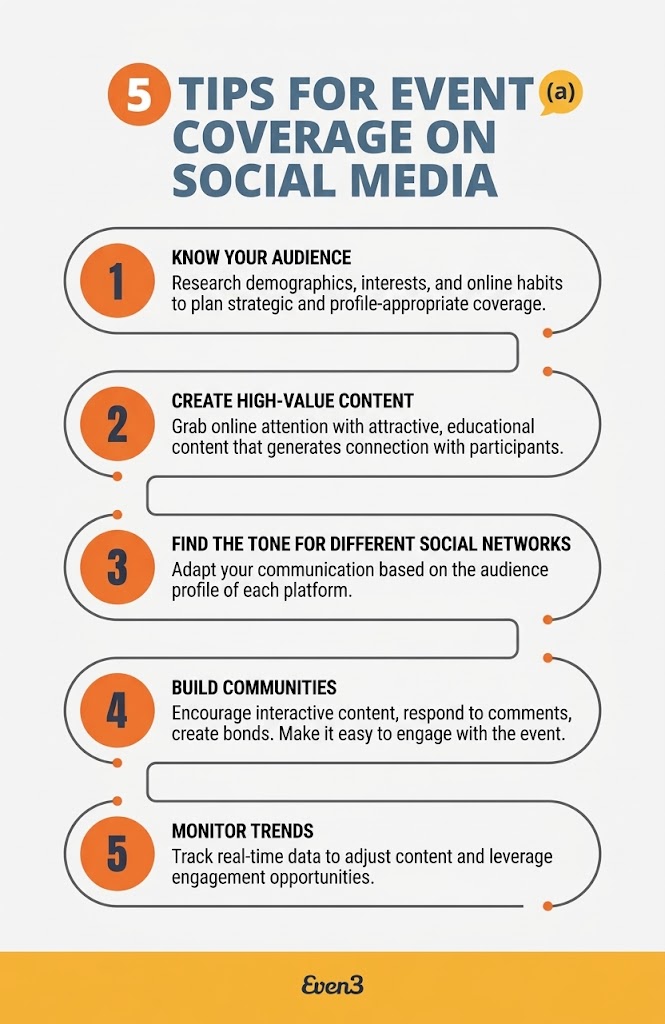
1. Know Your Audience
To start, it’s essential to know your audience so you can define your marketing campaign.
That campaign will guide which social networks you focus on, what kind of content you create, and, of course, how your event coverage will be done.
But before anything else, you need to know how to attract your audience. So research:
- Your audience’s demographics: What city or country are they from? What are their genders? Their ages?
- Interests: What do they like? What are their hobbies?
- Behavior: What do they do day to day? What’s their job? How do they consume content?
- Online habits: Which social networks do they use? What kind of content do they follow there?
With an audience profile in hand, you can start defining important strategies for covering the event, such as which topics are most relevant to address and in what format.
You’ll also be able to spot cultural or age-related differences that should be taken into account when creating content.
Understanding your audience will help you plan your content strategically, aligned with their interests and activities.
A great example of this happens at the Olympics. During the Games, each country’s team has to take into account the unique aspects, culture, and history of its own athletes.
That’s why it’s common to see dedicated pages for each national team, where memes and cultural references resonate in a unique way with fans from that country.
2. Create Valuable Content
Speaking of unique content, you should create posts that grab attention online.
Basically, the goal is to produce pieces that are visually appealing while also encouraging sharing.
So invest in content that:
- Actually adds something to the conversation happening around the event;
- Generates fun, curiosity, learning, and/or a sense of exclusivity for your audience;
- Follows current digital content trends;
- Matches the audience and tone of the social network being used;
- Delivers unique experiences and/or special offers to attendees.
With that in mind, consider using videos, GIFs, infographics, and memes. These formats grab more attention and are easier to share.
Humanized content also tends to get strong reach. So show the people behind your event, evoke emotion, and create posts that connect attendees with one another.
For example, it’s worth investing in “behind the scenes” event coverage or sharing real-time updates during the event itself.
We can also draw inspiration from how major festivals’ sponsors handle content. Typically, they create a lot of posts featuring event attendees, who end up sharing that content organically simply because they’re in it.
It’s also common to work with influencers to cover the event or conduct interviews. This helps reach new audiences and extend your overall reach.
3. Find the Right Tone for Each Social Network
Obviously, how you share your content can change depending on which social network you’re using.
After all, each platform attracts a different kind of audience. LinkedIn, for instance, skews more corporate, while TikTok is aimed at younger users.
So you need to be present on the social networks your attendees actually use, and communicate with them in the right tone for each one.
A great example of event coverage to draw inspiration from is how national Olympic teams handled their social media during the 2024 Games.
Olympic committee accounts ran full coverage of the event across every social network, aiming to reach audiences of different ages depending on the platform.
Because of that, the way they communicated also changed from channel to channel.
The result was growth of more than 42% across their channels, and, of course, much more variety in how they communicated.
One marketing lead who managed an Olympic team’s social presence in 2024 explained how the message was adapted to each network’s tone in an interview:
“X/Threads needs to be immediate — it needs to capture the reaction, the moment. That’s why you see ‘outbursts’ after a medal win: it reflects exactly where the fan is at that instant. At the same time, it’s the platform that lets you be the most informal. On Instagram, the visual appeal matters much more — the copy alone isn’t enough, it has to look good. Each network needs to be considered as part of a bigger picture, but worked on individually.”
4. Build Communities
There’s no point creating event coverage that drives a lot of engagement if you don’t do anything with it.
In fact, the whole point of major events is to generate community experiences.
So use your content to bring your audience closer to your brand.
Use calls to action (CTAs) and get people to sign up to receive content about the event’s theme on an ongoing basis.
Also encourage them to follow your social networks, create groups on messaging apps, and generate networking opportunities.
For example, large university events often create newsletters to keep sharing valuable content with attendees even after the event itself is over.
This way, you can build loyalty among attendees for future editions and increase your relevance in your field.
But remember, it’s not enough to just send content to attendees. You need to take part in conversations, reply to comments, build relationships, and contribute positively to your community.
5. Monitor Trends in Event Coverage
One of the biggest advantages of event coverage is the ability to generate and track data in real time!
Beyond monitoring digital trends, you should constantly analyze how your followers interact with your content.
That way, you can spot opportunities for engagement and inspiration for new posts.
To do this, use social media’s own monitoring tools along with the analytics from your event’s website.
This lets you focus your event coverage on content that drives engagement with your audience, trending topics, or unexpected moments that generate organic engagement.
Major events like the Oscars can teach us a lot about content creation and real-time monitoring.
For example, the red carpet is usually covered live, tracking trends and celebrity moments as they happen.
But it gains even more value when the broadcast adds live viewer comments, shares memes, and takes advantage of those engagement opportunities.
Ultimately, your event coverage will create experiences and connections that go beyond the event itself.
Just imagine the anticipation your attendees could feel for the next edition!
Building that anticipation depends on the content created during your event coverage, but also on a solid marketing strategy.
Boost Your Event Coverage with Even3
Complement your event coverage with an events platform that offers powerful marketing tools built in.
With a robust events platform like Even3, you can:
- Create a free website for your event;
- Send email campaigns to attendees and leads;
- Sell tickets and manage registrations;
- Collect and organize attendee data;
- Issue certificates automatically;
- Boost your marketing campaigns and much more.