Event production is the process of turning an event idea into a concrete reality. It covers three phases: pre-production, production and post-production. In other words, everything that happens from the first briefing to the final report.
Anyone who has organized a congress, a convention or a trade fair knows that the hard part isn’t any single task. It’s the number of tasks happening at the same time, with different deadlines and different people in charge.
In this article I explain how event production works in practice. You’ll see what goes into each phase, how far in advance to start each thing, who is on the team and what changes for each type of event.
What is event production
Event production is the set of planning, execution and evaluation activities that make an event happen. In practice, this includes building the budget, hiring vendors, coordinating the team on the day and measuring results afterwards.
The word production gives the impression that everything gets solved on the day of the event. But that’s not quite how it works. After all, most of the work happens beforehand, when no one is watching.
And that’s exactly where the difference lies between a smooth event and an event on the edge. The more decisions you make in pre-production, the less improvisation is left for the day.
Event production, organization and management: what’s the difference
The three terms are used as synonyms all the time. But in practice, they describe different layers of the same work.
| What it is | Main focus | |
|---|---|---|
| Event organization | The conception of the event: concept, goal, format and program | What the event will be |
| Event production | The execution of what was conceived: vendors, logistics, schedule, setup and operations | How the event will happen |
| Event management | The ongoing control of data, registrations, finances and results | How much the event generated and cost |
At small events, one person does all three. At larger events, they are three separate fronts with different people in charge. That’s why knowing how to tell them apart helps you hire the right people and hold the right person accountable. And if you want to dig deeper into this layer, look into how event organization and management works.
What does an event producer do
In short: the event producer is the person who takes the event off the drawing board. They translate the concept into tasks, deadlines and contracts, and make sure every part is ready on the day.
In practice, the producer negotiates with vendors, controls the schedule, tracks the budget, coordinates the team during the event and answers for the unexpected. In other words, it’s a coordinating role more than a hands-on one. Here’s how their work is divided:
How event production works: the 3 phases
Event production works in three linked phases: pre-production, production and post-production. Each phase has its own deliverables, and one only starts well when the previous one has been wrapped up.
Pre-production is the longest phase. After all, it concentrates decision-making, hiring and promotion, and takes up most of the project’s time.
Production is the shortest and most intense phase. It covers setup, the event itself and teardown.
And post-production is the most overlooked phase. But it’s the one that determines whether the next edition will start from scratch or from a solid base.
Pre-production: what to do before the event
Pre-production is the phase in which you define the event and hire everything it needs. In other words, it exists so that the event day is about execution, not decisions. Before you start, it’s worth getting to know the main pillars of event planning:
Briefing, audience and format
It all starts with one question: why does this event exist? Generating business, training a team, launching a product or presenting research are different goals. And each one leads to a different format, budget and metric. That’s why it’s worth reflecting on your event’s goal.
Then write that goal in one sentence and define who you want in the room. The event’s target audience determines price, venue, day of the week, time and promotion channel. With audience and format settled, you can already estimate size and, from there, budget.
Budget, venue and vendors
An event budget is organized into fixed costs, which don’t change with attendance, and variable costs, which rise as attendance grows. Separating the two lets you calculate the break-even point, that is, how many registrations pay for the event. To size each line item, look into how much it costs to organize an event and set aside 10% to 15% for contingencies.
Venue and date lock in the rest of the schedule. That’s why you should close both early. During the site visit, check the real capacity for each room layout, power outlets, internet, loading and unloading, accessibility and the time allowed for setup. Then hire the most critical event vendors first: structure, audiovisual, catering and security.
Production schedule
An event schedule works backwards. In other words, you start from the event date and go back in time, distributing the deliverables.
| Time before the event | What needs to be ready |
|---|---|
| 12 to 6 months | Goal, audience, format, approved budget, venue and date confirmed |
| 6 to 4 months | Critical vendors hired, program drafted, sponsorship prospecting under way |
| 4 to 3 months | Registration open, event website live, promotion plan running |
| 3 to 1 month | Program finalized, speakers confirmed, sponsorship closed, materials in production |
| Last 4 weeks | Run of show, team schedule, contingency plan, final communication with registrants |
| Event week | Alignment meeting, technical check, setup, check-in tested |
These timelines apply to a mid-sized event. Events with heavy sponsorship fundraising or booth sales need to start even earlier, because sales begin before promotion.
Registration and event promotion
Event promotion isn’t a single blast close to the date. It’s actually a sequence.
Start with the event announcement and the opening of registration. Then release the program and speakers gradually, because each new piece of news is a new reason to communicate. And in the final two weeks, increase the frequency and work on the sense of urgency.
Keep registration and communication in the same place. After all, when the registrant list lives in a spreadsheet and emails go out from another tool, every send becomes manual work: export, filter and paste. That work doesn’t show up on the schedule, but it eats up hours of the whole team’s time every week.
Production: what happens during the event
The production phase covers setup, the event itself and teardown. Here the nature of the work changes: planning steps out and real-time coordination steps in.
Setup and technical check
Setup starts earlier than most people imagine. Structure, stage, booths and signage need hours of lead time, sometimes a full day.
So set aside a block for the technical check with the room already set up. Test sound, projection, wireless microphones, the speaker’s laptop connection and internet. And also test the worst-case scenario, with the room full, not empty.
Check-in and reception
Check-in is the attendee’s first contact with the event. But it’s also the most common place for lines.
To avoid bottlenecks, estimate peak arrival time and size your service points for it, not for the average. QR code self check-in greatly reduces the time per person, because it eliminates searching through a list. It’s also worth understanding how proper check-in reduces lines at the event.
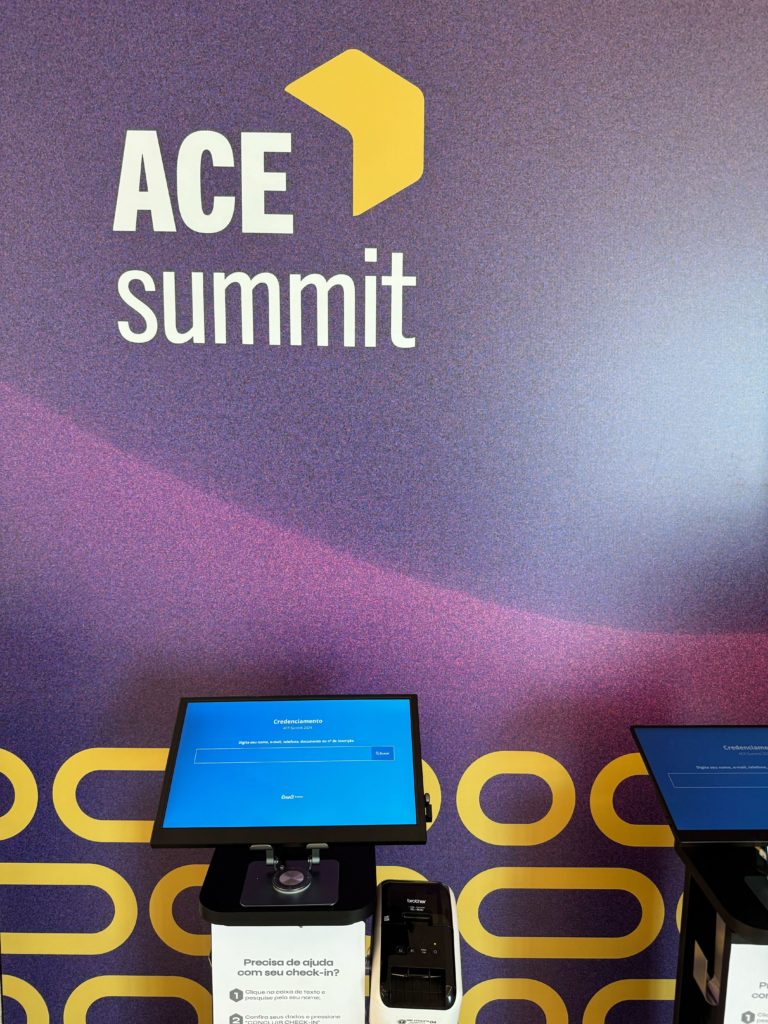
Also, keep one person outside the line just to handle exceptions. Misspelled names, registrations that can’t be found and pending payments happen, and they hold up the whole line when they have nowhere to go. That’s why attendee support exists on the day.
Coordinating the team on the day
On event day, the whole team needs two things: to know what to do and to know who to turn to.
So put together a run of show with time, activity, location and person in charge. And share it beforehand, not on the spot. Then define a single communication channel and a focal point for decisions.
That way, the coordinator doesn’t become a bottleneck. They circulate and solve what no one else can.
Plan B for the unexpected
A contingency plan is a short list of likely problems with a defined response.
For example: a speaker who doesn’t show up, rain in an outdoor area, a power outage, an internet failure and a vendor delay cover most cases. For each one, define who triggers what. A guide on how to handle the unexpected behind the scenes helps you build your list.
In the end, ten minutes writing this down saves an hour of panic later.
Post-production: what to do after the event
Post-production is the phase in which you close out pending items and turn the event into information. It usually lasts two to four weeks.
Teardown and settling up with vendors
Follow the teardown with the same attention as the setup. After all, returning equipment, inspecting the venue and removing materials all have contractual deadlines, and delays here turn into extra costs.
Then close the financial settlement with each vendor while everyone still remembers what was agreed. And at corporate events, this settlement ties directly into corporate event finances.
Certificates and communication with attendees
A certificate is an expectation, not a courtesy. At academic and corporate events, in fact, it’s usually one of the items people ask about most afterwards.
That’s why you should set the issuing deadline before the event and announce it at the closing. Automatic issuing, linked to check-in, solves this without a queue of support emails.
Use the same contact to send the satisfaction survey while the experience is still fresh.
How to measure event results
Measure results against the goal you wrote down at the very beginning. After all, without it any number looks good.
Some indicators work for almost every event:
- Registrants versus attendees, which shows the attendance rate
- Cost per attendee, which is the total cost divided by the number of people who attended
- Revenue versus cost, which shows the event’s ROI
- Satisfaction score and intention to return, taken from the survey
- Registration source, which shows which promotion channel actually brought people in
- For commercial events, leads or deals generated
So keep these numbers in a fixed place. A glossary of event metrics helps standardize what each one means. And at the next edition, they become your baseline, and planning starts with data instead of guesswork.
Who is on the event production team
The event production team brings together general coordination, the operational fronts and the hired vendors. The size varies, but the roles repeat.
| Role | Main responsibility |
|---|---|
| General coordination | Decisions, deadlines, budget and the relationship with the client or leadership |
| Executive production | Contracts, vendors, logistics and schedule |
| Content and program | Speakers, curation, script and moderation |
| Communication and marketing | Promotion, website, social media, press relations |
| Attendee service and registration | Questions, payments, check-in and certificates |
| Sales | Sponsorship and, at trade fairs, booth sales |
Technology in event production
Technology comes into event production to eliminate repetitive work and centralize information. It doesn’t replace planning. But it frees up time for the people doing the planning.
In pre-production, an event management platform brings the website, registration and payments together in one place. That way, you stop reconciling spreadsheets with bank statements and start tracking sales in real time.
In promotion, having the registrant base inside the same tool changes the pace. Communication goes out segmented, by ticket type or payment status, with no manual exporting.
During the event, QR code check-in reduces lines and records attendance automatically. And that record is what feeds certificate issuing later, without checking item by item.
Then, after the event, the data is already gathered in Even3 Analytics. Registrations by channel, attendance rate, revenue and satisfaction are available for the report, instead of having to be rebuilt.
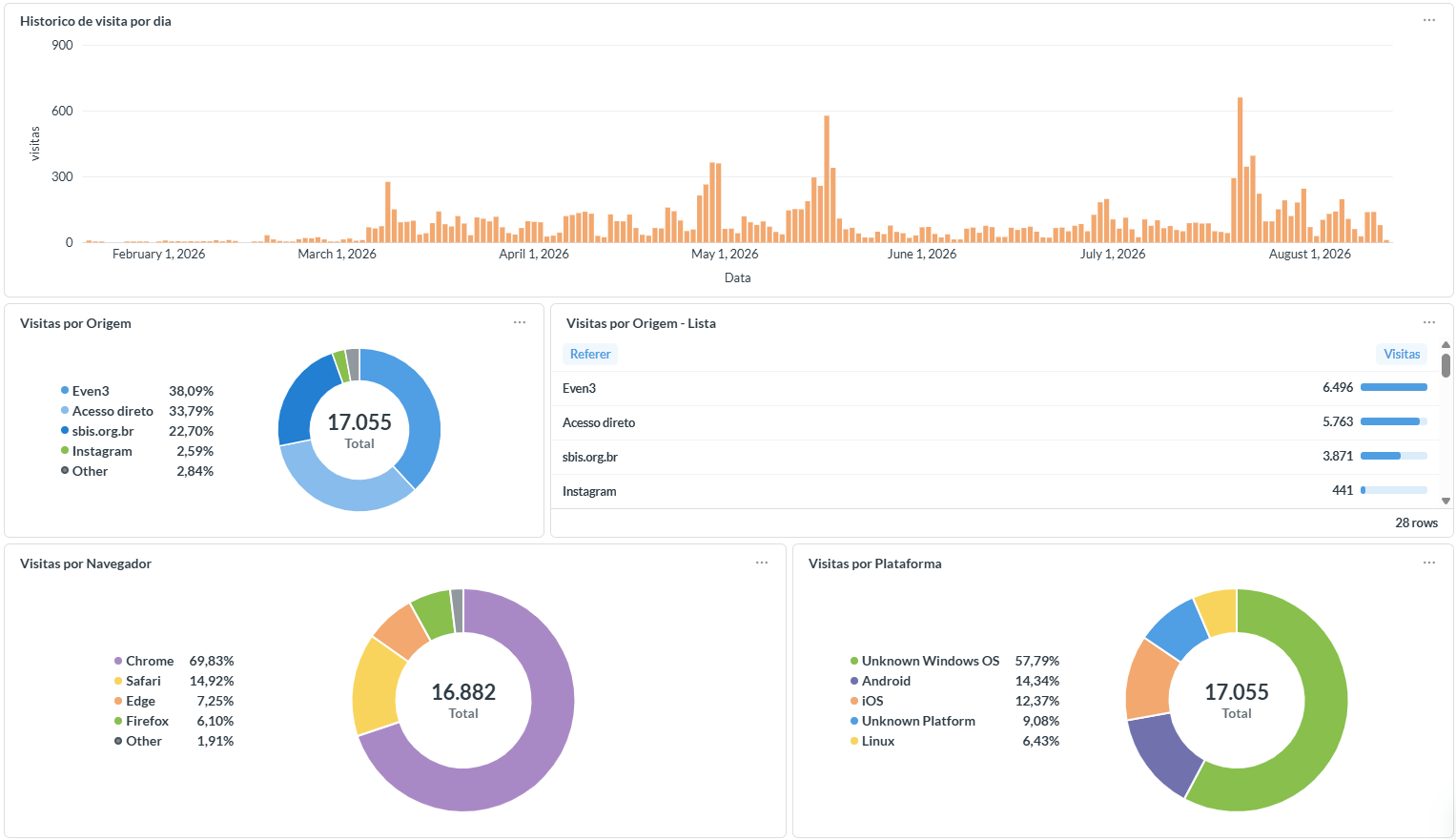
Even3 brings these stages together in a single flow, from the event website to the certificate. In other words, for academic events, corporate events and trade fairs, this means fewer scattered tools and less rework between one phase and the next. And you can see in practice how to create an event from scratch.
Other frequently asked questions about event production
How far in advance should I start producing an event?
For a mid-sized event, start six to twelve months in advance. Events with sponsorship fundraising or booth sales need more time, because commercial negotiations have to happen before promotion. Smaller, internal events work well with three to four months.
Produce in-house or hire an event production company?
There’s no single answer, but there is a calculation.
Producing in-house makes sense when the event is recurring, the format is already familiar and the team has hours available. That way, you keep the know-how in-house and reduce costs.
Hiring an event production company makes sense when the event is large, one-off, technically complex or takes place in another city. In that case you’re paying for the structure and the vendor network that’s already in place. For ceremonial events, it’s also worth considering whether hiring a professional event planner makes sense.
And many organizations take a middle path. Coordination stays in-house and field operations are outsourced.
How do you create an event budget?
Separate fixed costs, which don’t change with attendance, from variable costs, which rise with the number of attendees. Then calculate the break-even point to know how many registrations pay for the event. And set aside 10% to 15% for contingencies.
Ready to put all of this into practice? Create your event on Even3 for free and manage every phase of production in one place.