Did you know that 80% of marketing professionals run events to generate qualified leads?
Far beyond meetings and get-togethers, corporate events have become powerful tools for strengthening brands, driving sales, and generating high-value connections.
But is it worth it for your business?
In this article, we’ll explore why companies organize events, bringing market data and practical examples to help you make confident decisions.
What are business events?
Business events are gatherings organized by companies with the goal of promoting the brand, building relationships with their audience, presenting news, or developing employees.
They can be internal, aimed at the organization’s own team, or external, aimed at clients, partners, investors, and other stakeholders.
Among the main types of business events are:
- Congresses and trade shows: where a company can position itself as a reference in its field;
- Workshops and training sessions: a great opportunity to attract talent;
- Product launches: to establish your solutions in the market;
- Events tied to special dates: ideal for attracting leads;
- Conventions and strategic meetings: to strengthen ties with vendors and partners.
These events let a company position itself as an authority in the market, strengthen its internal culture, and create business opportunities.
3 reasons to organize business events
1. Brand strengthening
Have you ever stopped to think about how your customers consume?
A recent survey by Archrival found a shift in Gen Z’s consumption habits: what attracts young people is the community a brand creates.
For them:
“It’s all about entertainment. It’s about participation. And most importantly, it’s about connection.”
Does that remind you of something? It sounds exactly like events!
Most consumers see them as a chance to be part of something bigger than just consuming.
After all, during an event, companies can reach people through quality content, memorable experiences, and incredible opportunities.
That’s why big brands invest in successful events, like RD Summit, from Resultados Digitais, or Fire Festival, from Hotmart.
But what happens afterward? Research shows that 89% of attendees feel a stronger connection with the brand after an event.
So you can use events as a way to kick off the relationship with your audience.
How to achieve these results:
- Build communities beyond the event itself, using social media;
- Plan interactive, engaging activities. Get inspired by the gamification example from CBIS’24;
- Encourage networking between attendees and sponsors;
- Deliver valuable content that addresses your audience’s pain points.
2. Lead generation and new opportunities
By now, it’s clear that business events are excellent for attracting qualified leads, right? Especially since they already reach an audience interested in your niche.
On top of that, Freeman found that 80% of event attendees say in-person events are the most reliable way to discover new products and services.
And have you noticed the significant rise in talks and workshops lately?
Many brands invest in this format to make first contact with their audience. Usually, they offer valuable content, with the brand’s products or services appearing as a natural next step in the customer journey.
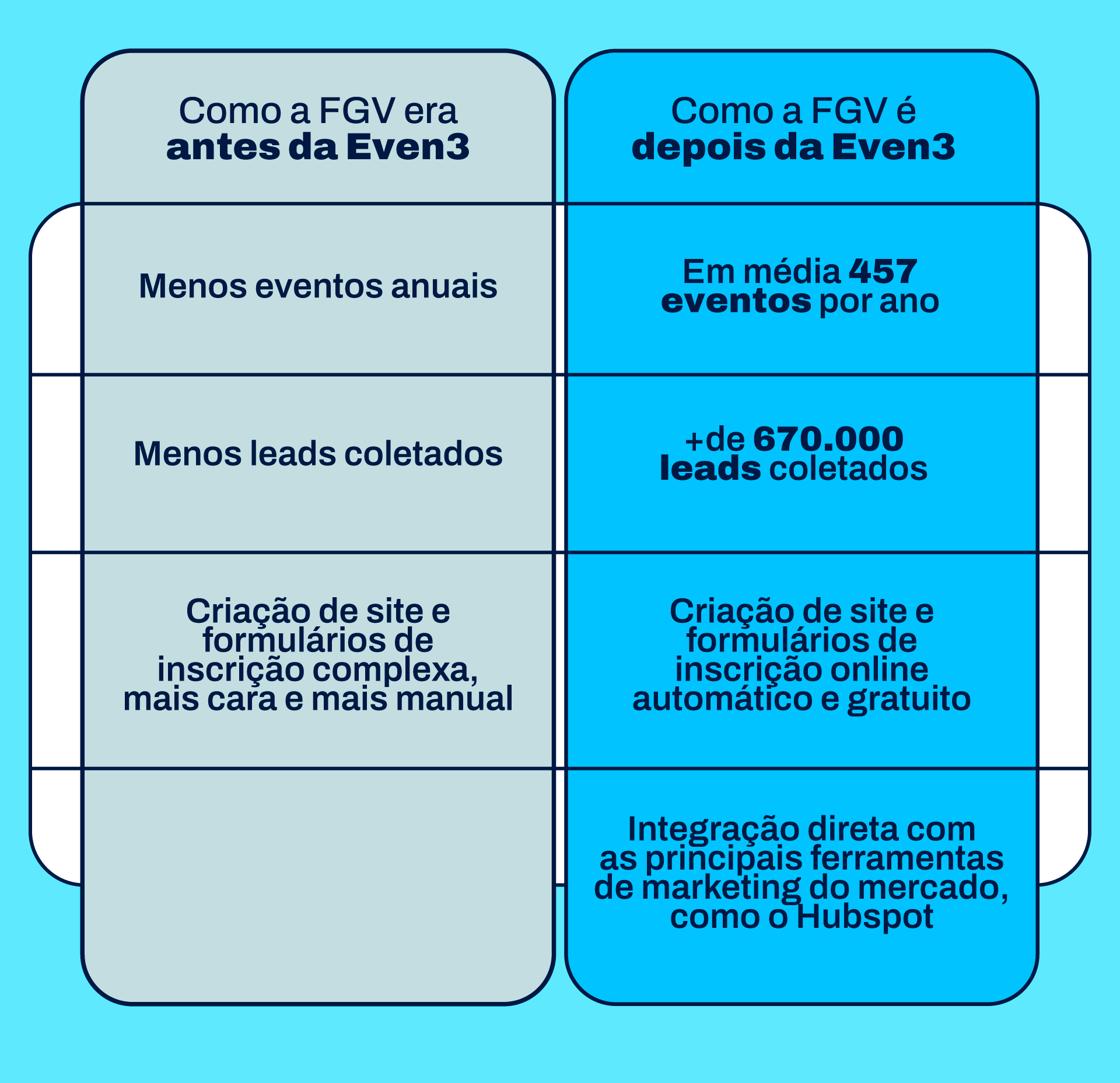
For example, for FGV (a major Brazilian university), creating events is an opportunity to collect leads and recruit prospective students.
So they chose to use Even3 Empresas, a service that makes organizing and managing institutional events faster and easier.
Since then, the institution has reached over 670,000 people, starting a relationship with all of them through email marketing and the integrations available within Even3 itself.
How to achieve these results:
- Define your target audience;
- Create engaging, relevant content;
- Use a platform, like Even3, to collect registrations online, store the data, and build email marketing campaigns with your leads.
3. Higher return on investment (ROI)
Events can generate both direct and indirect sales. According to Bizzabo, 80.4% of companies run events as their highest-impact marketing strategy.
That’s because events tend to be easy and inexpensive to organize, on top of driving customers toward completing a purchase.
For example, webinars basically just need a camera, an internet connection, and a good microphone to run on Even3. Creating the event on the platform is free!
Plus, with an event platform, it’s even faster and easier to create these opportunities for your customers.
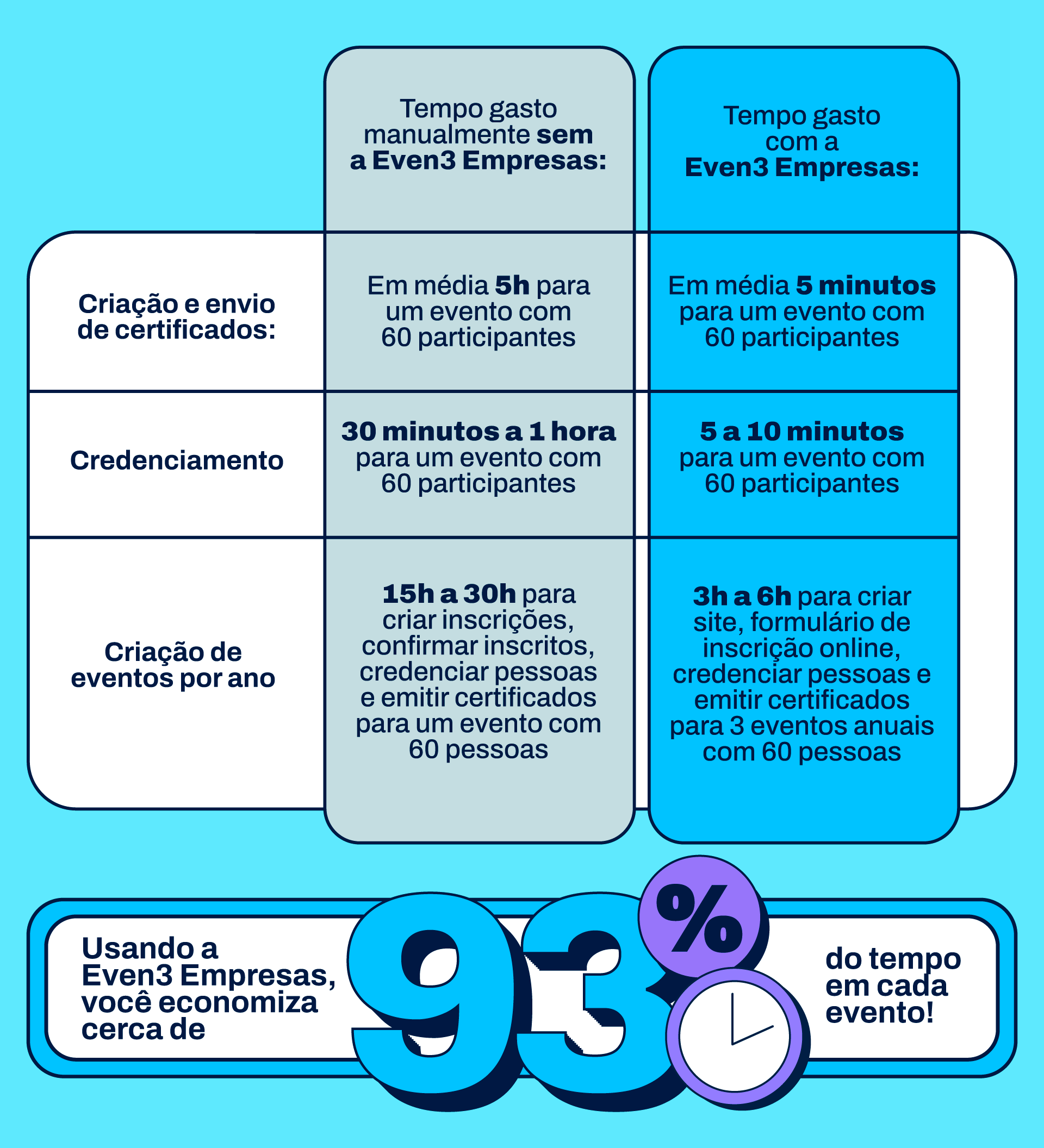
Check out some practical data on using Even3 Empresas:
“We had one more support person than expected at Even3 on the day of the event. We even timed it, and our maximum queue time was 6 minutes” — Ana Uriarte, organizer of Mangue.bit 2022
Is it worth using Even3 Empresas?
So, do business events make sense for your company? If so, now is a great time to invest in an event platform.
Without a doubt, Even3 Empresas is the ideal solution for companies that want to organize business events in a professional, standardized, and scalable way.
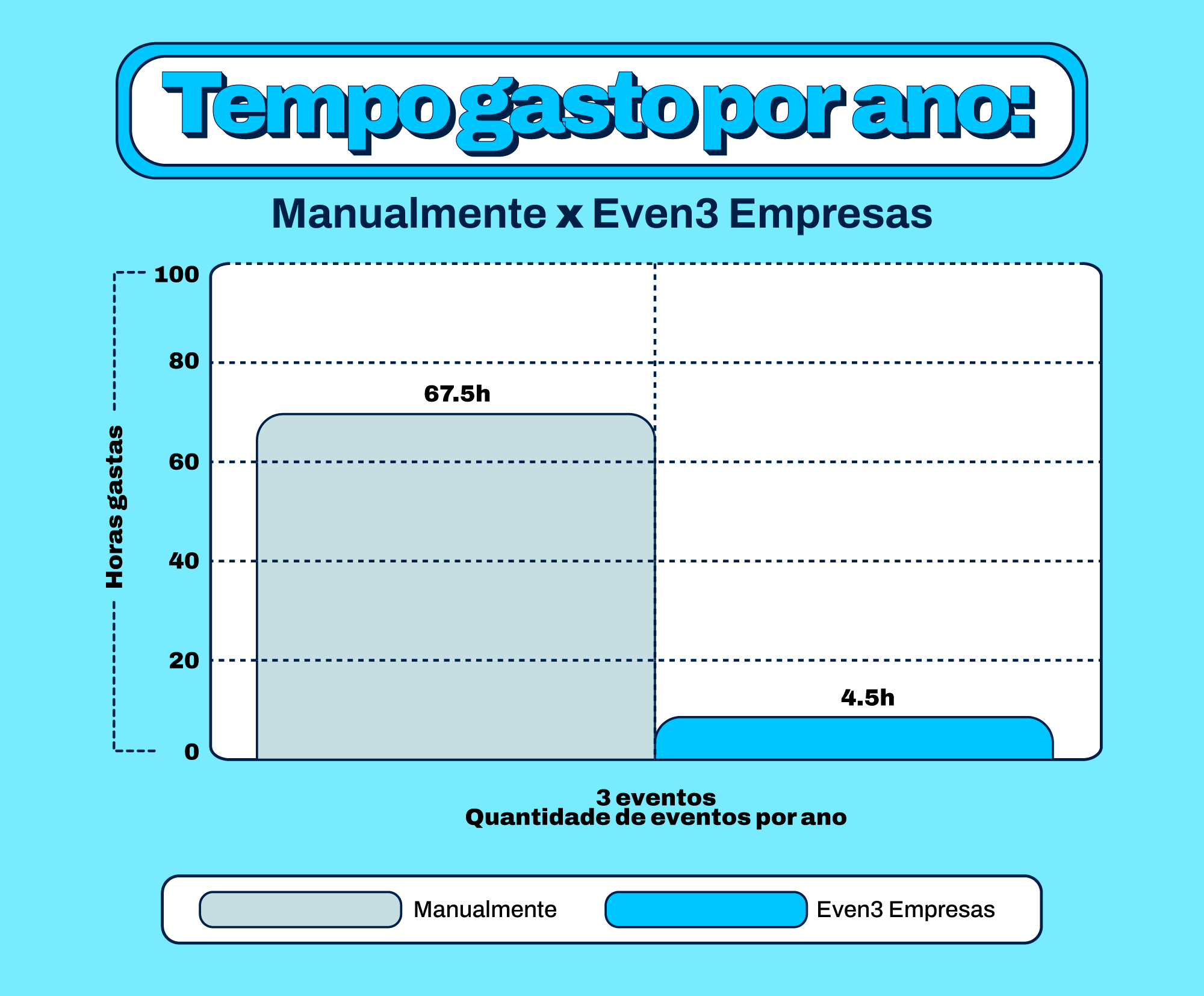
Beyond speed, the platform offers benefits such as:
- Event websites customized with your brand;
- An online portal with all of your company’s events;
- Automatically create new events by copying past event templates;
- A financial dashboard to track your sales in real time, and much more.
With an automated, customizable system, you can focus on what really matters: creating memorable experiences for your attendees.
Want to see how Even3 Empresas can boost your results?