If you work in event organizing, you’ve probably already noticed a shift in behavior: audiences are increasingly looking for closer, more intimate experiences.
It’s in this context that micro-events are gaining ground. But they’re not a passing trend!
That’s because personalized experiences have been a priority in events for years.
And if you can’t apply that yet at large events, smaller gatherings are the ideal moment to do so, for any organizer — from scientific events to corporate ones.
After all, they allow for high interaction between attendees and much more targeted content. Want to know how to make this happen? In this article, you’ll learn:
- What are micro-events?
- Main benefits of micro-events
- When is it worth investing in a micro-event?
- How to plan a successful micro-event?
- Trends for micro-events
- Frequently asked questions about micro-events
What are micro-events?
Micro-events are small-scale events, designed to bring together a limited number of attendees around a specific goal.
More than the number of people present, what defines this format is the aim of offering a more intimate, personalized, and participatory experience.
Generally, micro-events tend to have:
- a smaller audience, which makes direct contact between organizers, speakers, and attendees easier;
- a more focused schedule, without scattering across too many topics or audiences;
- greater interaction, since the format encourages questions, exchanges, and group discussions;
- easier networking, with fewer barriers for people to meet and connect;
- very specific goals, such as diving deeper into a technical topic, strengthening a community, or presenting news to a strategic group.
For example, workshops, training sessions, meetups, and panel discussions are common types of micro-events.
In fact, you’ve probably already seen them built into the schedule of large events like conferences, right?
This happens often because micro-events are ideal for bringing together groups with shared interests within larger events with broad audiences.
Main benefits of micro-events
- A richer attendee experience: with fewer people, you can personalize the schedule, service, and even communication before, during, and after the event;
- Higher-quality networking: in smaller groups, conversations tend to go deeper and connections tend to be more relevant to attendees;
- Greater engagement: smaller audiences tend to interact more — whether by asking questions, joining activities, or contributing to discussions;
- Format flexibility: micro-events can be in-person, hybrid, or even fully online, which expands the possibilities for execution;
- Cost-effectiveness: since they require smaller structures, they tend to have simpler operations and leaner budgets;
- Stronger communities: they’re an excellent format for keeping groups, associations, and clients engaged on an ongoing basis, not just at large annual gatherings.
When is it worth investing in a micro-event?
In short, micro-events make sense whenever the goal calls for depth, closeness, or focus on a well-defined audience.
For example, they can be used for training sessions, exclusive product launches, community building, and more.
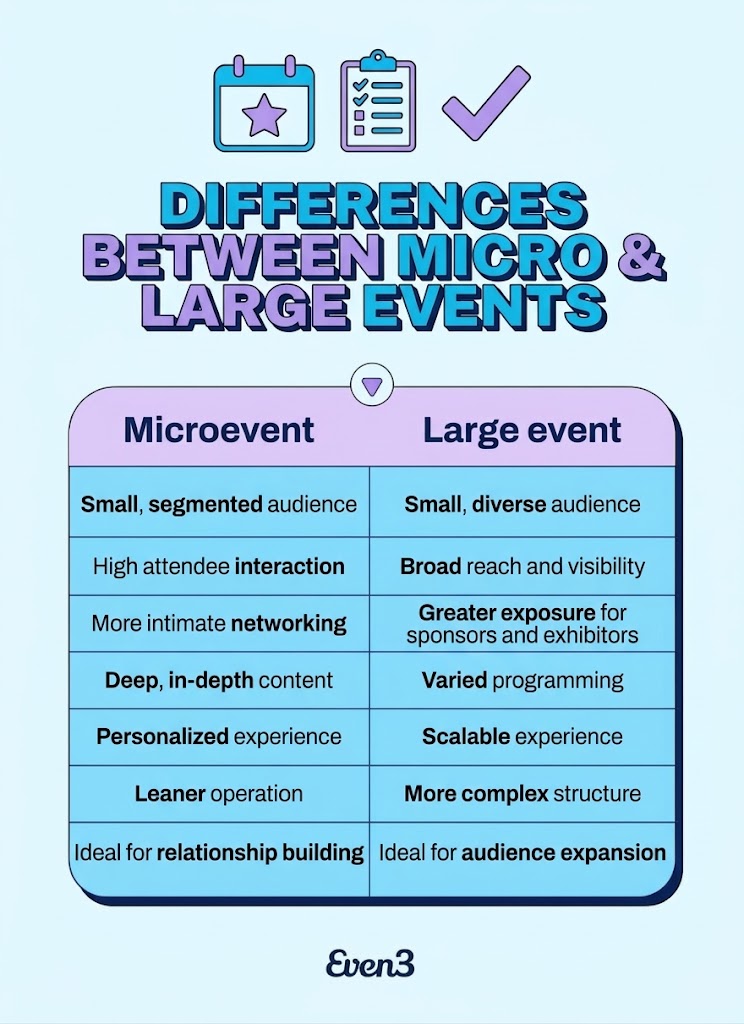
But if you’re unsure whether to invest in a large or small event, it’s important to know there’s no right or wrong answer. It all depends on your goal.
Here’s a comparison:
How to plan a successful micro-event?
As you’ve probably gathered, planning a micro-event is simple, but it needs strategy!
So try following these steps:
1. Start with a clear goal
Before thinking about venue, speakers, or promotion, answer a simple question: why does this event exist?
For example, your goal might be to generate business opportunities, train professionals, or launch a new product…
In short, this definition will guide every other planning decision.
2. Get to know your audience
The smaller the event, the better you need to know who will attend.
After all, micro-events work best when the audience is clearly defined, which lets you personalize the entire experience.
So, try to understand:
- what challenges they face;
- which topics interest them;
- which activity formats they prefer;
- which experiences they value.
3. Curate the content
Since the schedule tends to be leaner, every session needs to be truly relevant to the people who will attend.
So avoid a schedule made up only of lecture-style presentations.
Whenever possible, include moments like:
- debates;
- case studies;
- Q&A sessions;
- group dynamics;
- collaborative activities.
The more attendees contribute to the experience, the greater the perceived value.
4. Invest in the attendee experience
Remember that personalization matters A LOT at smaller events, right? So you should invest in the attendee experience!
Basically, attendees need to feel cared for and special.
There are several ways to do this, but a few small actions can make a difference, such as:
- Sending clear information about the schedule, location, times, and expectations reduces questions and increases attendee engagement.
- Staying in touch after the event also makes a difference.
- Sharing materials presented, sending certificates, asking for feedback, and promoting future gatherings helps turn a one-time event into an ongoing relationship.
5. Use event management tools
In short, even at small events, having a platform that centralizes activities frees up time to focus on the attendee experience.
Beyond that, the information generated during the event helps you better understand audience behavior and plan future editions based on data.
Trends that should drive micro-events in the coming years
The growth of micro-events isn’t isolated. In fact, it follows broader movements in the events market. Among the trends that should further strengthen this format are:
- Smaller hybrid events, combining the closeness of in-person gatherings with the reach of digital, without losing focus on specific groups;
- Recurring communities, with periodic gatherings that keep engagement going over time, not just at one-off dates;
- Artificial intelligence in personalization, helping organizers better understand attendee profiles and create tailor-made experiences;
- Guided networking, with structured activities to facilitate meaningful connections between attendees;
- Immersive experiences, prioritizing hands-on engagement and interaction over just delivering content;
- Exclusive events, aimed at invited or segmented audiences, reinforcing a sense of belonging;
- Local events, which strengthen regional communities and reduce reliance on long-distance travel.
Frequently asked questions about micro-events (FAQ)
How many people make up a micro-event?
There’s no fixed number. What defines a micro-event is the focus on a personalized experience and interaction between attendees, not an exact headcount.
Are micro-events only in-person?
No. Micro-events can be in-person, hybrid, or fully online. What matters is keeping the audience small and the schedule focused, regardless of the chosen format.
Are micro-events cheaper?
In most cases, yes, since they require smaller structures and simpler operations. However, the final cost will always depend on the format, venue, and level of personalization in the experience.
Is it possible to sell tickets for micro-events?
Yes. Just like at larger events, micro-events can have paid tickets, free tickets, or even invitation-only models, depending on the organizer’s strategy.
What types of organizations can hold micro-events?
Practically any organization: scientific associations, companies, professional communities, educational institutions, NGOs, and independent organizers can all benefit from this format.
Where to organize micro-events?
Regardless of the size of your event, having a complete platform to manage registrations, communication, certificate issuance, and check-in makes all the difference to the attendee experience. Micro-events are no exception here.
Even3 offers all the structure you need to plan and run micro-events in person, hybrid, or online. All with the same quality and professionalism as large events, but with the flexibility this format demands.
Want to launch your next micro-event? Create your event on Even3 and start building closer, more strategic experiences for your audience.