Whenever a big event comes together, there’s certainly at least one vendor behind it.
This professional is essential to make the event organizer’s job easier and turn planning into reality.
After all, they deliver products, services, or solutions that make it possible to execute exactly what the organizer planned!
So, it’s important to understand how a vendor should operate, what kind of contractual precautions you should take with them, and how to manage them. In this article, I’ll teach you how to do all of that!
What is a vendor?
A vendor is any individual or company responsible for supplying products, services, or technical support to another company, institution, or event.
In practice, they meet a specific need, such as food and beverage, structure, technology, content, or logistics. In other words, they’re a fundamental part of the production chain for any event.
Types of vendors and how to deal with each one
There are different ways to classify types of vendors: by legal structure, area of activity, and origin.
Obviously, more than one of these types can coexist. But it’s important to know the particularities of each one in order to manage them well.
Individual or company vendors
- Individual: independent professionals, freelancers, or individual specialists
- Company: formally registered businesses
Precautions and best practices:
- Formalize contracts even with individuals, specifying scope, deadlines, and delivery terms;
- Check whether receipts or invoices are issued, when applicable;
- Clearly define prices, payment dates, and cancellation policy;
- For companies, check their registration, legal name, and market experience;
- Avoid full upfront payments without contractual guarantees.
Public or private vendors
- Public vendor: government agencies, foundations, or public institutions
- Private vendor: market companies and professionals
Precautions and best practices:
- Pay attention to the rules, deadlines, and legal requirements for public vendors;
- Keep a written record of all authorizations and communications;
- Plan your cash flow in advance, since public payments can be slower;
- With private vendors, compare proposals, payment terms, and contractual penalties;
- Make sure termination and adjustment clauses are clear in the contract. If possible, hire a lawyer for these cases.
Domestic or international vendors
- Domestic vendor: operates within the country
- International vendor: supplies products or services from another country
Precautions and best practices:
- Assess the impact of exchange rates on the final contract value;
- Consider taxes, fees, and import costs, when applicable;
- Build extra time into your schedule for logistics and delivery, since imports can be delayed or held up in customs;
- Define currency, payment method, and responsibilities in the contract;
- Pay attention to the contract language and the laws that apply to the agreement.
Having clarity on these points prevents financial surprises and ensures safer relationships with each vendor.
To keep track of these transactions, you can use spreadsheets with the main financial information and the vendor’s contracting status.
Checklist: how to manage and track vendors in an organized way
Dealing with several vendors at the same time is one of the biggest challenges for event organizers.
To help you, you can create a structured vendor tracking spreadsheet.
That is, a place where you can see every piece of information essential to completing the work with vendors, and who’s responsible for each action.
The main information includes:
- Identification: Vendor name and type (individual, company, public, private, domestic, or international)
- Service contracted: What will be delivered and its scope
- Contract: Terms, deadlines, and responsibilities defined
- Deadlines: Delivery dates and intermediate checkpoints
- Communication: Main channel and point of contact
- Payment: Amount, payment method, and due dates
- Delivery: Service or product delivered as agreed
- Evaluation: Quality, punctuality, and areas for improvement
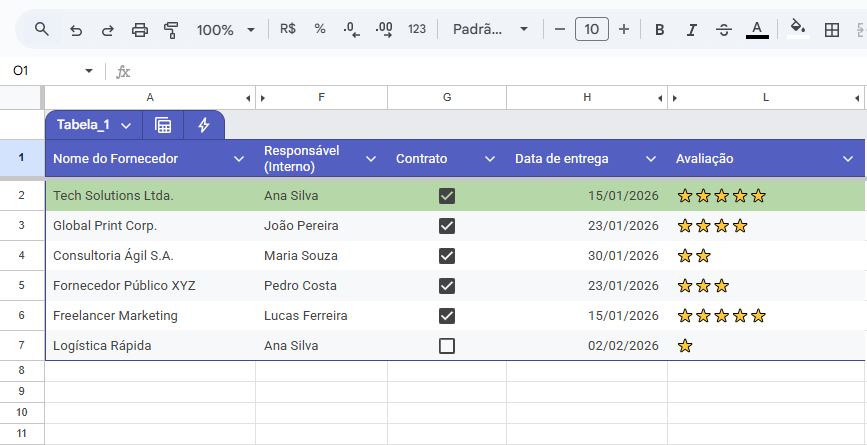
With this kind of tracking in hand, it’ll be easier to stay on top of contracts and avoid failures and unexpected issues.
Besides that, you’ll easily have a list of vendors you can consult and update for every new event you organize. After all, it’s always good to keep good partners close!
Tips for tracking vendors more efficiently
Besides the checklist, a few best practices make a real difference day to day:
- Centralize all information in a single place;
- Avoid conversations scattered across multiple channels with no record. If possible, choose just one official communication channel with vendors;
- Assign clear owners for contact with each vendor;
- Set intermediate deadlines for follow-up, not just the final date;
- Record lessons learned in a document or spreadsheet to make future events easier.
The more vendors involved, the greater the need for organization and control.
Where to find good vendors for events?
Finding good vendors basically comes down to digging through the sources available out there.
So, start by looking at:
- Referrals from other organizers: recommendations from people who have already hired them help reduce risk;
- Google search: ideal for finding local vendors specialized by service type or proximity;
- Professional social networks: Instagram and LinkedIn are great channels to evaluate portfolios, work style, and reputation;
- Trade shows, congresses, and industry events: ideal spaces for networking and direct contact with specialized vendors. Here you can secure good prices and trustworthy partners;
- Associations and professional communities: industry groups and organizations often refer qualified vendors;
- Events platforms: make it easier to discover and compare different vendors.
After finding vendors through these sources, the next challenge is organizing contracts, prices, and payments.
For that, an events platform helps centralize financial information and simplify payment organization for your event.
For example, with Even3 you can transfer ticket sales revenue directly to your bank account, issue invoices, and much more!
See how it works in practice: create your event now on Even3 and manage your event’s finances!