In 2019, a Bizzabo survey revealed that 85% of business leaders consider events essential to their company’s success.
Among the many possible formats, one model stands out when it comes to generating visibility, connections, and business opportunities: the trade fair.
Far beyond traditional street markets, these events can take on different formats — from a cultural exhibition to a large business gathering.
In this article, you’ll learn about:
- What a trade fair is;
- The benefits of trade fairs;
- Types of trade fairs;
- 4 things you can’t skip when organizing a trade fair.
What is a trade fair?
If you’ve ever been to a street market or a business event with booths and exhibitors, you know how impactful this format can be.
A trade fair is, basically, an exhibition event. Products, services, or ideas are presented to the public in a large space, usually divided into booths or themed areas.
The main goal is to connect exhibitors and visitors, creating an environment for exchange, networking, and even closing deals.
These events usually take place in venues like:
- Convention centers;
- Exhibition parks;
- Adapted public spaces.
To make everything more appealing, the program can include talks, workshops, awards, and much more.
For example, Mara Cakes Fair 2024, organized on Even3, brought together over 13,300 people to visit booths, attend classes, and compete for prizes among Brazil’s top pastry chefs.
Why organize a trade fair?
Check out some benefits this format offers exhibitors, organizers, and visitors:
- High visibility for brands and products;
- A dynamic environment for closing deals;
- Easier access to partners and vendors;
- Boosts the local economy and specific market niches.
Main types of trade fairs
Below, check out the main types of trade fairs you can organize — each with its own goals, audiences, and particularities:
Trade/business fair
This is the most traditional type of fair in the corporate world.
Here, companies gather to present industry news, launch products, and make strategic connections.
In fact, many companies and professionals are drawn to business fairs to generate more sales and win new clients.
That’s why this type of event ends up being strategic for the market, and whoever organizes it can stand out as an industry reference.
You’ll commonly find at these events:
- Well-designed booths with product displays;
- Business matchmaking sessions;
- Live presentations and demonstrations.
Auto shows, tech fairs, and book fairs are some examples of this format.
Local fair
Organized by communities or local governments, local fairs bring together small businesses and regional producers to encourage local consumption.
They can take place in neighborhoods, cities, or even entire regions, and highlight:
- Local cuisine;
- Crafts and cultural production;
- Small entrepreneurs;
- The creative economy.
Usually held in open spaces, these fairs typically don’t require registration. However, they should have open, accessible calls for exhibitors.
A good idea is to use an event platform, like Even3, to manage open calls, online registrations, booth purchases, and even lead capture.
Cultural fair
Focused on artistic expression and traditions, this type of fair offers immersive, educational experiences.
The program can include:
- Musical performances;
- Art exhibits;
- Sale of books, records, and crafts.
Beyond promoting local culture, these events generate engagement and stir activity across the city.
Career fair
Finally, another very popular type of fair is the career fair.
Very common at educational institutions, this format focuses on education and career development. The idea is to present different careers and opportunities to students who are making decisions about their future.
That’s why these spaces tend to be full of young talent and generate a lot of networking.
Career fairs are incredible opportunities to recruit future students or offer extracurricular activities, like courses and workshops.
Naturally, there are plenty of education-sector sponsors interested in events like this!
How do you organize a successful trade fair? 4 essential points
1. Research the market
As mentioned, fairs are important for showcasing what’s new in the market.
In this case, it’s essential that your event stays current and grabs attention within its segment.
To do that, you need to do your homework! So look into:
- What are the most current topics in the market;
- What your audience has been looking for, and how to catch their attention;
- What fairs have been happening in the field, how many people attended, who exhibited, etc.;
- Are there innovative technologies or formats you could apply?
This way, the organizing committee can draw inspiration from the information gathered and create a more appealing event.
2. Promote your event
Now, what’s the point of having a really interesting event if you don’t know how to attract the right people?
For a fair, promotion is essential! You’ll depend on it to receive exhibitor applications and to inform the public about everything that will be on display.
Since it’s a large event with many professionals, your fair might naturally become better known.
So you can take advantage of this organic marketing opportunity and enhance it with other marketing strategies, such as:
- Paid ads on social media;
- Instagram posts;
- Email marketing;
- Or printed marketing, like banners and flyers at your exhibitors’ stores.
3. Choose the ideal venue
The chosen venue needs to comfortably accommodate the exhibitors, the audience, and the fair’s entire structure.
So look for venues with:
- Easy access and good infrastructure;
- The ability to divide the space into areas or segments;
- Spaces for food, rest, and socializing.
Pay attention to the booths: they should be well positioned, with good visibility and comfort for exhibitors.
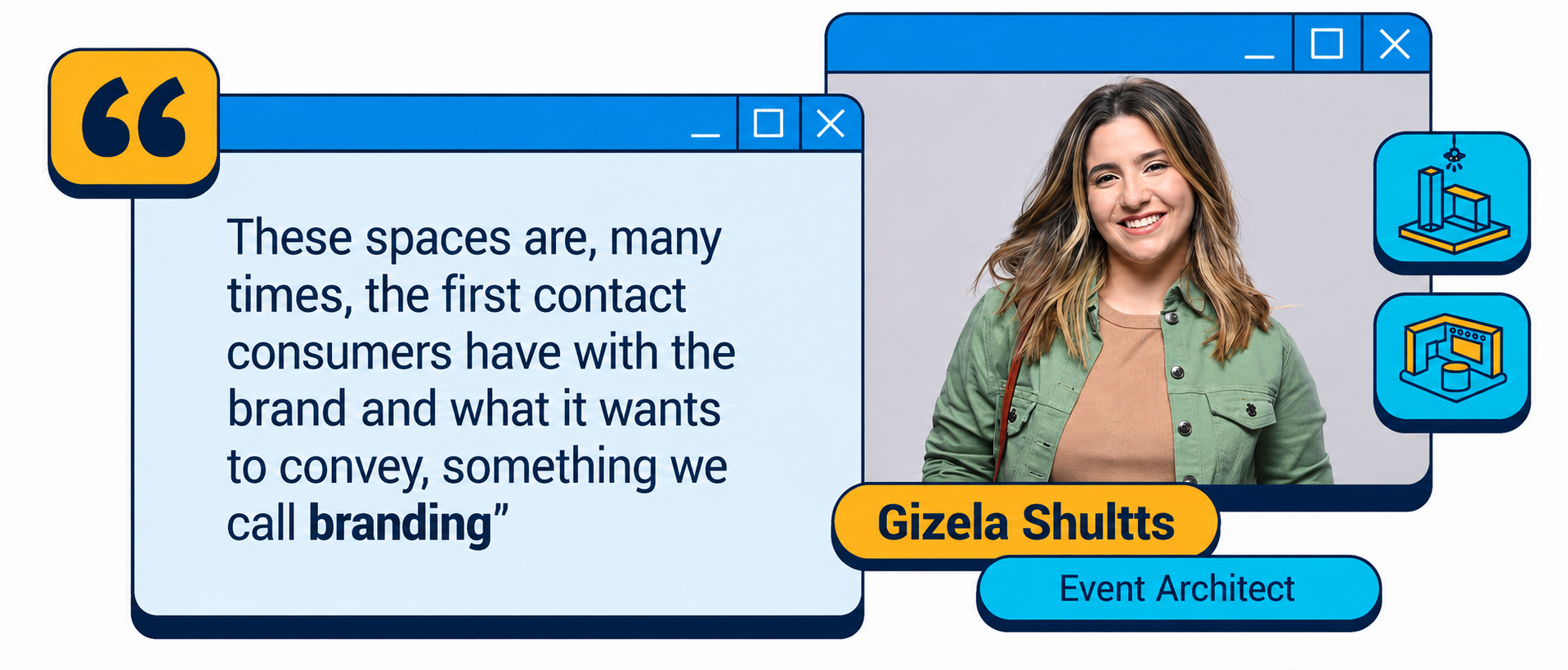
According to event architect Gizela Shultts, there are two essential points for anyone organizing fairs with booths:
- Adaptable spaces: offer standardized sizes (like 2m x 3m), but with the option to expand for sponsors or brands with higher demand. This lets you personalize the experience and add value to the exhibitor’s investment;
- A detailed event floor plan: send out venue images, highlighting power outlets and high-traffic aisles. This makes planning easier for exhibitors and ensures better use of the space.
Also, provide clear guidelines on what the organization will supply and what’s the brands’ responsibility. This avoids confusion and ensures more professional participation in the event.
4. Connect exhibitors with attendees
One of the main goals of anyone attending a fair, whether as an exhibitor or a visitor, is to build meaningful connections.
So go beyond just setting up booths: create real opportunities for interaction between brands and the audience.
You can:
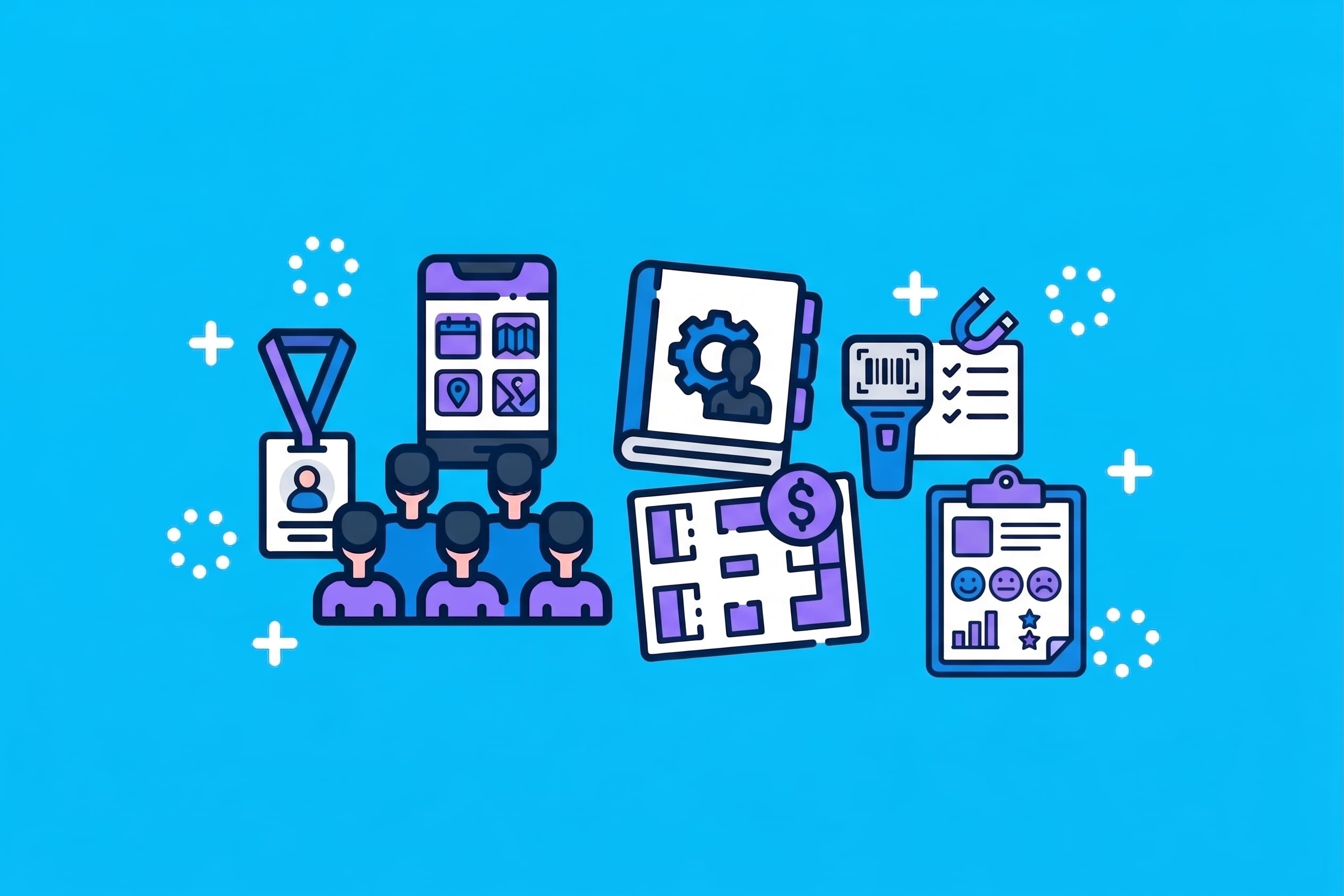
- Offer features in an event app, like an exhibitor map;
- Promote business matchmaking sessions, giveaways, or social media activations;
- Provide interactive spaces at the booths, with live demos, giveaways, or QR codes for digital catalogs;
- Use technology to connect the right attendee with the right exhibitor — such as sending personalized recommendations by email or notification.
This type of interaction brings the visitor closer to the brand, increases time spent at the event, and strengthens the relationship with the target audience.
It also improves the overall fair experience and increases conversion chances for exhibitors. So remember to mention these opportunities in your sponsorship proposal!
Use technology as an ally for your fair
Finally, want to learn about the newest technologies for fairs?
Well, you should know they don’t even need to happen in person! That’s right — with the support of an event platform like Even3, you can:
- Offer virtual booths;
- Create an online exhibition hall;
- Stream talks live or on demand;
- Sell tickets and offer digital check-in;
- Keep your audience engaged with an app, notifications, and exclusive content.
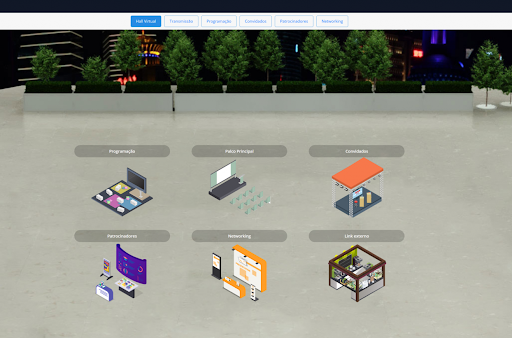
Plus, the Even3 platform offers specialized support for fairs of any size and format.
Take the chance to create an event website for free, manage registrations securely, connect exhibitors with attendees, build an app for your event, and much more.