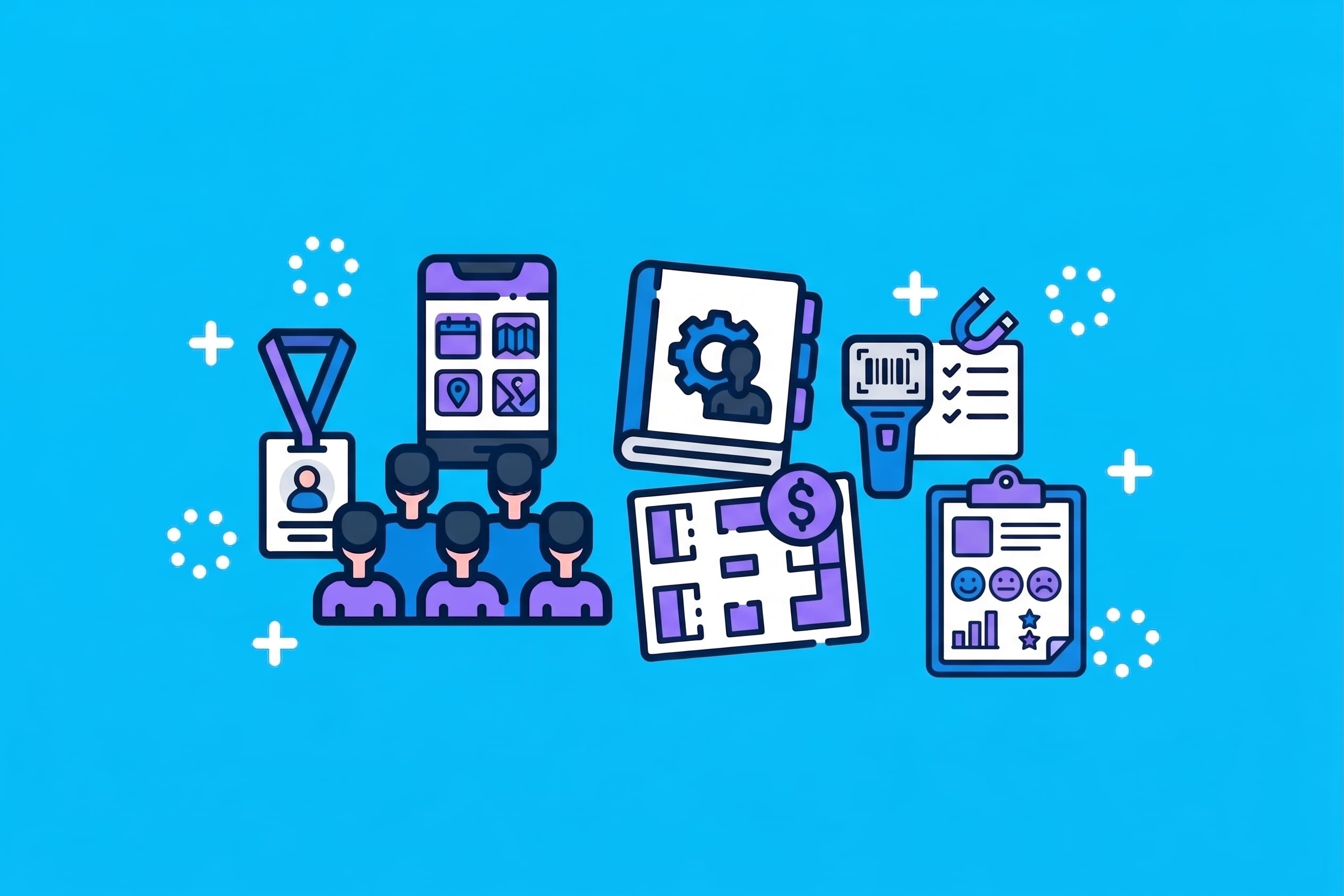
Research shows that most organizers already use technology for events, like artificial intelligence or event platforms. Do you already know what’s out there?
Using market trends will position you as a reference for attendees and other events.
Plus, it often makes your organization easier, faster, and simpler.
But the best part is that many options can be free! Want to learn about them?
Learn more about 8 technologies for events:
- Artificial intelligence
- Chatbots
- Event apps
- Virtual communities
- Streaming software
- Interactivity apps
- Self-check-in kiosks
- Event platform
Technology Trends for Events
1. Artificial Intelligence
To start, artificial intelligence is a highly effective technology for events, helping you speed up your work.
In fact, research shows that 40% of business leaders who use it report increased productivity.
At events, it has several different uses, like helping grade submissions at academic events, recommending events to attendees, and more.
However, writing content is one of the most useful functions of artificial intelligence.
That’s because many organizers struggle with creativity or lack the experience to write compelling copy. But with AI, you just enter a few prompts and your text is ready.
For example, Even3 has a Writing Assistant for activity and event descriptions.
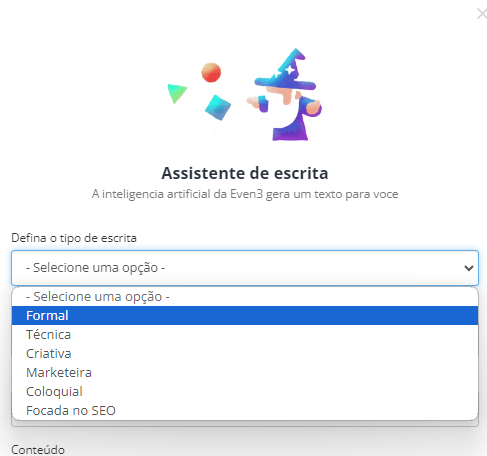
In this case, you just enter the details on the platform, and the right prompt is sent to the technology.
The result is ready-to-use text in seconds, with everything your attendees need: speaker names, activity details, and engaging copy.
2. Chatbots
Still on the topic of artificial intelligence, chatbots have become one of the technologies that can improve the experience at your event and even boost your sales.
Available 24 hours a day, they also make sure your attendees always have support, while reducing the workload on your organizing team.
Chatbots can also collect feedback in real time, helping you identify and resolve issues right away.
To activate them at your event, you can use chatbot software like Hubspot, Zendesk, JivoChat, and others.
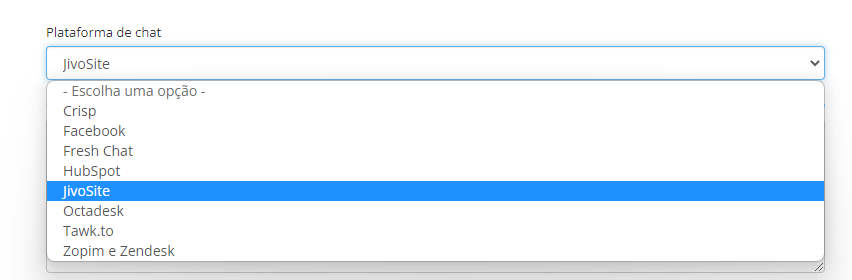
Even3 makes it easy to integrate chatbot software into your event website.
3. Event Apps
Event apps are multifunctional tools that bring all the necessary information together in one place. That’s why they stand out among event technologies.
They make sure attendees have everything within reach: from schedules and maps to speaker profiles and real-time notifications.
Since they’re customizable and easy to use, apps make communication and organization easier. That way, they improve the event experience, making it smoother, more engaging, and even more interactive.
Plus, you don’t need a team of developers to have your own app.
With today’s technology, you can even set one up directly from an event platform. Many offer this service and build the entire app for you.
4. Virtual Communities
Another highlight in event technology is virtual communities.
Although there’s no single tool for building one, it’s pretty easy if you have a strategy. After all, communities grow naturally around good events.
All you really need to do is invest time, create networking spaces, and share interactive, valuable content even after the event ends.
Some ways to do this include:
- WhatsApp: create exclusive groups for attendees and keep them active with content before and after the event;
- Telegram: the same logic applies here. But on this platform you can use public channels and become a reference for people who aren’t attendees yet;
- LinkedIn: become an influential voice on the platform with quality content, and promote events there;
- Instagram: use your social media to share videos, photos, and event content that build connection, interactivity, and knowledge.
In the end, you’ll have a loyal community that promotes your event without you paying a cent for it. Plus, an ongoing space for collaboration and learning.
5. Streaming Software
With the advancement of online event technology, options for online broadcasting have gotten richer than ever.
Today, the trend is to make live streams more interactive, invest in eye-catching visuals, and even broadcast your screen live.
That’s because there are now streaming programs that let you make real-time edits during your broadcasts.
For example, software like OBS Studio is free and offers features like live stream customization, screen sharing, and calls with more than one guest.
You set up the tool and connect it to a streaming service, like YouTube, to show what you’re creating live.
Besides what OBS Studio offers, you can also use simpler paid tools, like Streamyard.
You can also broadcast your event on streaming platforms other than YouTube, like Twitch and Even3.
Each one has a different audience, and the right choice will depend on the goal of your broadcast.
It’s also worth highlighting Even3 Streaming, which protects your content with a link that blocks access by anyone not registered for the event.
6. Interactivity Apps
Among the most sought-after event technologies, interactivity is still in high demand among organizers.
With that in mind, many apps have emerged in recent years and can even be embedded live during streams.
The main focus of these solutions is live quizzes, interactive presentations, Q&A, polls, and live chat.
Some tools that offer these features include Mentimeter, Voxxvote, Sli.do, Hypersay, MeetingPulse, and Even3.
7. Self-Check-in Kiosks
Self-check-in kiosks are a practical and efficient event technology solution for managing attendee entry.
Equipped with self-service technology, these kiosks let attendees check in quickly and independently, without facing long lines.
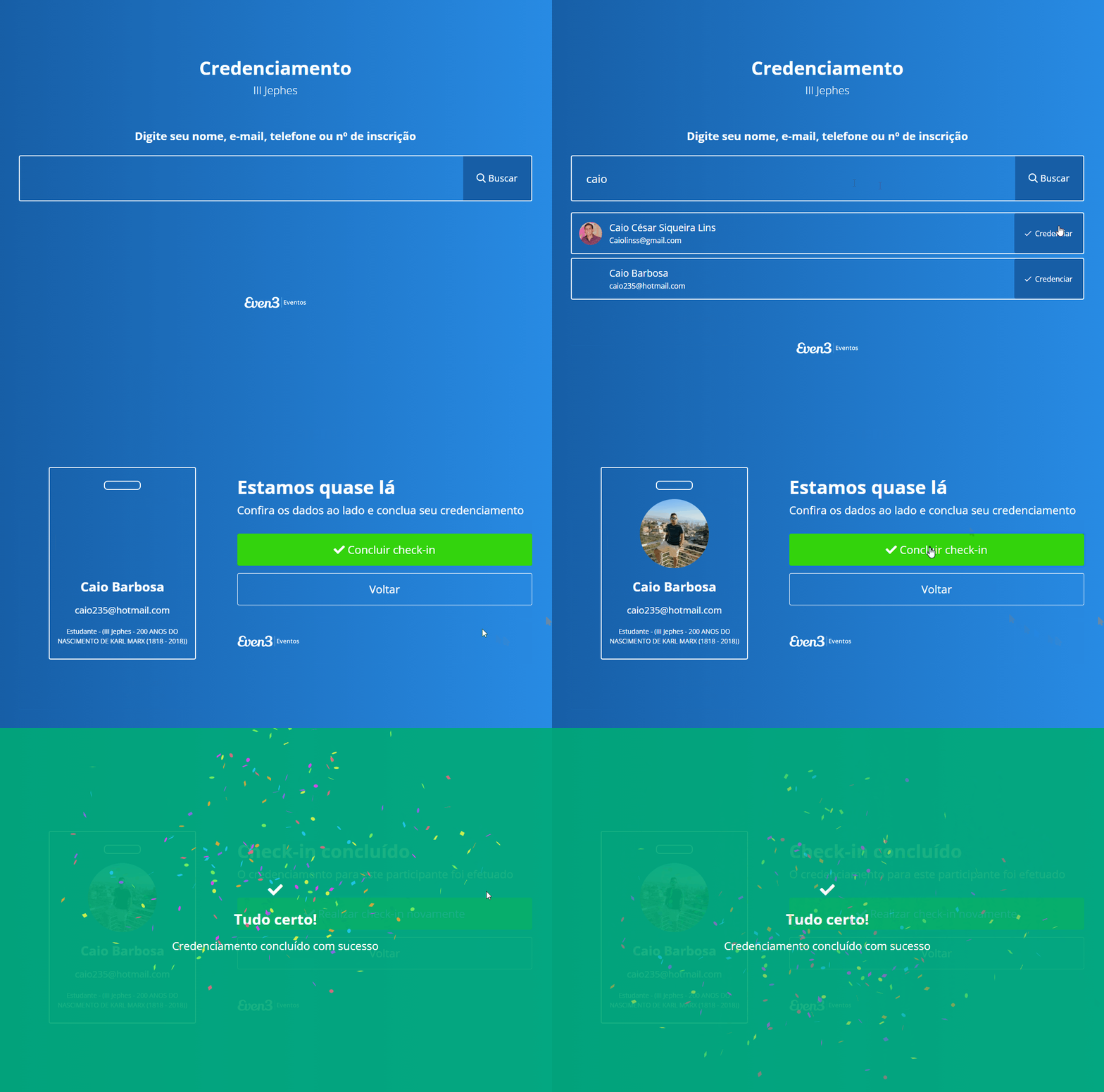
Although they may seem complex, kiosks today are simply set up using tablets or computers logged into self-check-in systems.
These systems are usually offered by event platforms that also include other check-in solutions, like QR codes, apps, and offline check-in.
8. Event Platform
As mentioned, some solutions bring together many of the event technologies already covered here. Those are event platforms.
They centralize all the necessary functions in a single system, from registration and ticket sales to content management and post-event reports.
With features that allow for customization and process automation, they make organizers’ work easier and improve the attendee experience.
They also offer post-event analytics tools that help you measure success and make informed decisions for future editions.
If you’d like to use a platform, there are free, well-known options out there, like Even3.
Even3 is one of the most popular event platforms around. It brings together all these event technologies in one place, while also handling common event organization tasks automatically.
Try it out for yourself.