
A symposium is a very important event in the academic and scientific world, but do you know its significance? What exactly is a symposium, and how do you organize one efficiently? Since it’s often confused with other types of events, it’s important to understand its main characteristics and meaning. Here are valuable tips on how a symposium works and what defines it, covering: what a symposium is, how it differs from other types of events, why you should organize one, and how to organize one.
What Is a Symposium?
Being an academic event, a symposium is often confused with other types of scientific events. Simply put, a symposium can be defined as a gathering of a scientific community around one specific subject. Its goal is to promote a deeper understanding of the topic being discussed — researchers present their findings and/or considerations on a given subject, sparking broad debate with the audience.
The main characteristics of a symposium are:
- A short event
- Focused on presenting a single topic
- Has no moderator figure
- Promotes dialogue between researchers
- Aims to advance research on the event’s central theme
How Does a Symposium Differ From Other Types of Events?
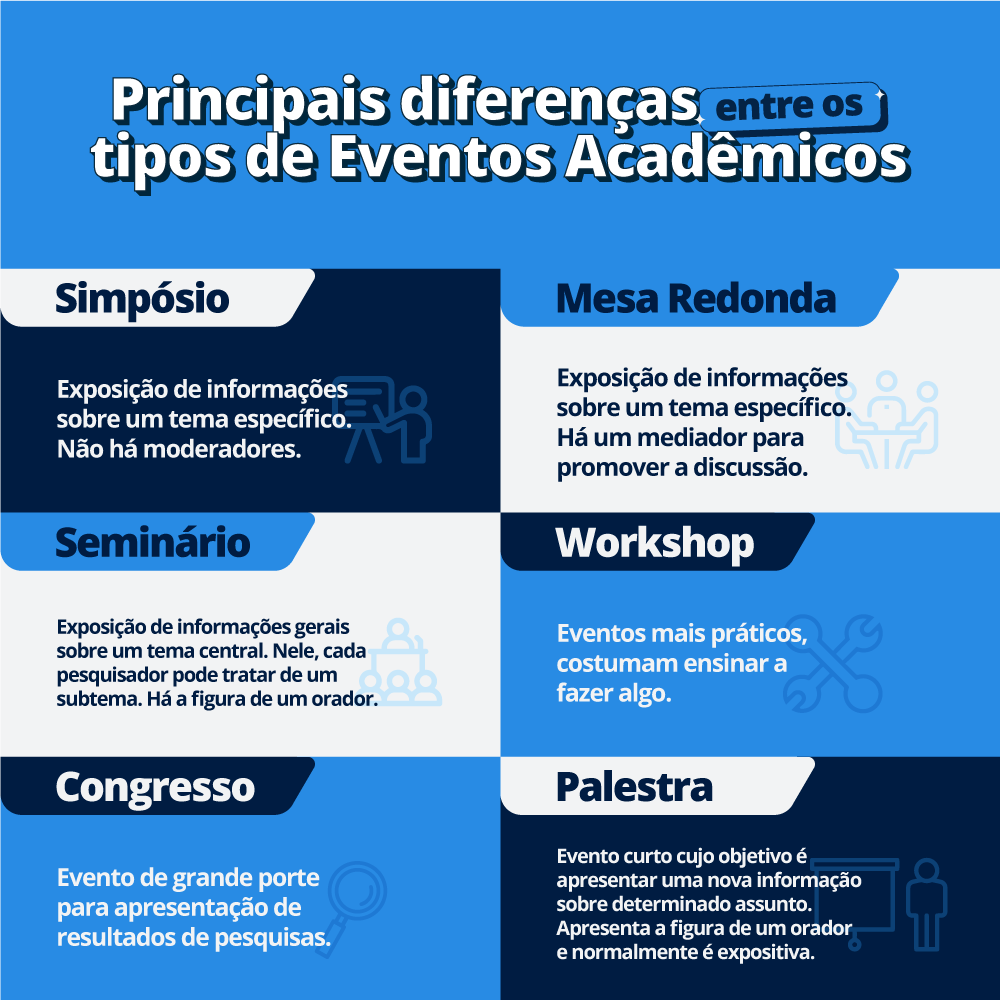
Being an academic event, a symposium can be confused with a congress, seminar, or even a panel discussion — but they differ in a few key ways. For example, while a panel discussion has an active moderator running the presentations, a symposium doesn’t. A symposium also doesn’t feature academic papers the way congresses or scientific journeys do; it may even include a submission process, but the focus stays on open discussion rather than formal paper presentations.
Why Organize a Symposium?
Now that you understand how a symposium works, you might be wondering: why organize one? When planning an academic or scientific event, the first things that come to mind are information and usefulness. A symposium is the ideal event for informing a group of researchers or peers from similar fields — it channels information toward a single topic while still preserving the qualities of a real debate. In short, a symposium is the ideal format for discussing one single theme in depth.
How to Organize an Academic Symposium?
Organizing an event generally follows well-defined steps. Here are 5 important points to consider when organizing this type of event.
1. Know Your Audience
This is the first step for any symposium organizer: understanding which topics matter most to your audience, the best time, format, and venue to get them to attend, and who they’d like to hear from — the speaker profile that resonates most with them. Understanding this information is essential for organizing an effective symposium.
2. Define Your Event’s Theme
You already know that defining a theme is a central part of organizing any event. In symposiums, the central theme sets the tone for the whole event, since invited speakers and submitted papers all need to relate to it. Remember: in a symposium, you should define just one single central theme. That theme will guide the entire discussion and every contribution from the scientific community at your event, so choose it wisely and dedicate real time to this step during your strategic planning.
3. Equipment and Structure
Today, symposiums can be organized in three formats: online, in-person, or hybrid. Each format will influence the equipment and structure your event needs. For an in-person event, book a room, presentation equipment, and check the number of available seats. For online events, consider streaming equipment, internet, and an event streaming platform like Even3. For hybrid symposiums, you need to think about how to create interaction between in-person and online attendees while ensuring a good experience — and good check-in — for both scenarios.
4. Offer Certificates
Symposiums are usually attended by students and researchers who dedicated time to submitting papers and joining the discussions. That’s why it’s common for a symposium to provide certificates, proving the knowledge gained on that topic and recognizing participants’ dedication. Events with certificates tend to stand out, since they enrich a résumé, prove experience, and add authority to your event. Just be careful to always include the following information on certificates: venue and date, participant’s name, event and partner logos, hours of activity, signature, and type of activity.
5. Rely on a Paper Submission Platform
Finally, whether online or in-person, if your symposium involves submitted and presented papers, you’ll need a submission platform. Submission is essential for academic events but tends to be labor-intensive, involving steps like receiving papers, corrections, and feedback. This work no longer has to be entirely manual — spreadsheets, emails, and forms used to be the norm, but that’s a risky and time-consuming method.
Today, you can find technology solutions for submission platforms that offer: well-defined submission timelines; categories and subject areas; clear submission rules with limits and restrictions per participant; cloud file storage, with no risk of losing papers; process tracking for participants, organizers, and reviewers; review rounds; and automatic scheduling of paper presentations. All of these features are available on the Even3 platform.