A scientific journey is a type of event many people confuse with others, since its characteristics are similar to other academic and scientific event formats. Knowing the model of a scientific journey well will help a lot when producing one, guiding every stage of planning, from choosing a theme to defining the venue. Here’s how this type of event can be useful, and the main points for organizing a successful scientific journey.
What Is a Scientific Journey?
A scientific journey is an event focused on the growth of its participants, mostly students, held to bring students closer to the job market and the scientific environment. It can last anywhere from a few hours to several days and typically happens as a gathering of closely-knit groups of researchers — often regional researchers who meet to discuss a previously defined topic. Participants in this kind of event often belong to research groups, and a scientific journey usually happens periodically, keeping everyone informed and up to date on the latest developments in their field of study.
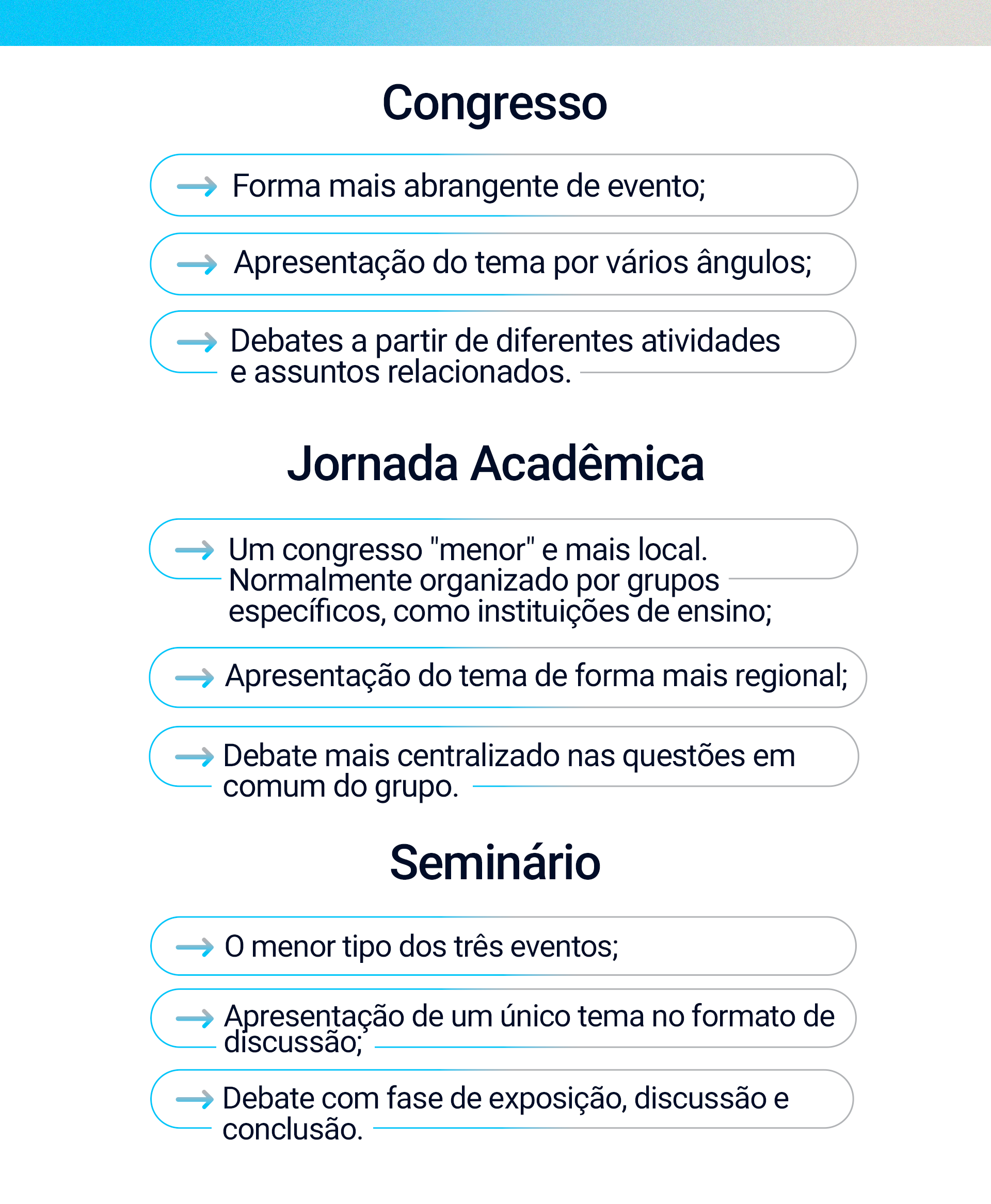
Difference Between a Scientific Journey, a Congress, and a Seminar
An academic journey stands out for the integration between speakers and participants — they keep up a constant debate about the topic, not just through presentations, but it can also include the presentation of academic papers. Many scientific events, on the other hand, are organized by course coordinators and university professors, while a scientific journey is usually produced by professional associations, such as research groups, leagues, and unions.
How to Organize a Scientific Journey?
To organize an event on the scale of a scientific journey, two categories need attention: event planning and programming.
Planning
Planning decisions for a journey apply to the event itself and what it will need to happen, such as:
- Theme
- Target audience
- Date and time
- Venue or online streaming platform
- Speakers
- Organizing committee
These are basically the essential pre-event factors needed to make everything happen according to plan. At this stage, you can rely on event organization tools, such as an event planning spreadsheet created by Even3’s specialists.
Programming
In the programming stage, you should start structuring your event’s activities. This is also the stage where your marketing planning starts to come together, defining how you’ll promote the event and attract the right audience for your scientific journey.