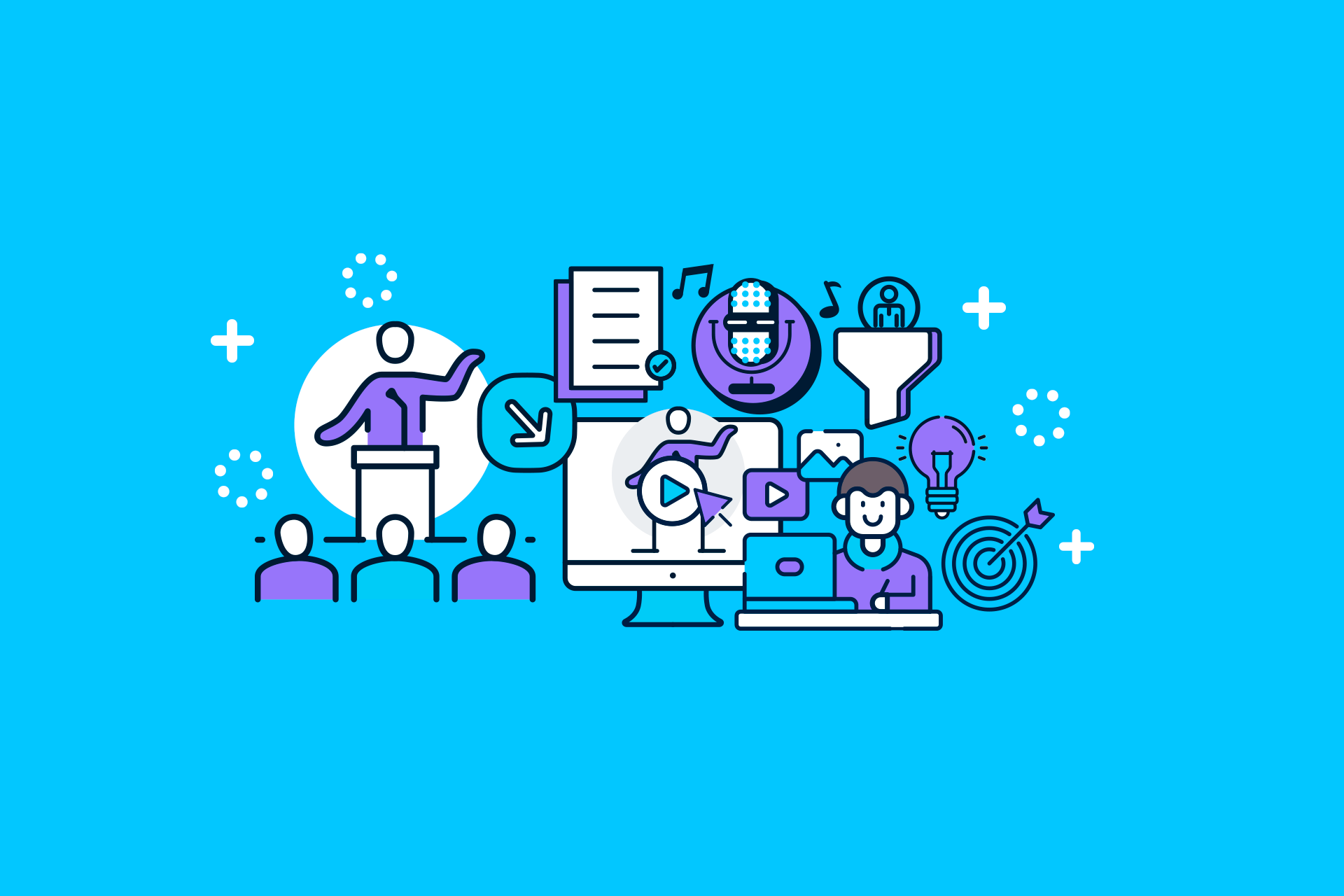
Most organizers want to create an event that lasts forever in their audience’s memory, and I’ll tell you the key to that lies in the event content.
That’s right — the material your event naturally creates is what gives it authority and can even generate new sales.
If you’re not yet reusing your event content, you might be missing an opportunity.
Learn how to boost your engagement, generate leads, and expand your event’s reach with what you already have ready. Learn more about:
- The benefits of reusing event content;
- How to create long-lasting content;
- Tools that can help you;
- How to track results.
Benefits of reusing event content
- Increased brand visibility: the content keeps circulating on blogs, social media, newsletters, and more;
- Reinforcing core messages: people tend to forget new information and appreciate reviews. Recapping content helps retain your audience’s attention;
- Reaching different audiences: some people love podcasts, others prefer blog articles — with different formats, you increase how much of your content gets consumed;
- Continuous lead generation: materials turned into e-books, videos, or posts can capture contacts even after the event ends;
- Saving time and resources: what’s already been produced gets new versions without needing to be created from scratch;
- Strengthening authority: talks, discussions, and insights become educational content and position you as a reference in your field;
- Extended engagement: attendees keep interacting with the event, and even people who didn’t attend can consume the content afterward.
But how do you create long-lasting content? 3 essential steps
Your event’s content is already ready. Now it’s time to unfold it and reuse it.
1. Reuse your event content
First, let’s get to what matters: how to roll up your sleeves and transform the content you already have. Here are some practical tips:
Blog posts
Ideal for organic traffic and lead nurturing.
How to use it: Write summaries of talks, create trend pieces based on speakers’ remarks, or produce educational articles focused on SEO.
Podcasts
Meets the growing demand for fast, mobile-friendly learning.
How to use it: Use the clean audio from sessions or invite speakers for post-event interviews.
Webinars
Generates conversions and keeps content active for longer.
Short, live online events usually give a quality “preview” of the event and can be ideal for attracting an audience before and after it.
How to use it: Offer replays behind a signup, or organize spin-off sessions with speakers to dive deeper into popular topics, common questions, or related content.
Videos
High engagement on social media and email marketing.
How to use it: Cut 30 to 90 second clips with highlight quotes, speaker insights, or behind-the-scenes moments.
If possible, collect testimonials at the event and feature your audience. After all, people love seeing themselves and identifying with the event.
Infographics and social media graphics
Makes information easier to consume and share.
How to use it: Turn data, statistics, or key takeaways into visual pieces customized with the event’s identity. Create content that can be shared or saved for reference.
Templates and practical materials
Excellent for lead generation, ongoing use, and authority building.
How to use it: Convert talk insights into checklists, work guides, or decision flowcharts that can be downloaded via signup on landing pages.
This way, interested people will provide their contact information and become leads.
2. Capture leads
Basically, your content will serve to keep engagement active with your audience and attract new people.
That’s why it’s important for it to be clearly linked to the event, whether through visual identity, linking to social media, or to the website.
This will keep the connection with your audience alive and promote your future editions.
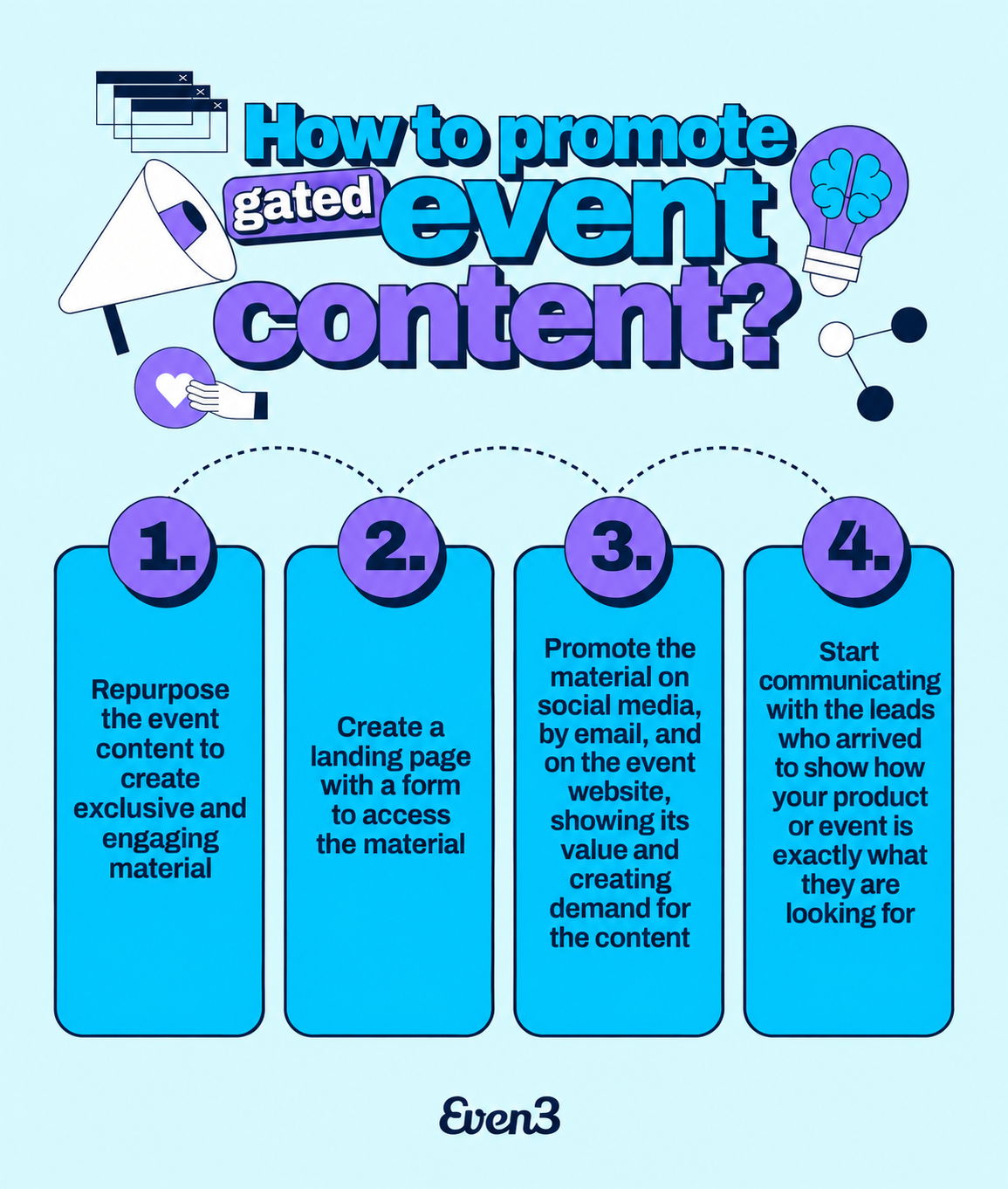
In addition, denser and more attractive content can be unlocked through a signup.
In that case, it’s made available on a separate page, also called a landing page.
There, it’s common to have a form requesting basic contact information to unlock the material or send it by email.
This is really important! Because the people who provided their information are now your leads.
In other words, an audience interested in your content that can be nurtured through communications until they become a loyal customer.
If you use an events platform like Even3, you can also add an interest form on the event website. This gives you another source of lead capture.
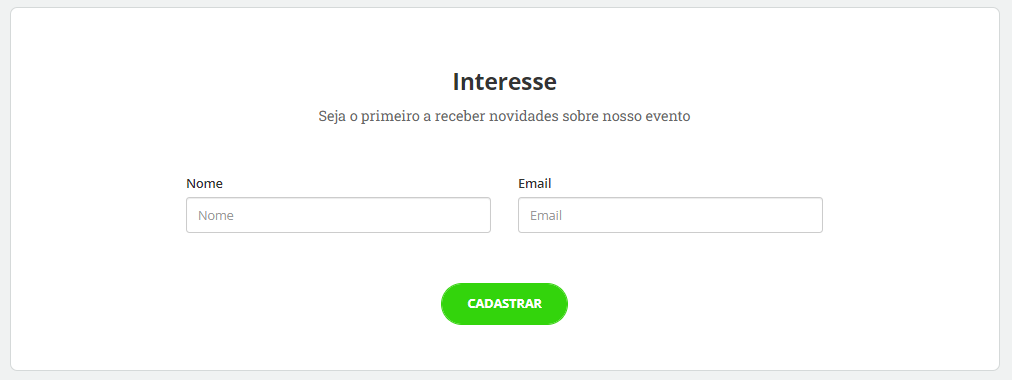
Interest Area for lead capture on the Even3 event website
3. Create a content calendar
Finally, it’s also essential to define where you’ll publish this content. But you don’t need to post everything at once!
A good idea is to divide your content into broader themes and try to create pieces that approach the same topic from different angles.
This way, your audience will encounter the same theme in different formats, which makes it easier to retain and increases your authority in the field.
Also, choose the social media channels where you’ll share this content. But remember to prioritize the ones your audience uses most.
To help with organization, you can use a free content calendar to plan your posts in advance.
Tools to reuse content faster and more easily
To speed up the process of reusing your event content, rely on tools that make extraction, editing, and publishing easier, such as:
- Canva or Figma: turn speeches, photos, and data into graphics and posts;
- CapCut, Descript, or Veed.io: edit and trim videos quickly;
- Notion or Google Docs: organize ideas, outlines, and scripts;
- ChatGPT: turn speeches, audio, or summaries into articles, captions, and scripts;
- Otter.ai or Google Recorder: automatically transcribe talks;
- Mailchimp, RD Station, or HubSpot: nurture leads with post-event content;
- Even3, RD Station, HubSpot, Wix, Unbounce: build landing pages with forms to capture leads.
How to track results?
Finally, you’ve reused your event content. Now, how do you know if it was worth it? Look at the metrics!
- Organic traffic: Is the reused content increasing visits to your site?
- Keyword ranking: Are your posts showing up in searches for strategic terms related to your event or field?
- Engagement: It’s worth tracking video views, downloads, and time spent on pages;
- Lead generation: Measure conversions generated by content that requires signup, such as e-books or webinars;
- Performance analysis on the event platform: if you use an events platform, look for options that share relevant data.
For example, on Even3 you can rely on an Analytics dashboard to observe audience data, plus sales information.
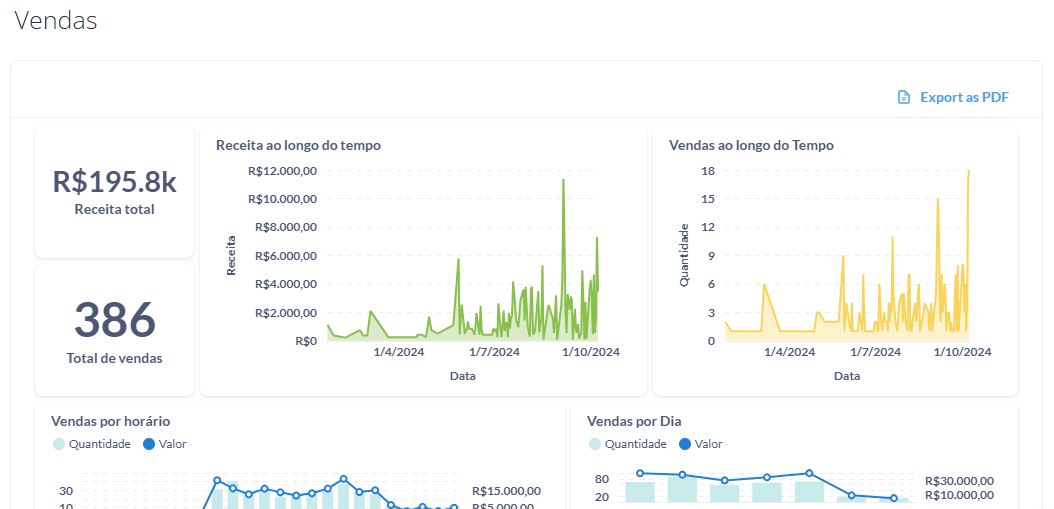
Even3 Analytics sales dashboard
This way, you can compare sales peaks with the campaigns you ran through your social media content.
In addition, if you run recurring events, you can analyze the overall gains all your events have brought you.
This alternative centralizes the most important information from your events in one place and helps you use it more strategically.