
Measuring results is one of the most important steps for any event organizer. After all, how do you know if your event was really a success without data to prove it? That’s where event metrics come in.
In this article, you’ll understand what metrics are, why they matter, and which ones you should track to measure the success of your event.
What are metrics?
Metrics are quantifiable indicators used to measure the performance of an action, project, or, in this case, an event. They translate results into numbers, allowing organizers to evaluate what worked, what didn’t, and where there’s room for improvement.
Without metrics, it’s nearly impossible to know whether your event met its goals or to make data-driven decisions for future editions.
How to track your event’s metrics?
Before choosing which metrics to track, it’s important to define some criteria for selecting them:
- They must be aligned with your event’s goals;
- They must be measurable and easy to track;
- They must generate useful insights for decision-making.
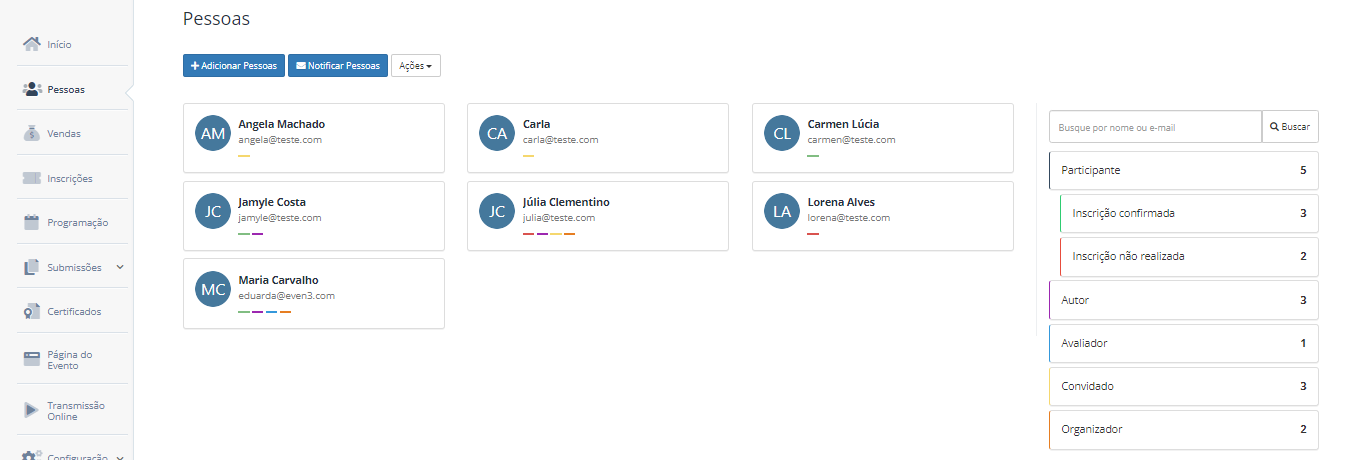
People menu on the Even3 platform
On Even3’s platform, for example, you can access the “People” menu to view detailed information about registrations, attendees, and other groups involved in your event.
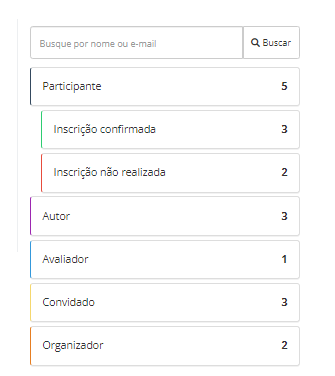
Categories of people involved in the event
Some of the most common metrics tracked by organizers include: number of registrations, attendance rate, revenue generated, satisfaction level, and social media engagement.
Why measure event metrics?
Measuring your event’s metrics allows you to understand what generated the best results, identify opportunities for improvement, justify investments to sponsors and stakeholders, and plan future editions more strategically.
Metrics turn subjective impressions (“I think the event went well”) into objective data that support real decisions.
8 metrics to measure your event’s success
1. Number of attendees
This is one of the simplest and most direct metrics: how many people actually attended your event, whether in person or online. Comparing this number to the number of registrations also helps you calculate your attendance rate.
2. Registration conversion rate
This metric shows the percentage of people who visited your registration page and actually completed their registration. A low conversion rate may indicate issues with your registration page, pricing, or the way the event is being promoted.
3. Abandoned registrations
Tracking how many people started the registration process but didn’t finish it helps you identify friction points, such as a registration form that’s too long or payment issues.
Social media metrics: beware of vanity metrics
It’s important to be careful with so-called “vanity metrics” — numbers that look impressive but don’t necessarily reflect real results, such as number of likes or followers. Focus instead on metrics that connect directly to your event’s goals.
4. Return on investment (ROI)
ROI shows whether the money invested in the event generated a proportional (or greater) return, whether in revenue, leads, or brand visibility. To calculate it, compare the total revenue generated against the total amount invested.
5. Email open and click rates
These metrics show how engaged your audience is with your email communications, indicating whether your subject lines, content, and calls to action are effective.
6. Engagement
Engagement can be measured through interactions during the event, such as questions asked, participation in polls and Q&A sessions, use of networking features, and interactions on the event’s app or platform.
7. Partnerships and sponsorships
Evaluate the results generated for your sponsors and partners, such as brand visibility, number of leads generated, and interactions with sponsored content. This data is essential for maintaining and attracting future partnerships.
8. Satisfaction survey
Sending a satisfaction survey after the event is one of the best ways to understand your attendees’ perception of the experience. It allows you to identify areas for improvement, gather feedback, and build a healthy relationship with your audience.
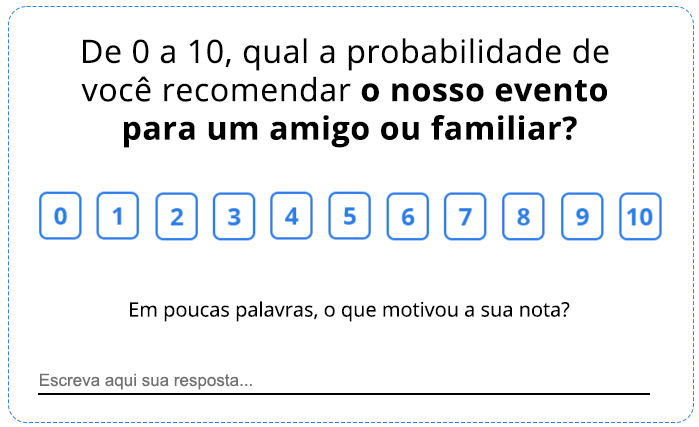
Example of an NPS satisfaction survey
Want to know where to start measuring all of this? Even3’s specialists have created a satisfaction survey template to help you. Check it out and start measuring your event’s success today!