Did you know there might be a large audience for your event that’s simply dormant?
Beyond the people who registered for your event, think about those who only visited your site, showed interest, or downloaded materials from landing pages. People whose name and email you already have, but who aren’t officially your participants yet.
What if I told you there’s a strategy to turn them into registrants? That’s exactly what lead nurturing is!
In this practical guide, we’ll show you how lead nurturing turns people interested in your event’s theme into participants. Learn more about:
- What is lead nurturing?
- How to nurture leads for events?
- Examples of lead nurturing content for events
- How to build an automated lead nurturing flow?
- Lead nurturing best practices for events
What is lead nurturing?
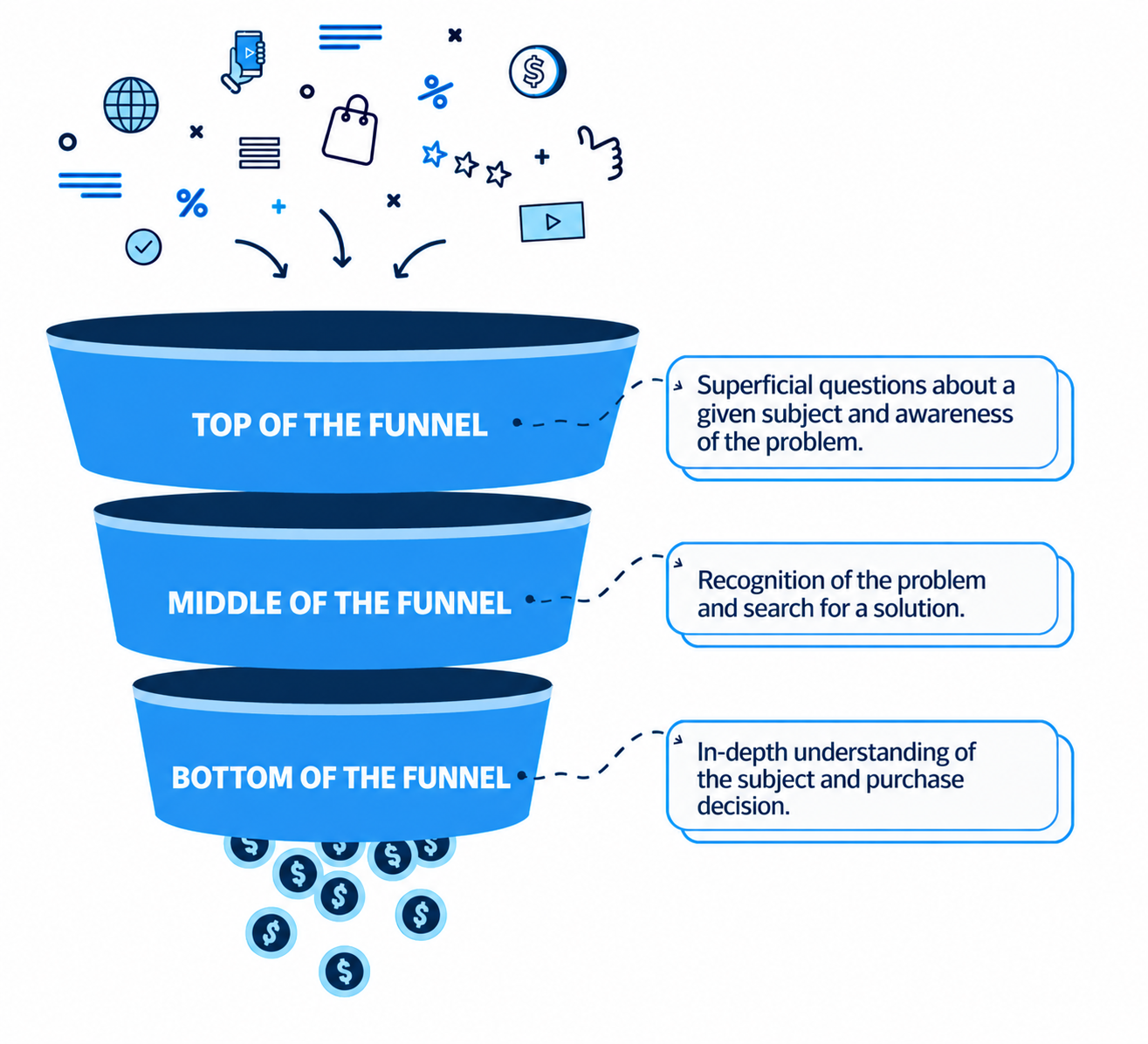
Lead nurturing is the process of building relationships with potential customers at every stage of the sales funnel. Remember it?
In practice, it means sending the right message to the right person at the right time, with the goal of moving them closer to conversion.
Quick recap: in the context of events, a “lead” is anyone who has shown interest — filled out a form, clicked an ad, signed up for updates, or visited the event page.
Nurturing is the strategy that keeps that interest from cooling off.
This is usually done through email, WhatsApp, SMS, push notifications, and social media — sometimes combining all of them automatically. Here’s how!
Why does this matter for events?
To start, the data on lead nurturing already shows how important this strategy is.
A study by Forrester found that nurtured leads generate 20% more purchase opportunities than leads that aren’t nurtured.
Also, after getting to know your event and treating it as a reference, a lead is much more likely to become a repeat participant.
Overall, the benefits are:
- Speeds up the registration decision;
- More sign-ups with the same ad spend;
- Lower no-show and drop-off rate after registering;
- More engaged participants who are better prepared for the content;
- A lasting relationship that makes it easier to attract people to future events.
How to nurture leads for events?
Now that you understand the concept, let’s see how it works in practice!
Generally, lead nurturing for events starts before registration even opens and continues after the event, following a few steps:
1. Understand what stage of the funnel the lead is in
Not every lead is ready to register.
Remember the sales funnel? Split your contacts into stages:
- Top of funnel: still discovering the topic
- Middle of funnel: already showing interest and exploring options
- Bottom of funnel: ready to register
The stage a lead is in determines what kind of content they should receive, for example:
- Top → Educational content about the event’s central theme, without mentioning the event directly, like “5 education technology trends changing classrooms in 2026”
- Middle → A free preview with an event speaker to build anticipation and warm up the lead before registration
- Bottom → Alerts about a pricing tier closing, limited spots, or the registration deadline
2. Create strategic content
As you can see, content is the foundation of nurturing.
There’s no limit to what you can create! But if you need some inspiration, here are a few good ideas for events:
- behind-the-scenes of the organization
- speaker introductions
- topics that will be covered
- related educational content
- social proof (testimonials, attendance numbers from previous editions)
Generally, content works best when it’s relevant and personalized to increase conversion chances.
So, whenever possible, segment by funnel stage, profile (field, experience level, ticket type), and behavior (who opened the previous email, who clicked a specific link).
3. Use multiple touchpoints
Although we talk a lot about email, it isn’t the only way to reach a lead.
You can combine email marketing, social media, notifications, and communities to deliver the same message to leads across several different channels. This reinforcement will help you reach your goals!
4. Work with conversion triggers
Include elements that encourage action:
- scarcity → “last spots available”
- urgency → “pricing tier changes today”
- social proof → “+500 confirmed registrants”
5. Build a journey to the event
Finally, nurturing doesn’t end at registration. After reaching that goal, keep communicating with people who already signed up:
- send reminders
- share the schedule
- prepare the participant for the event
This boosts engagement and reduces no-shows.
Examples of lead nurturing content
As mentioned, lead nurturing doesn’t happen on a single channel.
But you don’t need to be present everywhere either! The ideal approach is to choose 2 or 3 main channels and build an integrated, consistent journey.
In other words, keep constant contact with leads through messages that connect and build on each other. Here are some examples:
Email marketing
Email is the most comprehensive nurturing channel. After all, it lets you go deeper with your message, segment your audience, and guide the lead toward conversion with more control.
Unlike other channels, you get more of the lead’s attention here. That’s why it’s ideal for more explanatory, direct, and persuasive content.
For example:
- “See how this event can help your career in [lead’s field]”
- “Meet the confirmed experts in [lead’s area of interest]”
- “5 [lead’s field] trends to know about at Event X”
- “Last days to secure your spot”
Social media
Social media works as an entry point and a constant reinforcement of your message.
That’s why it’s ideal for generating interest, keeping the event present in your audience’s daily life, and attracting new leads.
Here, consumption is fast. So content needs to be direct, visual, and easy to understand.
For example:
- A carousel with “3 trends in the event’s theme”
- A short video of a speaker answering a question about the field
- Quick testimonials from participants
Communities (WhatsApp, groups, forums)
In communities, closeness with the audience is greater. That’s why communication is more direct, fast, and interactive.
This is the best space to answer questions, build a sense of belonging, and increase engagement, especially with warmer leads or people already registered.
For example:
- An engagement question: “What’s your biggest question about this topic?”
- Sharing extra, exclusive material
- Hosting an introduction round with people who will attend the event
- Running polls to decide preferred activities or attractions
Rich content (supplementary materials)
These types of content deepen the relationship and increase the perceived value of the event.
They are especially useful for educating the lead before the decision and positioning the event as a relevant source of knowledge.
Most common content types:
- An e-book on the event’s theme
- A preparation checklist
- A free class with an expert
How to build an automated lead nurturing flow?
Now, did you know you can automate lead nurturing?
For example, if you create a landing page with a rich material, you can automatically send emails to leads who download it.
This is done through an automated lead nurturing flow. Here’s how to build one:
1. Choose a tool
To build an automated flow, you’ll need a platform that offers:
- segmented lists
- scheduled automatic sends
- action-based triggers (e.g., registration, click, absence)
This is usually done with marketing automation and CRM tools, such as HubSpot, MailChimp, RD Station, and others.
2. Define the entry triggers
On the platform, choose what activates the email flow automatically. It could be filling out a form, clicking an ad, revisiting the event page, or a confirmed registration. Each trigger can start a different sequence.
3. Map the journey and the content
Remember the sales funnel? Now’s the time to use it! Here, you’ll list what the lead needs to know at each stage of your funnel. Then, segment leads by funnel stage and send the matching content. Plan for at least 3 touchpoint emails.
4. Set the sending intervals
Avoid overwhelming the lead. For events more than 30 days out, weekly sends work well. During event week, increase frequency to make sure no one forgets.
5. Use behavior-based segmentation
For example, someone who opened the last email but didn’t click can receive a different version of the message. Someone who didn’t open it can get a reminder with a different subject line. Automation makes this simple.
6. Integrate with your event platform
Automation works best when it’s connected to your registration system. That way, once someone registers, they leave the conversion flow and enter the engagement flow — all automatically, with no duplicate messages.
7. Monitor and adjust
Track open rates, clicks, and conversions at each stage. Also test subject lines, send times, and content formats.
Nurturing flows improve with every iteration, so use the data to understand your audience’s behavior and what works best for them.
Lead nurturing best practices for events
Finally, it’s time to build your lead nurturing flow. So remember:
- Personalize beyond the first name. Use the lead’s history. For example, if they’ve attended one of your events before, mention it. If they clicked on the business track, talk about the panels in that area;
- Create real urgency, not artificial urgency. Pricing tiers, limited workshop seats, and paper submission deadlines are legitimate triggers. But use them transparently.
- Don’t sell all the time. Mix value emails (content, behind-the-scenes, speaker interviews) with conversion emails. The 80/20 rule works: 80% value, 20% selling.
- Use WhatsApp responsibly. WhatsApp messages have very high open rates, but the channel is personal. Use it for communities, critical reminders, and high-value content — not spam.
- Close the loop after the event. Leads who attended the event are the easiest to convert into participants of the next one. So don’t abandon them once it’s over.
- Use a platform that centralizes everything. When registration, communication, and analytics data live in one place, nurturing becomes much more efficient and errors are rarer.
This is where a platform like Even3 makes all the difference!
With it, you can manage registrations, segment participants, and even integrate with other tools, like HubSpot, to share information automatically.
That way, lead nurturing becomes simpler, faster, and more effective for your events. Want to try it out? Create a free event on Even3.