
Have you ever stopped to think about how to make organizing a gospel event simpler?
After all, when creating one, you’ll face challenges like collecting registrations and payments, controlling attendee check-in…
Doing all of this manually can be difficult. But today there are free tools to help you. Check out these practical tips:
- What is a gospel event
- Themes for a gospel event
- How to organize a gospel event
What is a gospel event
You probably already know what a gospel event is. It’s a gathering meant to celebrate the Christian faith, and to share moments of communion and worship.
But this type of event usually requires attention to a few key points, for example:
- Christian events have a theme, and their format can vary;
- It’s almost always necessary to collect registrations with name and phone number for contact;
- These are high-demand events, and you need to manage that;
- It’s very important to provide a good experience for all attendees;
- The event should promote comfort and welcome.
These events are usually spiritual retreats, gospel concerts, talks, worship services, and more.
Themes for a gospel event
In a gospel event, your theme sums up the subject of the event and attracts people to the proposal.
It’s usually direct, impactful, and aligned with the event’s audience.
For example, if you’re organizing a conference for women, the event’s theme should speak to that audience’s reality.
Get inspired by one of the most popular gospel events on Even3:
The success numbers of Imersão – Aprovadas por Deus

With an impactful theme, the Imersão Aprovadas por Deus event brought together nearly 11,000 women.
All registrations were handled by Even3 across different categories, with free and paid options.
Even though it was an in-person event with a specific audience, it was a huge success in number of attendees!
That’s because online ticket sales made it easier for more people to register.
Plus, with Even3’s multiple payment methods, it was possible to offer more options to registrants!
How to organize a gospel event
1. Know your audience
Before anything else, it’s essential to understand who your event’s audience will be.
After all, they determine how the event should be promoted, what attractions the audience expects, and what the theme will be…
For example, an event for young people will have a completely different dynamic from an event for women.
So it’s important to build a detailed profile of your attendees, such as gender, age, preferences, habits…
This will let you offer an unforgettable experience tailored to their needs.
To learn how to please your attendees, try running audience surveys at your church, with attendees from previous editions, or looking at the competition…
2. Define the theme, date, and location of the event
After understanding your audience’s profile, you’ll be better prepared to define crucial aspects such as theme, location, and date.
Choose a relevant and transformative theme. It will also influence the event’s name, colors, and goals.
Then, choose the location carefully. After all, gospel events need spaces that support all activities, such as worship, preaching, group activities…
At this stage, you can also consider how Even3 can help you through the Notify People feature.
This feature allows you to send personalized emails to different groups of people involved in the event.
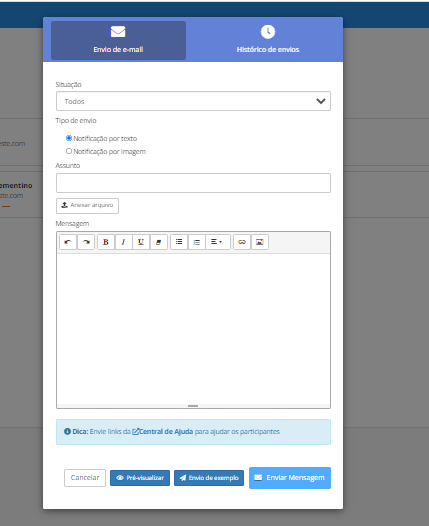
This way, you can send communications to registrants about the event location, notify people who visited your site about registration deadlines, and much more.
3. Plan your finances carefully
One of the biggest challenges of a gospel event is managing the different sources of income.
After all, how do you tell registrations apart from offerings? And how do you track who has already paid in full, who split the cost, and who is attending with financial assistance?
A good practical tip is to use a spreadsheet to organize the event’s costs. Track expenses for structure, attractions, promotion…
This way, you can anticipate the need for sponsorships and set ticket sales goals.
Also, prefer selling tickets online and track sales in real time.
As mentioned, offering multiple payment methods will be a differentiator.
You’ll also benefit from controlling attendees at the event and tracking finances.
A platform like Even3 makes this process easier.
After all, it offers all the tools needed for secure ticket sales and transfers the funds to your bank account with the lowest fees on the market.
It also lets you create affiliate links.
For a gospel event, this is a great tool to reward partners or influencers who help promote the event.
In practice, you can track the sales generated by each affiliate and reward the ones who contribute the most. This boosts your event’s promotion without increasing marketing costs.
4. Choose the right attractions
Depending on the size of your event, the attractions could be well-known figures, such as religious leaders, musicians, or speakers.
That fame can help attract attendees, but it isn’t the main thing!
Remember to choose people who connect well with your audience. Also, take the event’s budget into account.
After the event, it’s essential to evaluate the performance of the attractions and the event as a whole.
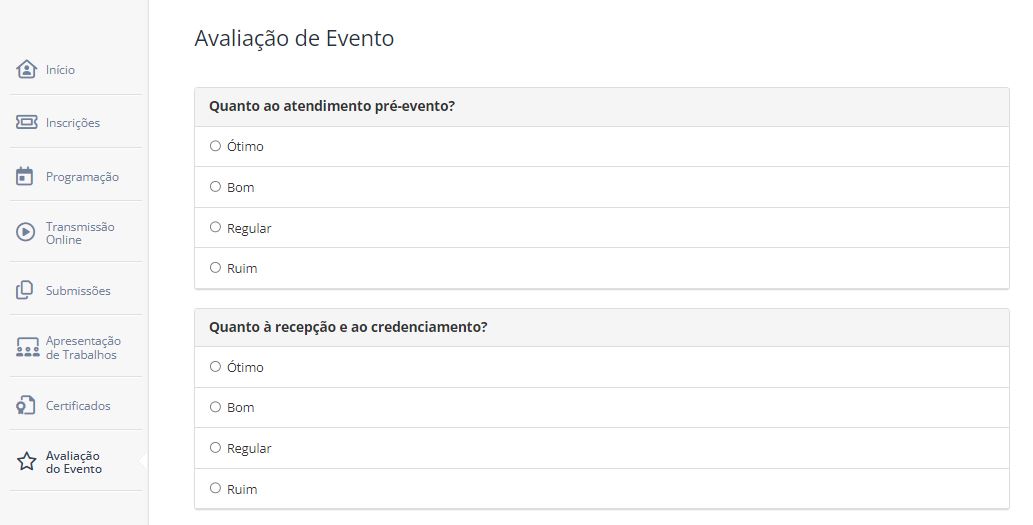
Even3’s evaluations feature lets you collect feedback from attendees, helping you improve future editions.
The questionnaires are sent automatically, and the results can be viewed directly on the platform.
5. Pricing your tickets
With the event structured, it’s time to set the price of tickets.
To do this, take into account:
- Audience profile;
- Balance of expenses;
- Prices of similar events
- The event’s financial goal (profit or covering costs)
Then, divide the event’s total cost by the average number of expected attendees.
Remember to make a realistic audience estimate, taking into account that at least 20% of tickets may go unsold.
In many gospel events, the audience is limited. For example, events specific to a church or a Christian group.
In these cases, you can use Even3’s Private Event feature.
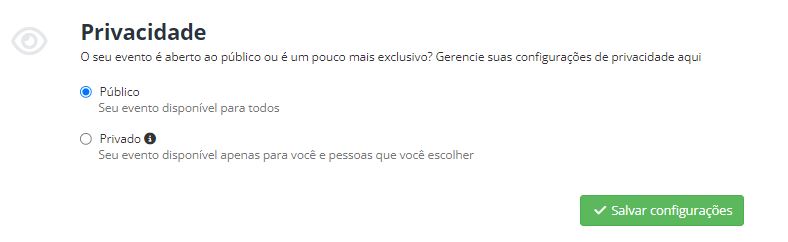
With it, you can ensure that only invited people or those with the access link can register.
This way, you keep control over your ticket sales and protect the exclusive nature of the event.
6. Promote the event
With everything ready, the next step is attracting attendees.
A good strategy is to create a dedicated website for the event, including key information and making it easier to sell tickets.
Don’t forget to use digital marketing, including emails and promotion on social media, like Instagram, as well as ads on Google.
However, the biggest focus of a gospel event is the possibility of building communities!
Since this type of event tends to bring people together and promote fellowship, it’s natural for communities to form spontaneously.
Within them, a bond grows that gives meaning to your event and should be nurtured!
Use these communities to engage attendees for future editions, promote more fellowship, and become a reference for gospel events.
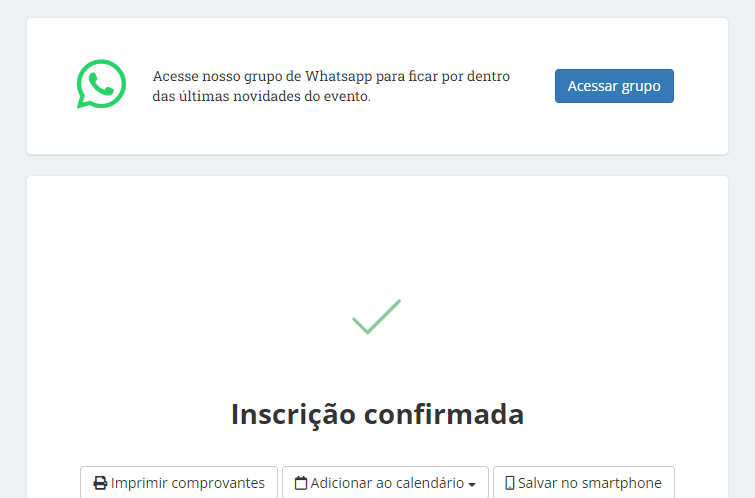
In this case, create WhatsApp and Telegram groups for your events. Then, use Even3 to promote these groups at the ideal moments for attendees, such as during registration confirmation.
7. Avoid lines on the day of the event
On the day of the event, you’ll probably want to track how many people are present.
It’s also important to ensure security, making sure only registered attendees enter the venue.
That’s why it’s essential to have a check-in system.
These systems typically generate QR codes for attendees’ tickets, which are quickly scanned at the venue.
This avoids lines and ensures that only checked-in people access the space.
In addition, some more advanced tools offer solutions like offline check-in and a check-in app.
That’s exactly what happens with Even3. The platform brings together the main tools needed to manage a gospel event in one place.
Finally, you’ll be able to create a gospel event with ease. Use the same tool to manage registrations, sell tickets, check in attendees, and much more.