You’ve captured your leads, but now how do you start the conversation?
Research shows that the first moment is decisive for reaching your goals.
But you shouldn’t just start any old way! The right approach depends, as always, on your audience’s profile and on some valuable strategies I’ll teach you in this article.
So if you want more conversions, start here.
Quick recap: what is a lead?
Before talking about outreach, it’s worth reviewing some lead-generation concepts.
First, what does “lead” mean? A lead is anyone who has shown interest in what you offer and left some contact information, like a name, email, or phone number.
In the context of events, a lead is usually someone who visited your landing page (LP), downloaded a piece of content, or signed up to receive updates about the program.
It can also be a contact you captured at an event, as happens with exhibitors at trade fairs.
Afterward, these contacts can be nurtured with the help of lead-capture tools.
From there, you can manage the lead’s path through the sales funnel — and it’s precisely the first contact that will guide them!
When should you contact a lead?
Remember: timing makes all the difference when it comes to leads.
When a lead shows interest, the faster you make that first contact, the better.
Sales studies show that conversion chances are much higher when the first contact happens within 5 minutes of the lead’s conversion.
This happens because the lead is still:
- remembering the action they took;
- emotionally connected to the topic;
- more receptive to a conversation.
The ideal timing for contact
In general, the first contact should ideally happen:
- right after capture;
- within the first few hours after sign-up;
- or, at most, within 24 hours.
If someone downloaded a piece of content, joined a community, or showed interest in the event, waiting several days can significantly reduce engagement.
How to monitor whether your timing is working
To know whether your contact timing is on point, track metrics such as:
- Email open rate: emails opened within the first few hours indicate good timing.
- Direct message response rate: quick replies usually indicate a warmed-up lead.
- Conversion rate by time window: compare conversions for leads contacted in under 1 hour, between 1 and 24 hours, and after 24 hours to find the ideal window for your audience.
CRM and marketing automation tools are essential allies for this kind of analysis.
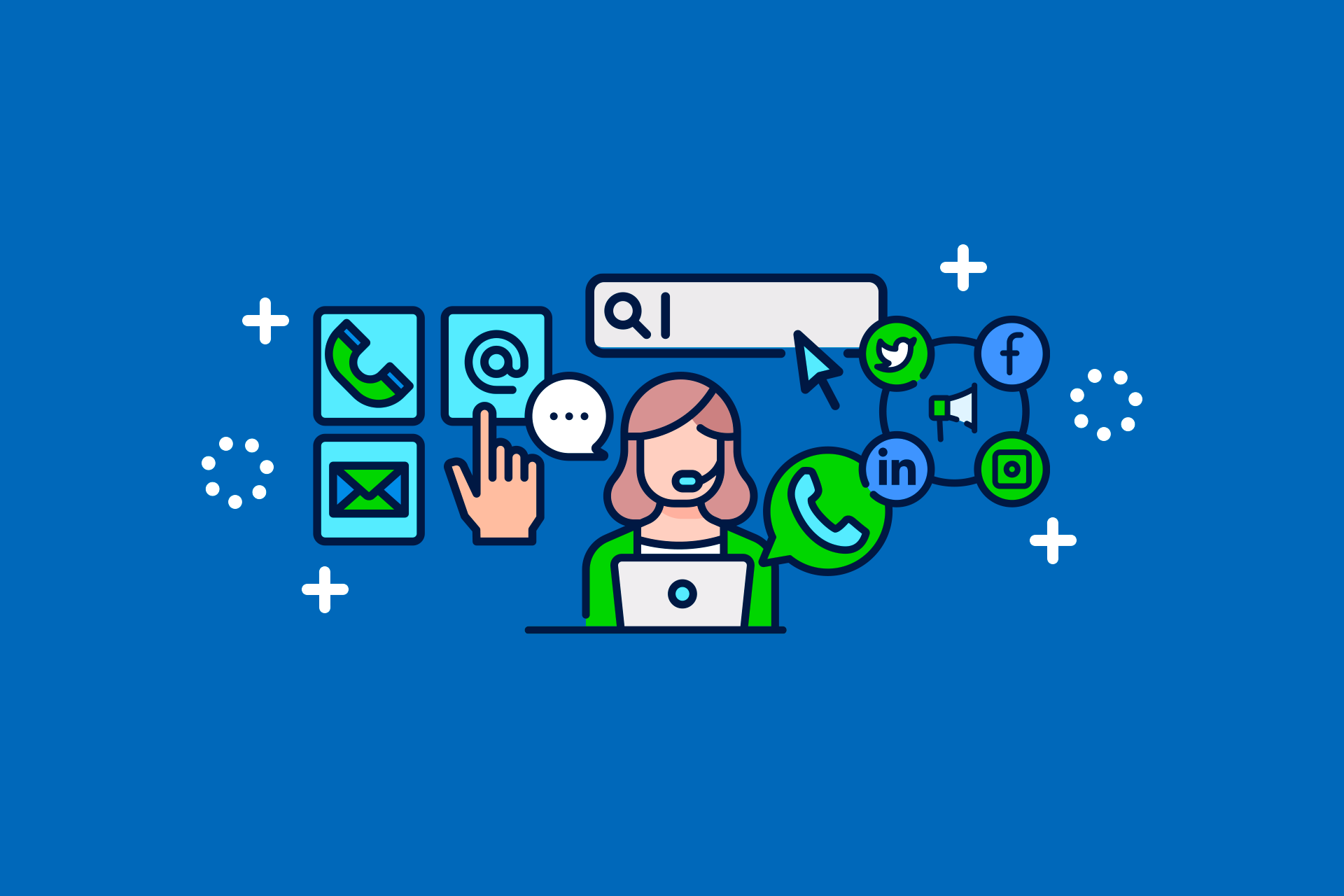
Main channels for contacting leads
Now you’re probably wondering where this contact should happen. The answer is: it depends.
The best choice will take into account the audience profile, the type of event, the funnel stage, and the level of closeness you want to create.
The most important thing is understanding where your lead is most available and what communication format makes the most sense at that moment.
Email remains one of the strongest channels for lead nurturing and scalable communication.
It has some advantages, such as:
- Allows for more complete, structured messages
- Ideal for sharing links, materials, and schedules
- Easy to automate with email marketing tools
Tip: personalize the email subject line. Generic subject lines have much lower open rates than ones that mention the person’s name or something specific to their interest.
WhatsApp is the channel with the highest open rates in many markets. That’s why it’s one of the most effective for the first contact with leads at events. It’s especially recommended when the lead has already provided their number and shown recent interest.
- Short, direct messages work best
- Avoid sending too many files at once
- Respect business hours
Attention: use a business account to access features like labels, quick replies, and a catalog. But always get the lead’s consent before sending messages! In other words, only message people who filled out the event’s forms.
DMs on social media
DMs on Instagram, LinkedIn, or other networks are a good option when the lead interacts with your profiles — commenting on a post, liking content, or messaging you first.
- On LinkedIn, the tone tends to be more professional
- On Instagram, the approach can be lighter and more casual
- Always reference what triggered the interaction to create context
Phone call
A phone call is one of the most direct and personal channels for the first contact with leads. Overall, it works well for high-value leads or those who showed clear purchase intent (such as someone who requested a quote or asked to speak with the team).
- Allows a real-time conversation, with active listening and immediate answers to the lead’s questions
- Conveys more trust and humanity than any written message
- Ideal for B2B leads or corporate events with a higher ticket price
Tip: before calling, do a bit of research on the lead to personalize your approach. A cold call without context can backfire. If possible, send a WhatsApp message or email first, letting them know you’ll be reaching out — this significantly increases the answer rate.
In-person meeting
An in-person meeting is the channel with the greatest relational impact and can happen in various ways:
- At trade fairs, conferences, and industry events: if you or someone from your team is present at an event where your audience will also be, that’s a natural space to approach potential leads organically;
- In-person visits or meetings: for corporate events or sponsors, an in-person meeting can be the first step of a deeper negotiation;
- At the event you organize yourself: depending on your lead-capture goal, attendees present at the event are hot leads, and eye-to-eye contact in that context tends to be very well received.
But pay attention: in-person meetings require more planning and resources. However, when well executed, they create bonds no other channel can match in depth.
Which channel should you choose?
Finally, it’s important to understand that your first contact channel won’t be the only one.
That’s because the best strategy usually isn’t about using just one channel, but about creating an integrated communication flow.
For example:
- the lead downloads a piece of content via the LP;
- receives the first contact through an automated email;
- joins a community;
- gets a reminder on WhatsApp;
- attends an in-person meeting;
- and only then converts into a registration.
The more organized your lead management is, the easier it will be to understand which channels generate the best responses and conversions for your event. Then you can prioritize them.
How to make the first contact with leads: a practical step-by-step
The first contact needs to balance:
- context;
- clarity;
- personalization;
- value.
Below, see a practical flow for structuring your approach.
Step 1: Identify where the lead came from
Before any message, understand the source of the contact: did it come from an LP? An ad? A group?
In short, this information defines the level of interest (funnel stage) and the tone of the approach.
Step 2: Segment and personalize
Avoid generic messages. Use the person’s name, mention the event or content they showed interest in, and adapt your language to the audience’s profile.
For example: “Hi, Anna! I noticed you showed interest in our community for academic organizers yesterday.”
Step 3: Choose the right channel
Based on the source and the data available (email, phone, social network), choose the most appropriate channel, as discussed in the previous section.
Step 4: Craft a clear, valuable message
The first contact doesn’t need to be an immediate attempt at conversion.
Prioritize:
- help;
- guidance;
- relevant information;
- useful benefits.
For example: “I put together a checklist that can help with your event’s initial planning.”
Step 5: Close with a clear CTA
Every first-contact message needs an expected action — whether it’s clicking a link, replying to the message, or booking a time slot. Be direct, but without pressure.
Step 6: Log the contact and follow up
Use a CRM or spreadsheet to record when and how the contact was made. This is essential for lead management and for knowing when (and how) to make the next contact. Then just follow the nurturing flow!
Examples of first-contact messages
Example 1: Email to a lead who downloaded a piece of content
Subject: [Name], your guide has arrived. And there’s more good stuff here!
Hi, [Name]! How are you? I saw you downloaded our guide on [topic].
I hope it’s useful! I just wanted to let you know that on [date] we’re holding [Event Name], which dives deeper into exactly that topic.
There, you’ll find activities like:
- [summary of the main event activities in bullet points]
Registration is open and spots are limited. You can secure yours here: [link]
Any questions, I’m here! [Signature]
Example 2: WhatsApp to a lead captured on an event LP
Hi, [Name]! This is [Your name], from [Organization].
I saw you signed up to receive updates about [Event Name] — glad you’re interested!
Registration just opened. Can I send you more details about the program?
Example 3: Instagram DM to a lead who interacted with a post
Hi, [Name]! I saw you liked our post about [topic] — awesome!
We’re putting together an amazing event on this and thought it might interest you.
We’ll have activities like [example activity 1] and [example activity 2].
Want me to send you more details?
7 tips to improve your first contact with leads
1. Don’t try to sell right away
The first contact should build trust and curiosity, not pressure. So deliver value before asking for anything in return.
2. Respect timing and context
Messages sent outside business hours or at inappropriate moments tend to be ignored — or worse, get the contact blocked.
3. Adjust the tone to the channel
The tone of an email is different from that of an Instagram DM. Adjust your language to the environment you’re communicating in.
4. Use the person’s name
It sounds simple, but personalizing with the lead’s name already significantly increases open and response rates.
After all, your emails may be automated, but the messages should feel like they were written by a real person. So add real personalization and write in a warm tone.
5. Have a clear value proposition
Why should the person keep talking to you? Make that clear right in the first message.
6. Organize your lead management
Centralize information about your leads to:
- track history;
- segment contacts;
- identify the most engaged leads;
- improve future strategies.
7. Run A/B tests
Test different messages, times, and channels to find out what works best with your audience.
But remember to change only one variable at a time to see what gets better results. Tracking data is key to improving lead management.
What to do after the first contact?
The first contact is just the start of the journey.
After that, the mission is to nurture the relationship with relevant content, strategic follow-ups, and communication that brings the lead ever closer to the decision to attend your event.
In short, keep nurturing their interest with:
- educational content;
- reminders;
- useful materials;
- social proof;
- event updates;
- exclusive opportunities.
The more consistent this communication is, the greater your chances of turning interest into real attendance.
And to help you with this strategy, Even3 lets you capture, manage, and nurture leads all in one platform — from registration to lead capture at your event and beyond.