
Organizing your event team is essential to ensure tasks are well divided and executed.
But getting people to actually work well together is a real challenge.
Also, do you know which professionals your team simply can’t do without?
With that in mind, we put together this post around the golden rule of event organization: divide and conquer!
Do you know what that means? Discover the secret to building the perfect event team 👇
The golden rule of event teams: divide and conquer
To start, it’s important to keep in mind that an event works like one big living organism.
For it to run smoothly, the organizer needs control over the different areas that come together.
And the best way to do that is by dividing the event’s organization in order to conquer it completely!
In other words, separate smaller teams with specific functions and responsibilities that cover each part of the event and report to the organizer, keeping them in the loop on everything.
In these teams, it’s important that everyone knows exactly what their role is within the event’s workflow.
So below, we’ve put together a list of the different divisions commonly found in event teams.
How to build an event team?
Basically, a good event team is made up of different unified sub-teams. They are:
Coordination and organization
This team’s role is one of the most important, which is why it’s essential for the lead organizer to be part of it.
Basically, this team plans the entire event: its workshops, submissions, work exhibits, talks, and any other activity offered.
It also needs to coordinate and monitor the work of the other teams. In short, the Coordination team’s main goal is to make sure the event runs as planned.
Technical-scientific and cultural committee
This group’s job is to define the content of materials that will be distributed, such as booklets, handouts, and compendiums. This team works directly with the tasks planned by the coordination and organization team.
This is usually the team that develops the complete, detailed schedule.
It should also stay in contact with paper reviewers, and coordinate presentations and other submission-related activities.
Check-in and attendee support team
If you don’t have the budget for a large team, at least have someone dedicated to event check-in! Or invest in self-check-in.
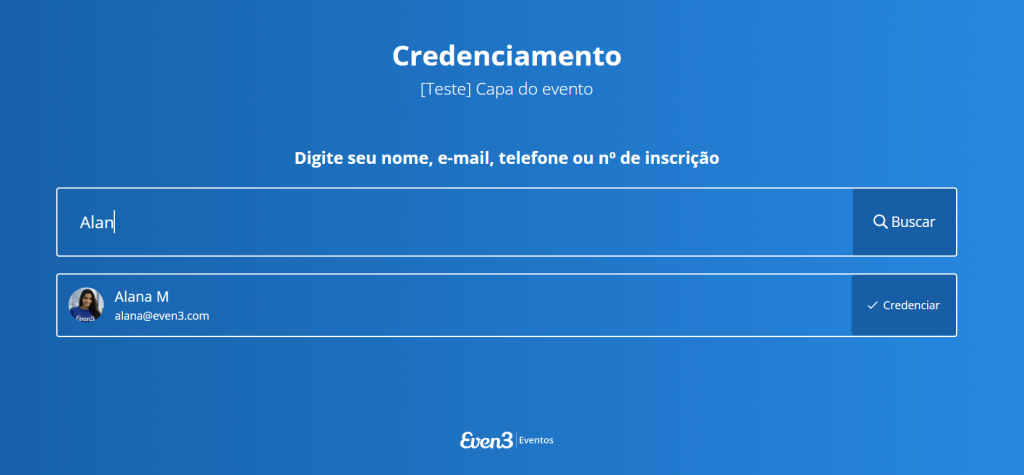
That’s because check-in is the event’s front door — it also serves as a support point for registrations and shapes attendees’ first impressions of the event.
So your check-in team should handle it quickly, monitor attendee attendance, and hand out any needed support materials.
Production team
Now it’s time for the people who get their hands dirty!
This team is responsible for making the plan a reality in the best way possible.
They’re the ones in touch with speakers and suppliers, preparing the venue for exhibitors, and much more.
They organize decor, lighting, transportation, catering, and so on.
They also collect invoices from suppliers and pass them on to the accounting team so payments can be processed.
Keep in mind: this team covers a lot of ground. So the bigger the event, the bigger this team should be, to avoid overloading anyone.
Ceremonial team
This team has the important job of guiding the entire event. They create the ceremonial script and handle the microphone announcements.
They’re also responsible for personally welcoming authorities and important professionals.
This team’s two key moments are the opening and closing ceremonies.
It’s important these moments are prepared with great care, since one is the attendee’s first contact with the event and the other is their last.
Communications and promotion team
Promoting an event is very important and needs to be done carefully.
That’s why this team matters so much.
It’s responsible for developing the full marketing plan that will be used and producing all the promotional materials.
This includes layouts and copy for digital channels, such as email marketing, social media, ads, etc.
But in some cases, print channels too, like magazines and newspapers.
So this team will also need to stay in constant contact with the press so the event gets the visibility it deserves.
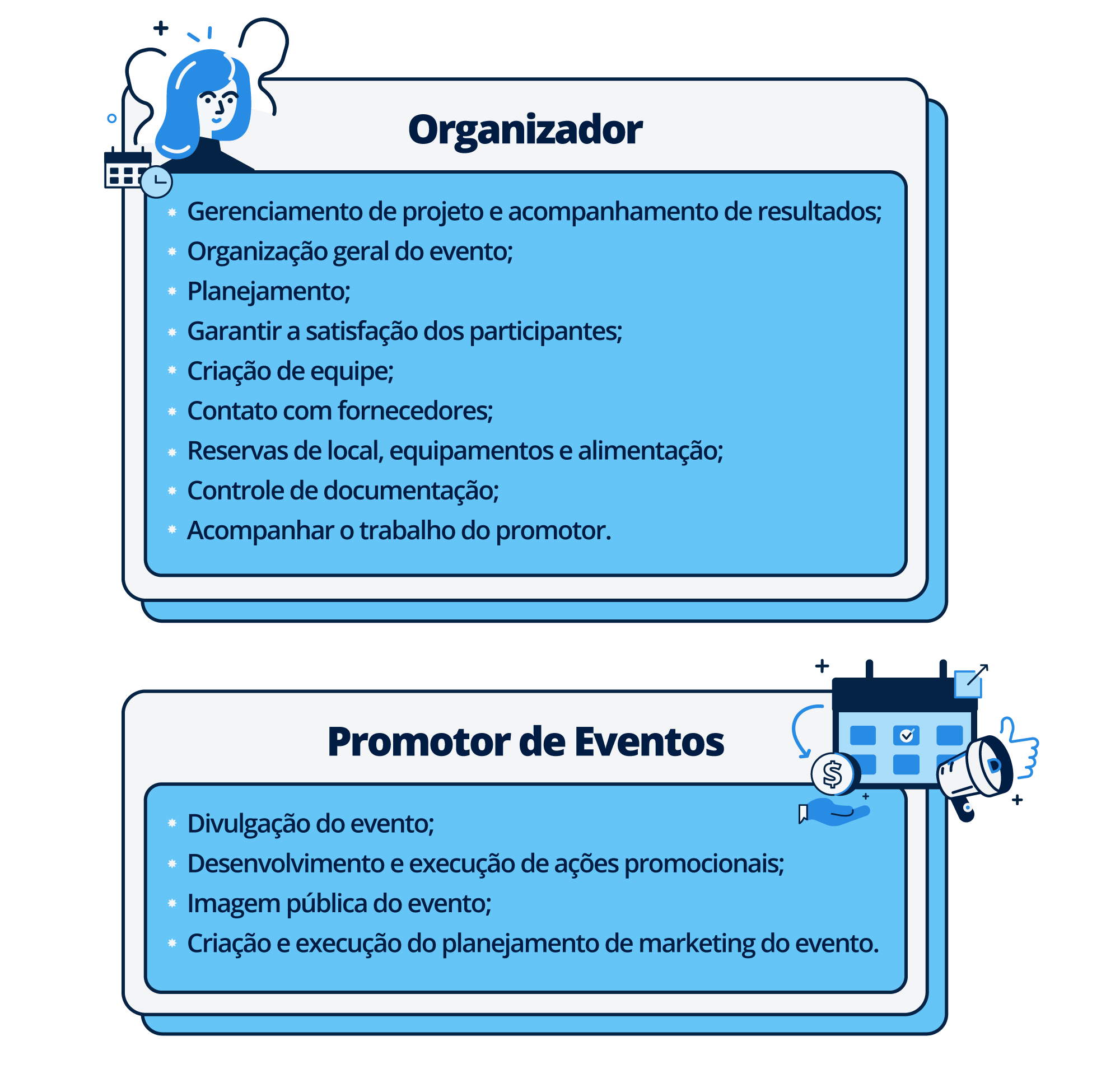
Should you hire an event promoter?
When we talk about the communications team, people often picture a promoter.
This is a professional who creates promotional campaigns for the event, plans brand outreach, represents clients, executes the marketing plan, and more.
But they’re not the only one responsible for that!
If you don’t have the budget to hire a promoter, you can split those activities among your marketing team, although a promoter sometimes acts as its leader.
IT team
This team is responsible for all the technological support the event needs. That includes overseeing the setup of electronic equipment, like screens, network cables, routers, computers, and so on.
The IT team is also responsible for developing software and other technologies as needed.
Finance and accounting team
This team handles everything related to the event’s finances.
They need to control costs, get quotes, and manage contracts with suppliers.
Monitoring cash flow, processing registration payments, and managing sponsorships and donations are other responsibilities of this group.
General services and maintenance team
This event team has a fairly broad job. It’s their work to install electrical wiring, phone lines, and lighting.
They also need to check that the venue is properly sanitized and keep up that cleanliness.
Cleaning and maintaining halls, support rooms, auditoriums, and restrooms during the event is an important task for this group.
Security team
This team is responsible for keeping all event attendees safe.
They monitor entry and exit, preventing potential threats from putting attendees at risk.
They may also be legally required for certain types of events, depending on attendance size.
Parking team
This team coordinates the event’s vehicle flow.
They manage arrivals, departures, and parking payment. It’s also this group’s job to direct authorities and other professionals to their reserved spots.
Customer Success
Finally, the Customer Success team plays a key role, especially for events that use online platforms.
They’re responsible for making sure every attendee, speaker, and organizer has the best possible experience with the event’s technology.
For example, if you use a platform like Even3 with an event app, the Customer Success team is who provides support and teaches attendees how to use it.
Basically, this includes offering fast, effective support, creating support materials, building a channel for questions, and acting proactively.
In short, having a dedicated Customer Success team ensures everyone at the event stays satisfied, reducing any friction with the event’s technology.
So, ready to start building your team and planning your next big event? Start with the support of the best tools, all in one place — create your event on Even3 and meet the newest member of your event team.