Knowing the ideal duration for an event is a common question for anyone in the planning stage, and it goes far beyond deciding how many days the audience will attend. This choice involves logistics, setup, operations, and a direct impact on the experience of everyone involved.
In a clip from the Even3 Tá On podcast, Eduardo Marchetti of RX Brasil shared practical insights on how an event’s timeline needs to be considered from structure through to execution. Throughout the conversation, it becomes clear that getting this decision right helps avoid delays, reduce surprises, and keep things organized. With that in mind, it’s worth taking a closer look at the factors that truly influence this decision.
In this post, you’ll learn more about:
- There’s no single ideal duration for every event;
- Event type and size determine how many days it needs;
- Execution requires pace, monitoring, and room for adjustments;
- The ideal duration is the one that guarantees a good experience.
There’s no single ideal duration for every event
Defining an event’s ideal duration isn’t a matter of a ready-made formula or a fixed number of days. Every event has its own characteristics that directly influence how much time is needed for everything to happen in an organized way, from start to finish.
The event’s objective is one of the first things to consider. A conference with multiple simultaneous activities, for example, requires a different logic than a simpler institutional event. Format also plays into this decision.
In-person events require more time to physically set up the venue, while hybrid or online events have different technical and operational needs.
Another important factor is the audience involved. Events with heavy foot traffic, exhibitors, or suppliers need more time for setup, adjustments, and testing.
Smaller events, on the other hand, can have a leaner structure with shorter timelines, as long as everything is well aligned.
That’s why thinking about the ideal duration means understanding the event’s context as a whole. The clearer the objective, format, and structural complexity, the easier it is to define a realistic schedule, without rigid standards that don’t fit your reality.
“When planning an event’s duration, it’s important to consider the entire process involved. This includes building the structure, running it safely and in an organized way, and dismantling it afterward. An event doesn’t start or end only on the days the audience is present.” — Eduardo Marchetti
An event isn’t just the days open to the public
A common planning mistake is only considering the days the event is open to the public. In practice, those days represent just one part of the whole operation.
Before opening, there’s venue preparation, supplier arrivals, technical testing, and structural organization. After closing, there are still essential activities to wrap up the event.
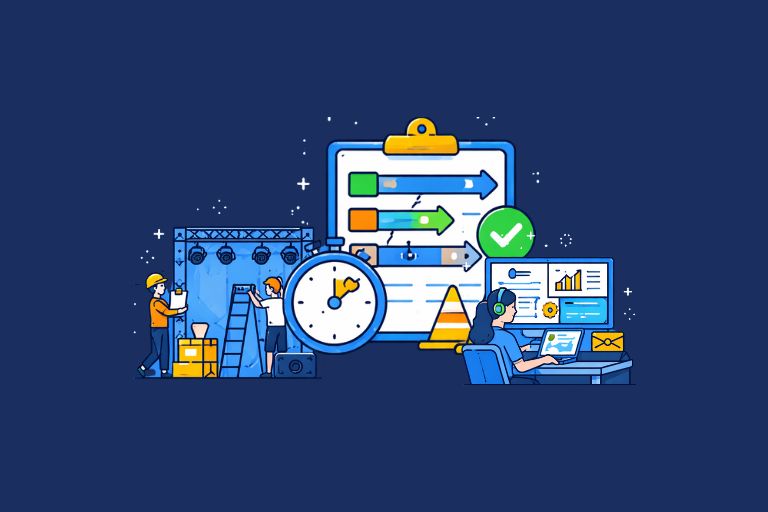
Thinking of the event as a continuous process helps create more realistic schedules. Setup, execution, and teardown are all part of the same timeline and need to be planned together.
When these stages aren’t factored in, the risk of delays, improvisation, and team burnout increases.
Seeing the event this way shifts planning from focusing only on the schedule to considering the entire operation needed for the event to run well from beginning to end.
Event type and size determine how many days it needs
The type and size of the event are decisive factors in determining its total duration. Larger events, with many exhibitors, large areas, and complex structures, naturally require more setup time than smaller, simpler events.
Trade shows and large exhibitions, for example, usually require several days of setup before opening, plus a dedicated teardown period.
The greater the number of booths, equipment, and suppliers involved, the greater the need for an extended, well-distributed schedule.
Events with fewer exhibitors or concentrated activities can run on shorter timelines, as long as the structure is compatible with that choice.
Venue size also factors in. An event occupying large areas requires more time for electrical setup, staging, technical testing, and safe circulation.
In smaller venues, these processes tend to be faster, but they still need to be carefully planned.
Understanding the event’s real size helps avoid unrealistic estimates. When type, size, and complexity are considered from the start, defining the duration stops being a guess and becomes a decision based on the structure the event actually needs to run well.
“Bigger events, with many exhibitors and more complex structures, need more setup time. Smaller events, with fewer booths and less floor space, can be set up in fewer days. That’s why the size of the event directly influences its total duration.” — Eduardo Marchetti
Setup and teardown need to be factored in
Setup and teardown are stages that directly impact an event’s total duration. The time needed for these phases varies according to the size of the structure, the number of booths and equipment, and the level of customization of the space.
The more complex the setup, the more days are needed to get everything safely ready.
Beyond the physical setup time, it’s important to consider adjustments, testing, and unexpected issues. Delays in material delivery, technical problems, or last-minute fixes are all part of the routine of running events.
That’s why building margin into the schedule helps avoid last-minute rushing and hasty decisions.
Teardown, while usually faster, also requires planning. Teams, schedules, and venue rules need to be aligned so closing happens in an organized way.
When these stages are included from the start, the event’s duration becomes clearer and more realistic.
Execution requires pace, monitoring, and room for adjustments
During the event’s execution, time needs to be managed with constant attention. This is the phase where the entire structure that was built comes into operation, and any delay or failure can impact the schedule.
That’s why close monitoring by the operations team is essential to ensure everything happens as planned.
Security, cleanliness, venue functionality, and crowd flow all require continuous monitoring. Last-minute adjustments are common and part of the routine, whether due to technical issues or changes in audience flow.
Having margin in the schedule helps handle these situations without compromising the event’s progress.
When execution is planned within a realistic schedule, the event gains more fluidity. Time management stops being just an operational concern and becomes an ally for maintaining organization and the quality of the experience.
“During execution, you need to stay alert the whole time to ensure safety, organization, and that everything runs smoothly. Adjustments happen, delays can come up, and the team needs to work together to solve them. An event isn’t something you set up and just let happen.” — Eduardo Marchetti
The ideal duration is the one that guarantees a good experience
At the end of the day, an event’s ideal duration is the one that allows every stage to happen in an organized way without overloading the operation.
When the schedule is too tight, the chances of delays, improvisation, and avoidable failures increase.
A well-structured event respects the time needed to set up, execute, and tear down, taking teams, suppliers, and the venue itself into account.
This mindset helps maintain the event’s pace, prevents team burnout, and contributes to a more consistent delivery.
Thinking about duration this way helps make more conscious decisions. Instead of aiming for the shortest possible timeline, the focus shifts to having enough time for everything to run well and for the event to happen in the best possible way.
Defining an event’s ideal duration is, above all, a planning decision. When setup, execution, and teardown are factored in from the start, the schedule becomes more realistic and the operation flows better.
Having clarity about these stages helps avoid surprises and makes decision-making easier throughout the entire process.
With Even3, you can organize every phase of your event in one place, from planning to execution. The platform helps centralize information, monitor operations, and gain more control over your event’s time and structure, making organization easier and reducing rework.