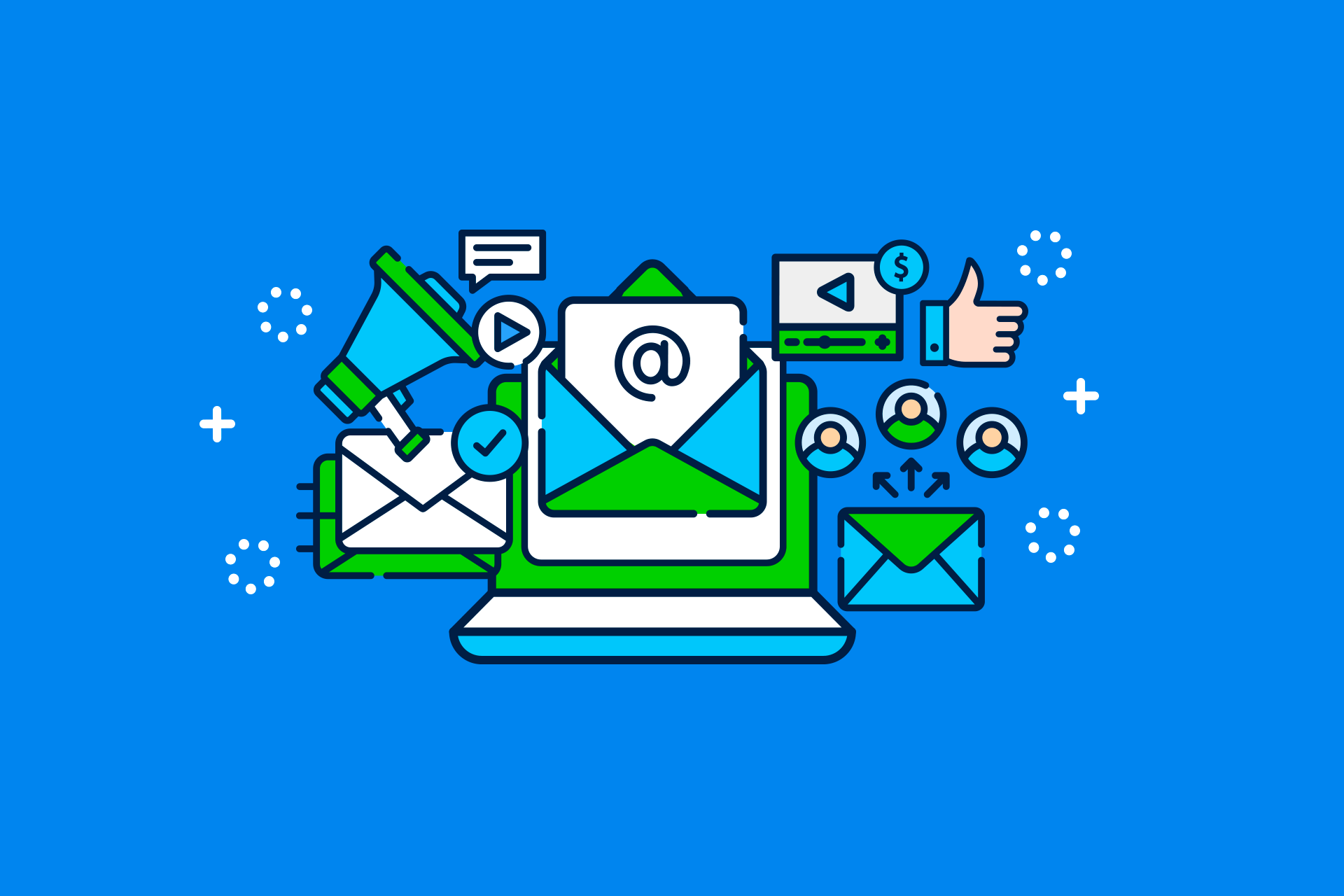
Today, email marketing is one of the most effective communication strategies between an event’s organizing team and its attendees.
What’s more, when done well, it doesn’t just increase event registrations — it can turn attendees into customers of your business.
Have you ever thought about writing emails that actually deliver results? Then learn more about:
- What is email marketing?
- How does email marketing for events work?
- Why use email marketing at events?
- How does email marketing work on Even3?
- 4 types of email marketing for events.
What Is Email Marketing?
Simply put, email marketing is a form of personalized communication sent by email between a company and its contacts.
For events, it connects the organizing committee directly with different audiences: attendees, speakers, reviewers, sponsors, and even potential partners.
The big differentiator of this strategy is personalization. That means each group receives a message crafted specifically for their needs. For example:
- An attendee might receive extra content for their learning beyond the event;
- A speaker might get a slide template;
- A sponsor might be updated on visibility opportunities during the event.
So email marketing isn’t just about sending a mass transactional message.
Its goal is to deliver the right content, at the right time, to the right person. This segmentation is essential for your audience to feel the communication is relevant and valuable, turning simple contacts into loyal customers.
How Does Email Marketing for Events Work?
As you can probably tell, email marketing for events works as a continuous communication cycle designed to educate, mobilize, and build loyalty among customers.
The content of these emails depends on the goal you want to reach. But in general, email marketing follows steps like these:
1. Choosing the Tool
Before you start, you need to choose an email marketing tool that makes it easy to send, personalize, and analyze results.
This step matters a lot! That’s because many email tools, like Gmail, have protections against abusive advertising, known as spam.
In these cases, they tend to block emails sent manually straight from an email client to many contacts at once, since that behavior looks like spam. Even if that’s not your event’s intent, it’s quite likely to get blocked!
So using a dedicated email marketing tool gives you more assurance that your emails will actually reach recipients and that your account won’t get blocked.
You can use platforms like MailChimp, RD Station, GetResponse, ActiveCampaign, and even Even3 itself, which also works as an email marketing tool during events.
Many of these tools offer free email marketing plans, ideal for those just getting started.
2. Building Your Contact List
Your contact list is the heart of your strategy.
It should be made up of people who explicitly gave you their information. After all, it’s important to follow data protection regulations when collecting it.
Many companies use events specifically to capture contacts who have an interest in their field.
All of this happens legally through the event’s registration form.
We call this process lead collection. And leads represent potential customers for the business.
Of course, you can find leads elsewhere too, such as social media, brand activations, awards, and more.
What matters is reaching out to that lead once you have their information!
Additionally, your contact list can include extra information such as area of interest, registration category, or even activity preferences. This will really help with audience segmentation!
3. Audience Segmentation
After the list, segmentation is another critical step.
Your audience needs to be split into groups (attendees, speakers, reviewers, sponsors, etc.), since each one should receive specific messages.
This personalization makes people feel valued and increases the chances of engagement.
For example, imagine sending a speaker information about extra content and additional activities: that probably wouldn’t make sense. But at the same time, it would be extremely relevant for attendees.
So segmentation turns email marketing into a strategic, powerful communication tool.
4. Creating the Content
With your list segmented, it’s time to write the message.
Most platforms already offer ready-made email templates you can adapt.
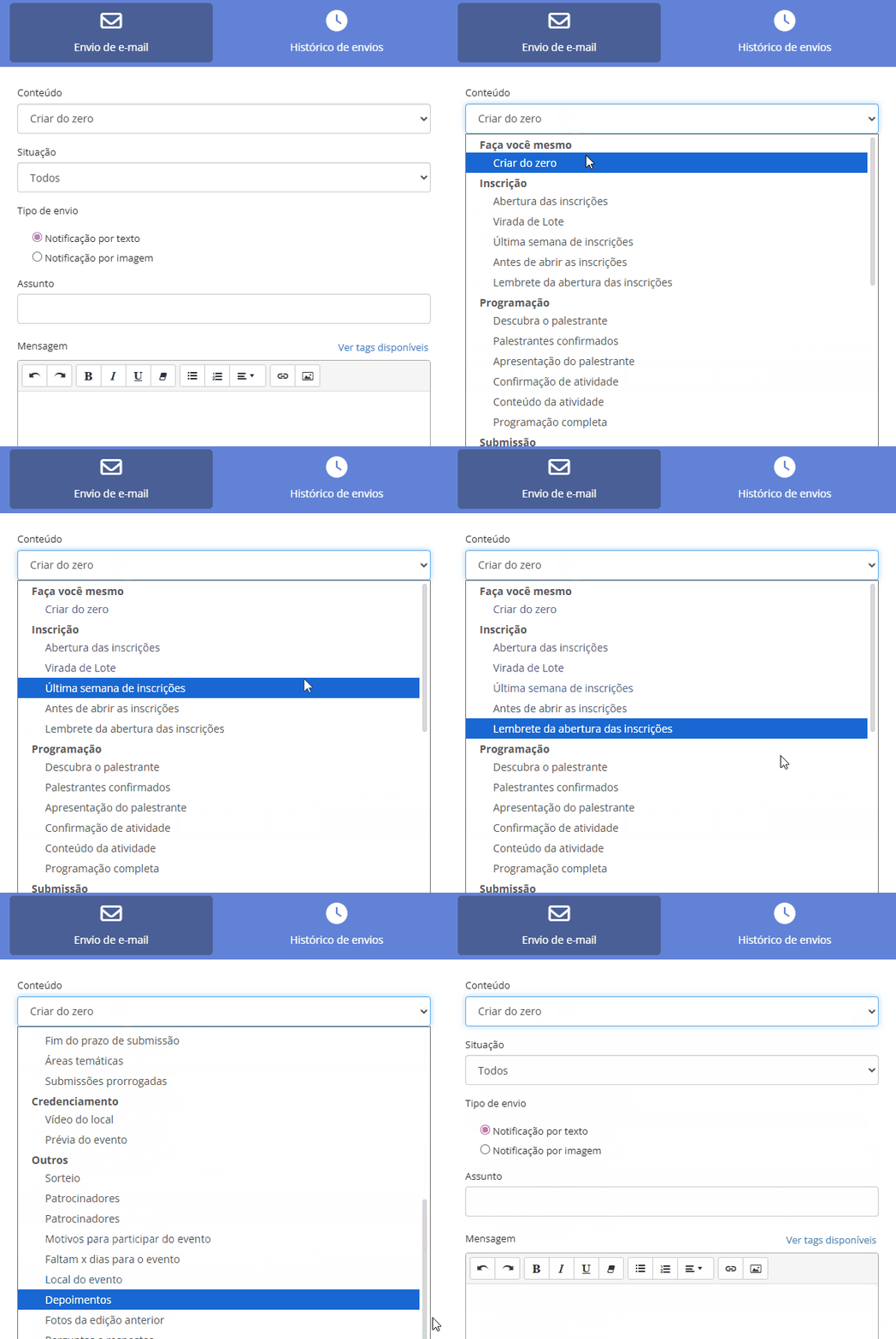
You can include text, images, links to registration or ticket purchase pages, and even eye-catching buttons that lead to extra products or services.
5. Sending and Analysis
After sending, the analysis phase begins.
A good email marketing platform lets you track metrics like open rate, link clicks, number of unsubscribes, and even which content generated the most engagement.
This data helps you fine-tune your strategy and improve your next sends.
This way, you can build a simple, clear, and effective communication strategy. That will bring new customers to your event or business, as well as strengthen your relationship with people who already know you.
Why Use Email Marketing at Your Event?
As mentioned, the content of your email marketing for events depends on the goal you want to reach. There are a few common ones, such as:
1. Increase Your Company’s Reach
Have you noticed that practically everyone around you has an email address? According to a Pew Research Center survey, 92% of online adults have one.
That means, through email, your message can reach a large share of your registered or interested audience. That’s not always the case on social media, where algorithms limit reach.
2. Offer Content to Strategic Customers
When you gain contacts at an event, you already know they’re interested in the content you’re offering.
In this case, you can run a more targeted marketing strategy, identifying their problem, educating them, and offering your product as the solution they’re looking for.
3. Create Personal Connection and Exclusivity
While communication on social media happens as a group, email communication is individual. That strengthens the bond between the event and each person, creating a sense of exclusivity.
4. Increase Sales
By adding call-to-action (CTA) buttons, you can direct attendees to buy tickets, products, or extra activities, generating new customers and increasing your event’s revenue.
5. Run Surveys or Collect Feedback
Email marketing is also an effective channel for running surveys and getting to know your audience better.
You can send extra forms or rely on satisfaction surveys, which are essential for improving your organization and delivering an even better experience in future editions.
6. Measure Results
With metrics reports, you can identify what worked, which messages had the most engagement, and what needs adjusting. That makes your marketing strategy increasingly efficient.
How Does Email Marketing Work on Even3?
On Even3, organizers have access to an exclusive feature called Notify People.
This tool was built to simplify event communication and make the process even more efficient.
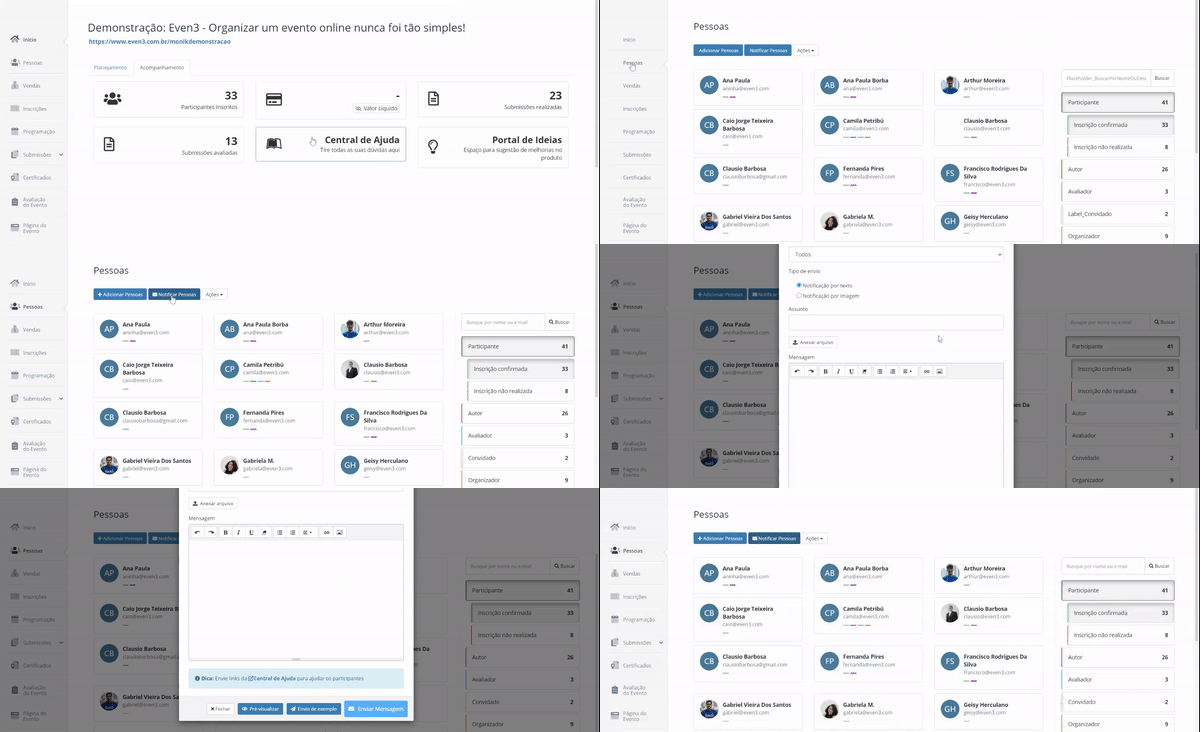
As the name suggests, you can send automatic emails to everyone involved in the event without leaving the platform. That’s right: attendees, people registered for activities, guests, paper reviewers, and much more.
Some of the benefits of Notify People include:
- Detailed segmentation of everyone involved in the event. For example, you can even email your event website visitors;
- Ready-made, editable email templates;
- An easy way to share important information and event updates;
- Visibility and value opportunities for sponsors;
- Compliance with data protection regulations, with an unsubscribe option for contacts.
4 Types of Email Marketing for Events
As mentioned, email marketing isn’t just about transactional emails like “registration confirmed!” On the contrary, it’s used strategically to turn contacts into customers.
For that, there are a few types of emails, such as:
1. Event Newsletters
One of the most common types of emails for driving engagement is the newsletter.
They can be sent at any point in the event cycle: before, during, and even after it.
In practice, they update registrants with news, share content of interest, keep the event “alive” in attendees’ minds, and even attract new customers through sharing.
They’re ideal for maintaining constant communication with your audience and building a community beyond the event.
For example, large events create newsletters to keep their broad audience active, sending out a monthly newsletter to stay in touch with attendees even after the event ends.
Tips for Creating Event Newsletters:
- Set a frequency (weekly, biweekly, monthly);
- Avoid cramming too much information into a single send: curate your content, summarize it, and use external links;
- Use images that reflect the event’s visual identity;
- Always include a call to action (CTA), such as “Learn more,” “Secure your spot,” or “Share with colleagues.”
2. Sales Funnel Emails
One of the key differences between email marketing and transactional email is that email marketing aims to generate sales, while transactional email simply informs.
But they can coexist in the same message!
For example, a good welcome email for an event confirms the attendee’s registration, but can also deliver the value of the business/product or service behind the event.
In that case, it plays the role of a solid top-of-funnel email.
But it doesn’t stop there! You should use the event as an opportunity to move attendees through the funnel stages and turn them into customers.
Tips for Good Customer Journey Emails:
- Personalize emails for each stage of the sales funnel: problem awareness (top of funnel), considering solutions (middle of funnel), and deciding to purchase your product (bottom of funnel);
- Mix practical information, like check-in instructions and links to event groups, with offers for products and services (even free ones);
- Offer additional content that shows the value of your business and introduces it to event attendees;
- Use urgency and scarcity triggers for bottom-of-funnel emails (“last spots available,” “offer valid until tomorrow”);
- Include eye-catching CTA buttons, like “Buy now.”
3. Post-Event Emails
The post-event period is strategic for email marketing.
After all, this is when you build a relationship with your attendees and reinforce the connection you’ve created.
In other words, this isn’t the time to stop communicating, but to keep it going smartly, with thank-you notes, supporting materials, and requests for feedback.
Tips for Post-Event Emails:
- Thank attendees personally for participating;
- Send extra materials, such as session recordings or certificates;
- Include a satisfaction survey to understand strengths and opportunities for improvement;
- Use the opportunity to announce future editions or invite your audience to stay connected to the community.
Ultimately, your events can generate results even after they end. And your emails are the essential tools that make this strategy work.
So how about putting it into practice on a complete platform? Bring your email marketing strategy and your events together in one place: on Even3.
Also take advantage of Even3’s integrations with other email marketing and CRM tools, like RD Station, ActiveCampaign, and more.