One thing that’s changed a lot in recent years is the way we work, especially after remote work became widespread. Now more than ever, companies look for solutions to handle daily meetings, team integration, onboarding, and more. In that context, there’s nothing better than a corporate event to bring your team together and help them reach company goals. Here’s everything you need to know: what a corporate event is, the types of corporate events, and 6 tips for organizing a successful one.
What Is a Corporate Event?
A corporate event is a more professional type of event, almost always organized by a company. While there are several types, corporate events are commonly created to bring employees together, build relationships with clients and partners, create interaction between the company and its brand, and more.
Types of Corporate Events
Since corporate events serve different goals, they often use well-known formats adapted to their purpose — talks, courses, and workshops to train employees, or seminars and congresses to discuss a specific topic. There are also some particularly attractive formats commonly tied to corporate events:
Summit
A summit — the word literally means “top” — always aims to bring the best, most up-to-date content in the organizing company’s field. Summit talks are usually led by experts, offering a highly relevant, current experience for participants’ careers. Companies that organize summits tend to be market references, offering rich content and a premium experience.
Trade Shows
When we think of a trade show, booths come to mind! This is the type of event where several companies gather to showcase their products, usually sharing a common goal that draws in a large audience. For example, book fairs — very common among publishers — tend to offer perks like cheaper or exclusive products, giveaways, or talks with authors. For online trade shows (yes, they exist!), there’s an added bonus: virtual booths displayed in 2D fair halls. On Even3, you can create a 2D hall inside your event and add online booths for companies and sponsors.
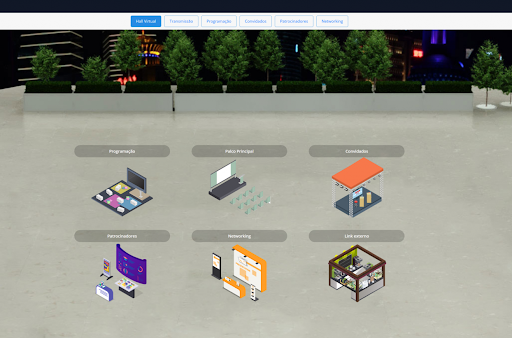
This is a chance to showcase your products in a completely different way, reaching an even bigger audience than an in-person event, with extra features to promote your products.
Launch Events
You’ve definitely attended or heard of one of these! Launch events do exactly what they say: they’re created to promote and launch a product. Companies use this format to build desire around a product and generate value, often offering something new and an exclusive experience for attendees. This type of event is used to reach audiences, buyers, press, employees, and sponsors. Online launches become even richer — with registration data and activity during the event, a company can gather important information to better understand its audience and what interests them. Online launches can also offer extras like forums and audience interaction, similar to what Apple has done in its recent WWDC editions.
Meetings
Unlike everyday, more casual meetings, corporate meetings are more professional and require real organization. Common types include board meetings and company-wide meetings, both usually discussing goals, future plans, and business decisions for different audiences. How the meeting is run varies a lot by company profile, but these are usually important events aimed at engaging everyone involved.
End-of-Year Parties
Finally, one of the most important and anticipated corporate events is the famous end-of-year party! Beyond a moment of connection, these events are essential for reinforcing company culture, strengthening team bonds, and preserving a healthy work environment. Online, these moments become even more crucial.
6 Tips for Organizing Successful Corporate Events
1. Plan Ahead
Although this is a basic tip, corporate scheduling requires even more advance planning, since your guests and participants will usually be busy with work demands and you don’t want your event to get in the way. It’s a good idea to give a heads-up several months in advance, or ask people to “save the date” even if the event isn’t fully organized yet. Another good practice is making corporate events recurring, part of the company’s annual calendar — this helps build a sense of community and anticipation around the event.
2. Build Networks
One of the best things about corporate events is bringing together professionals with a shared goal — why not use this moment to build your business network? Since attendees likely share similar profiles, take advantage of corporate events to learn and network.
3. Learn From Other Events
Another important point when relating to other companies is looking at what’s already being done at corporate events — and there’s nothing wrong with that. Researching market data and best practices already in use is a growth strategy many companies rely on. Attend conferences and trade shows, ask other participants what they like and don’t like, build relationships, meet suppliers, and experiment. Then bring the best insights back to your own event, test them, and keep whatever makes sense for your goals.
4. Don’t Forget the Satisfaction Survey
Finally, after your event, don’t forget to listen to feedback — even for corporate events, it’s essential. For recurring events especially, a satisfaction survey gives you insights into what to improve and what content to cover in future editions.
5. Boost Profits Through Lead Generation
A corporate event is also ideal for building brand awareness, which means it can be used as a strategy to boost your company’s profits. To do that, first, you need to know your customer. Then your event needs to be attractive and offer content of real interest, so you know your participants likely already have some connection to your product and can be approached by your marketing and sales team. During registration, pay close attention: this is the moment to collect important information, start the contact, and, of course, follow data protection regulations.
6. Track the Data From All Your Events
Finally, after collecting so much information and running several events in a year, it’s essential for the company to take stock and review whether corporate events still make sense within its goals. Data is your guide here: track satisfaction survey metrics, attendance confirmations, number of participants, and how many events you run per year, among others. On Even3, this tracking is much easier, with an event management tool built for companies and a dedicated menu showing every event run on the platform.
With a corporate event management platform, your marketing team’s work gets easier and most processes become automated.