Did you know that nowadays you already spend a good part of your time talking to robots instead of humans?
But contrary to what many movies have put in our imagination, we’re not at war with them. In fact, artificial intelligence technologies have created smart machines (or robots) capable of helping us with our daily activities. That’s the case with event chatbots.
With this technology, many events become more interactive, tech-forward, valuable, and sought after by attendees.
Want to know how to be part of this trend too? Here’s everything you need to know:
- What is an event chatbot?
- How does a chatbot work?
- Main advantages of using chatbots;
- How to use a chatbot at your event?
What is an event chatbot?
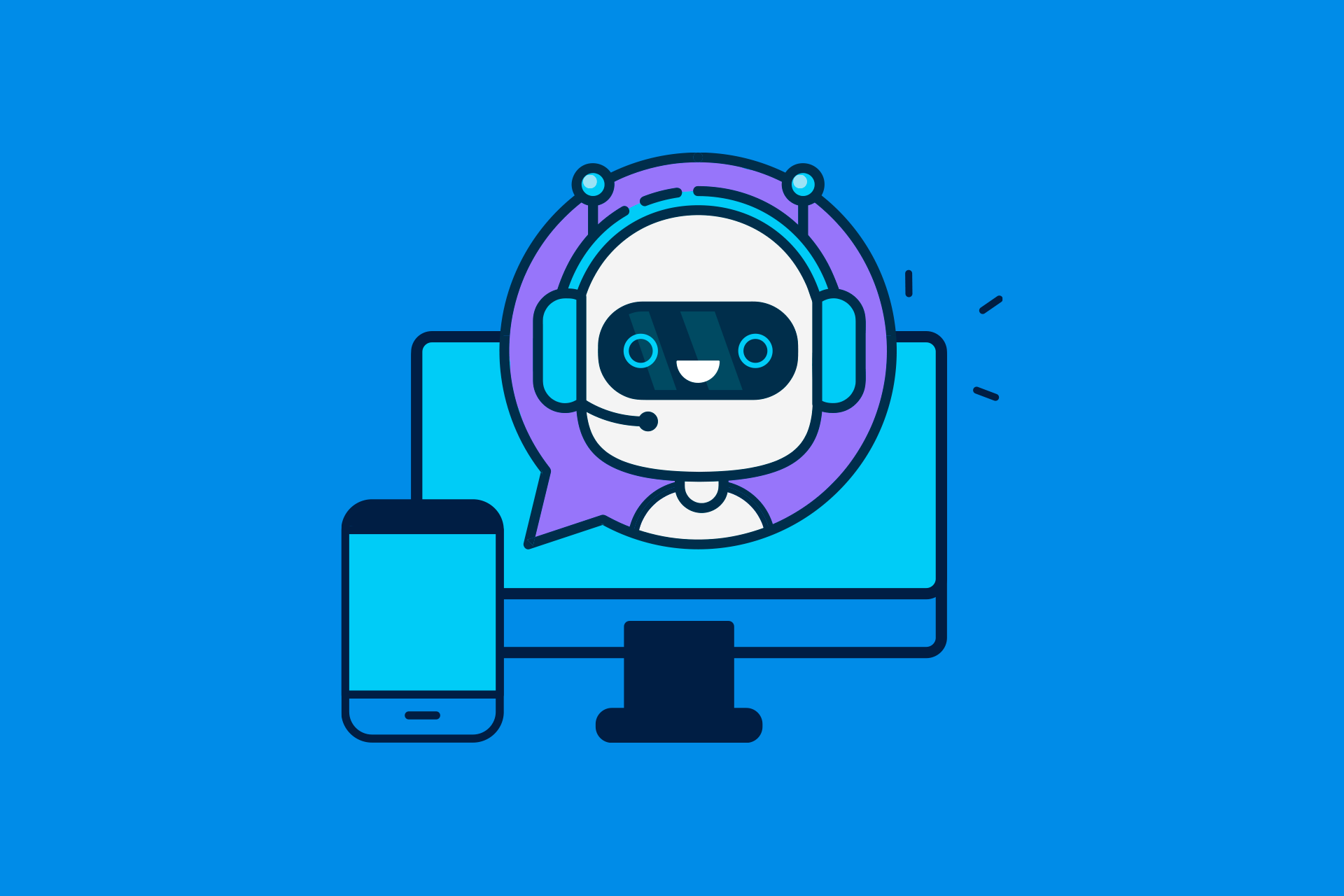
An event chatbot is a robot that chats with an attendee, but in an automated way. In fact, that’s the literal translation of the term: “chat” means conversation, and “bot” is short for robot.
In other words, it’s a software programmed to converse with humans, answering questions and building relationships. Because it behaves similarly to a person, it’s referred to as artificial intelligence.
At events, chatbots are used in help centers or customer support services to answer questions quickly.
But they’re different from those frequently asked questions lists, okay? That’s because bots create the feeling of a real, humanized conversation, which makes the attendee’s experience even more positive.
But do you know how bots work in practice? Let’s explain!
How does a chatbot work?
Basically, a chatbot is made up of three elements:
Channel
This is where the interaction with humans happens. It can be WhatsApp, Facebook, call center systems, websites, online stores, and more.
Content
This is the conversation itself. In the case of chatbots, the responses are programmed, and there’s a database that dictates the rules of the conversation and how it works.
So, anyone who wants to use an event chatbot needs to sign up for one of these software tools.
Also, if a bot can’t answer a complex question, it should redirect the conversation to a human. This way, your attendee’s experience keeps improving, offering faster, always-available, accessible support.
In return, your team can focus only on the more complex tasks and have more time to dedicate to them.
Main advantages of using an event chatbot
- Always-available, fast support;
- More personalized interactions and relationships;
- Automation of simpler tasks;
- Presence across multiple channels, increasing your support’s reach;
- Reduced costs and effort for your support team;
- Increases audience engagement.
How to use a chatbot at your event?
First, you’ll need the support of a chatbot software. Among the most popular are:
- HubSpot;
- Zendesk;
- JivoChat;
- Zenvia.
Since some options are free, think carefully about which one is ideal for your event. If you decide to use paid tools, you can rely on our finance spreadsheet to help you stay on budget.
Then, you’ll need to configure the tool with the bot’s purpose, the channels it will operate on, and the answers for the most frequently asked questions.
In this case, think about the main questions attendees have throughout the event. For example, how about, on the day of the event, offering a bot that answers the Wi-Fi password, where to park, or the event venue map?
Remember: your interactions should be efficient! That’s why it’s important to activate your chatbot across the channels where you interact with your attendees, such as your event’s own website.
On Even3, besides having an event website built for you for free, you can integrate the chat platform of your choice into it.
The chatbot will also be available on the main pages where attendees interact with you, like the ticket checkout page.
Finally, do you want to activate a chatbot for your event? Our specialists can help you!