Online events are taking on innovative formats. One of them is the webinar. Have you heard of it? This format has been gaining a lot of traction in academic and business settings.
In this article, you’ll learn what a webinar is, its main features, and how to organize your own and stay up to date in the events market.
What Is a Webinar?
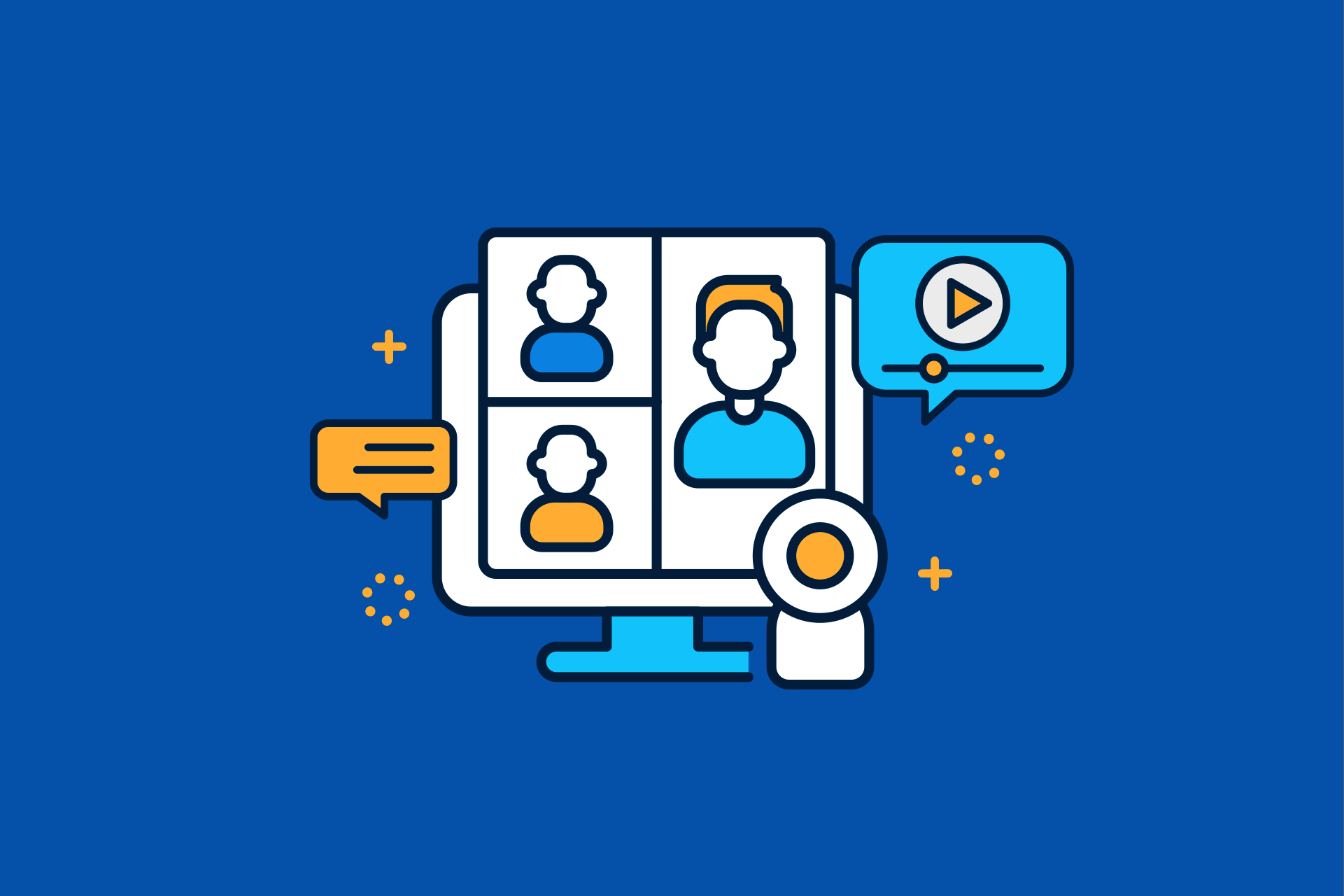
A webinar is an online seminar, either broadcast live or recorded, aimed at a specific target audience.
The term comes from “web-based seminar,” which literally means a seminar held over the web.
Regardless of what it’s called, a webinar works almost like a lecture. In this format, the presenter or presenters usually cover an engaging topic and talk with attendees through chat.
That’s why it’s a highly interactive and relaxed event format.
Since it’s super simple to organize, many people use webinars to promote previews of richer content or product demos.
So they’re often used to attract potential customers and close sales, the well-known practice of lead generation. Check out the possibilities:
Types of Webinars
Basically, to produce a webinar, all you need is a computer with a camera, a microphone, an online broadcasting tool, and, of course, internet access.
That makes this type of event super cheap and simple to produce.
That’s why it’s frequently used to share content, run training sessions, or build relationships with customers.
Product or Service Demo Webinars
In this type of webinar, the presenter can share their screen and demonstrate a product or service.
Usually, they’ll cover the benefits, new features, and practical tips.
A good idea is to use one of your audience’s pain points as the webinar’s theme and use the product or service to solve it.
This way, your attendees will be drawn in by the content and get to know what you offer.
Interview Webinars
Did you know that the well-known “live” format can also be a webinar?
If there’s a presenter teaching content and an open chat, it can already be considered a webinar!
In this case, a fairly common format is the interview.
In this webinar, an expert covers a topic they know well while a moderator asks questions, encouraging more interaction with the audience.
When there’s more than one guest, this format can also work as an online version of a panel discussion.
Lecture Webinars
As mentioned, webinars have a “lecture” quality to them. That is, they’re always very instructional, explanatory, and interactive.
That’s why it’s recommended for a webinar to dive deep into just one topic, exploring it as thoroughly as possible and answering the audience’s questions.
It’s also common for the content to be made available to the audience afterward, or sold separately.
Advantages of Running a Webinar
- Convenience: low production cost and low complexity to organize the event;
- Accessible content: can be followed by the audience from anywhere with internet access;
- Wider reach: since it’s broadcast online, a webinar can reach a very large audience;
- Lead generation: rich content can attract people interested in your service or product’s topic;
- Repurposable content: you can reuse the webinar and turn it into eBooks, podcasts, blog posts, and more.
How Do You Organize a Webinar?
Now that you know what a webinar is and its biggest advantages, it’s time to learn how to organize one. Let’s get started!
Define a Theme and Format
Just like with in-person events, a webinar needs to start with defining the topic.
That’s important so you can think through the script and format of your webinar before you start producing it.
To choose your webinar’s topic, consider:
- The type of content your audience is most interested in learning about;
- The subject you’re an expert in and have the authority to speak on.
For example, you can create polls on your social media asking your audience what content they’d most like to learn. With those answers, you can already define your topic.
If you prefer, you can email out a free Audience Survey Form, created by Even3. Give it a try.
After that, you’ll be able to decide the best way to deliver your content: live, recorded, as a lecture, as an interview… Choose whatever makes the most sense for your audience!
Create a Script
It’s very important to structure a script for the webinar. So if you have speakers, recommend this to them too!
After all, a webinar works like a type of presentation. Some tools even let you show a screen to your audience while recording yourself presenting.
Because of that, a lot of things tend to happen at the same time. But don’t forget to create moments to connect with your audience, okay?
It’s important to define this in your script, along with a clear beginning, middle, and end to your talk.
One tip is to break the topic into sections and put them on your slides, along with quotes from experts and scholars or charts that back up what you’re saying.
But watch out! Long blocks of text generally aren’t a good idea for slides, since they make the presentation more tiring and less dynamic.
Also, if the webinar will be a live broadcast, rehearse your presentation in advance.
Set a Day and Time
It’s very important to set the event’s day and time in advance. That’s because your audience needs to be well informed so they can block off time on their calendar and attend your webinar.
Also, with more lead time, you can use social media to promote your webinar and attract even more people to your presentation.
Prepare a Visual Presentation
It’s very common to use a slide presentation during a webinar. Combining text, images, and the presenter’s speech makes it much easier to absorb the content.
To build your slides, you can use PowerPoint or even Google Slides, which is accessible for free through Google Drive.
It’s essential for your visual presentation to have a template that’s pleasant to read and matches your brand’s visual identity. This way, you can reinforce your branding and stay memorable in your audience’s mind.
An essential tip for building your presentation is to use larger fonts and summarize your content into short, clear bullet points.
Also, remember to illustrate everything with icons or images to make it less tiring to follow.
Choose an Online Broadcasting Tool
Finally, we’ve reached the key piece for your webinar to happen and be a success.
So you need to choose a tool that provides a good experience for your audience and is also within reach for you, both in terms of cost and ease of use.
For example, if you’re just starting out and want something simple and convenient, you can use platforms like YouTube Live, Even3, LinkedIn Live, and others.
These streaming services are enough to run a live broadcast and interact with your attendees through chat.
They also record the videos during the broadcast, letting users watch them later using the same link.
So let’s take a look at the options:
YouTube Live: Pros and Cons
Basically, YouTube Live is a Google tool that lets you run live broadcasts.
Advantages of running a webinar on YouTube:
- Your content stays available for the audience afterward;
- The platform is very popular and used by people all over the world;
- The audience can interact with the speaker in real time via chat;
- You can access all your audience’s metrics and statistics.
Disadvantages:
- The live broadcast isn’t done directly on YouTube;
- You need to install and learn how to use other tools to run a live broadcast from your computer, such as Streamyard.
Zoom: Pros and Cons
Zoom is a video conferencing service with online chat. Because of that, it’s also often used for webinars.
The tool has paid and free versions. In this case, we’ll take a look at the free version.
But paid plans can also offer interesting features for more elaborate events, such as simultaneous translation.
Advantages of running a webinar on Zoom:
- Real-time chat with all attendees;
- Closed sessions for groups. Doesn’t allow access by unauthorized people;
- More security for your content;
- You can send educational materials from your computer and give another person access to interact.
Disadvantages:
- Since it’s a closed, restricted room, Zoom limits the number of attendees per video conference;
- In the free version, meetings can only last up to 40 minutes;
- The free plan also doesn’t offer detailed audience reports.
Even3: Choose an Events Platform
Finally, you can turn your webinar into a more complete event and get the most out of it.
After all, with an events platform like Even3, you can manage an event’s entire lifecycle in a practical and simple way.
This way, you’ll have control over registrations, data collection, online broadcasting, certificate issuance, and much more.
For example, to make it easier to collect your leads’ data, you can use Even3’s online registration forms.
Or to make your webinar profitable, you can sell tickets securely and track the entire sales process without leaving the platform.
This way, running a webinar through Even3 comes with plenty of advantages, such as:
- Online event broadcasting that’s secure against intrusions;
- A single website for your event;
- Free webinar creation and event management;
- Support from event specialists;
- The Enterprise plan lets you create an online portal for attendees with all of your organization’s events, including webinars.
6 Practical Tips for Organizing Webinars
1. Don’t Skimp on Time! Webinars Run Long
Did you know webinars usually last about an hour on average?
While some percentage of listeners leave before the event ends, most stick around, or watch the whole thing later.
So when you invest in an engaging topic, use the webinar to explore the content as thoroughly as possible.
Also, encourage interested people and answer their questions.
If they stay until the end, that’s a sign they’ll keep engaging with you even after the webinar, or that they’ll take the action proposed at the end of the event.
2. Encourage an Action After the Webinar
Speaking of the action proposed at the end of the event, you already know webinars usually offer demos of services or products.
That’s why it’s super important to propose actions after your event, like asking people to sign up or buy what you presented.
For example, share a registration form for the full course, an exclusive coupon for listeners, and so on.
If you’re using a platform like Even3, you can also keep the relationship going after the event by sending emails to your attendees and a satisfaction survey.
3. Choose an Attractive Title
Another essential point for boosting audience interest is choosing an attractive title. So:
- Use words like Guide or Handbook and convey that your webinar will be practical and comprehensive;
- Include numbers and lists in the title, like “11 Steps” or “3 Practices”;
- Include the word “how.”
4. Don’t Just Look at Live Metrics
Many people registered for webinars don’t attend the live event. But that doesn’t mean a lack of interest!
That’s because some attendees don’t have the availability to follow live content.
For that reason, when analyzing your metrics, it’s crucial to value not just your live audience, but everyone who watches the content afterward.
So also remember to make the content available online after the webinar wraps up.
5. Create Relaxed Webinars
Basically, webinars are relaxed, interactive content. And that’s exactly why they’re appealing!
So provide a comfortable environment for your audience to participate and engage.
In that sense, understanding the diversity of your audience is essential, since even serious topics can be covered in a lighter way.
6. Invest in Promotion
Finally, nobody’s going to watch your webinar if they don’t know it exists!
So it’s crucial to start promoting the event at least three weeks in advance.
Among the strategies used, email marketing is one of the actions that shows the best results.
But it can be reinforced with other digital marketing actions, such as ads, social media posts, and a website for your event.
With that in mind, Even3 created a marketing guide for events that can help you define the best strategy for your webinar, for free.
Get an explanatory e-book on marketing and spreadsheets to help you get started. Download it now for free.