If you already know that making strategic decisions is super important, it’s time to get to know the data collection tools for events that can help you!
From registration to check-in, every stage of an event can (and should) generate information that will help you make better decisions.
This data will help you understand audience behavior, measure results, calculate ROI, and improve the attendee experience.
So, get to know some of the main tools for data collection at events:
Why collect data at events?
First, you need to choose which data you’re going to collect at your event.
After all, you don’t have time to analyze everything! And it isn’t necessary either.
Basically, all you need to do is collect information that helps you reach your event’s goal.
For example, if your event’s goal is to increase the number of leads for a company, you’ll collect and analyze data related to that topic, such as number of leads, conversions, engagement in marketing campaigns, etc.
Here are some of the main reasons to invest in data collection tools for events:
Understand the audience profile
Knowing who attends your event helps you fine-tune communication, the schedule, and even attract sponsors.
Measure the event’s real success
Sales aren’t the only indicator. You need to analyze attendance, engagement, and satisfaction.
For example: You sell 500 tickets, but only 320 attendees check in. This shows the need to improve the schedule, reminders, or engagement strategies.
Improve future editions
Data shows what worked and what needs to evolve.
For example: The post-event survey shows that check-in took too long. In the next edition, you can invest in QR code check-in to speed up the process.
Calculate the event’s ROI
Without data, it’s not possible to measure the financial or strategic return for you and your sponsors.
Validate the event’s proposal
Even before the next edition, data helps answer: was the topic relevant? Was the right audience reached?
For example: If activities about innovation had twice as many attendees as the others, that indicates high demand and could justify an event exclusively about the topic.
Identify monetization opportunities
Data collection reveals the audience’s specific interests, sales peaks, the most used coupons, etc.
All of this can point to improvements, such as creating a new product or extra event.
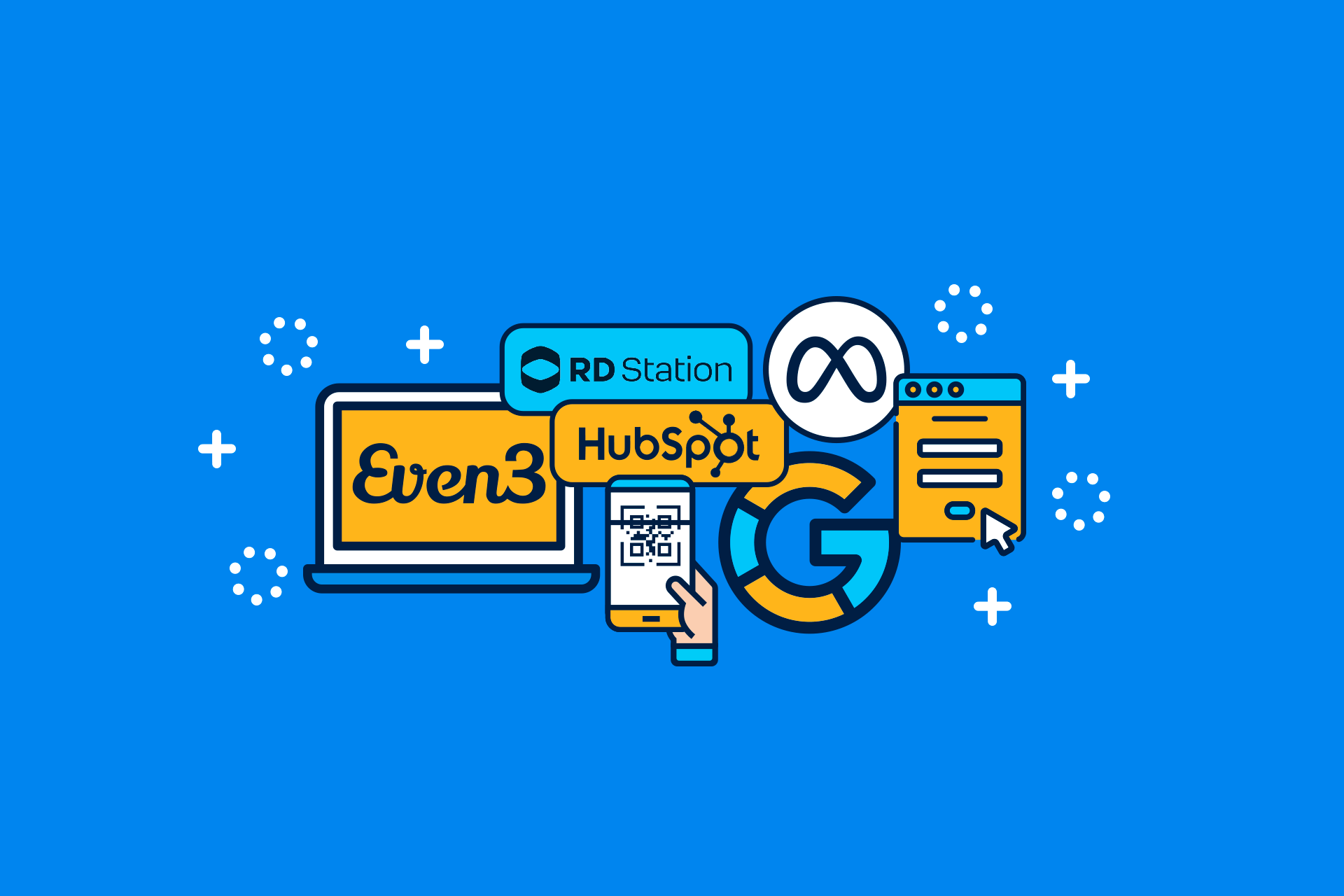
10 tools for data collection at events
Pre-event
1. Even3 forms
Forms are necessary for any registration to happen.
Basically, they need to be online, concise, and offer security, in case there’s ticket sales involved.
But if you want to go beyond the basics, you can invest in tools that let you create forms that go beyond registration.
For example, on Even3 you can create other standalone forms with extra questions for your attendees to answer whenever you want.
Afterward, the collected data is stored on the platform itself (a secure location), but can also be exported to be analyzed and presented more easily.
Practical example: You want to get to know your audience better at an event, but want to avoid a registration form that’s too long. So, at the start of the event, you automatically send an email with a link to a more robust form to get to know all your attendees in more depth. You can also choose the colors, images, and visual identity of the new form you create.
2. Google Analytics
Google Analytics is a free traffic analysis tool that monitors user behavior on a website.
It works by installing a code on the event page. From there, it starts recording data such as:
- Number of visitors
- Traffic source
- Device used
- Time on page
- Conversion rate
So, it’s super important to use this tool if you want to find out which channels bring in the most registrations, understand the audience profile, the results of marketing campaigns, etc.
Practical example: You notice that many people visit the registration page, but few complete the purchase. This can indicate that the form is too long or that there’s friction in the payment process.
3. Even3 Analytics
Similar to Google, Even3 Analytics is a data analysis tool, but integrated directly into the events platform.
With it, you don’t even need to leave the event organization page to see charts containing information such as:
- Total sales made
- Sales peaks
- Payment methods used
- Countries of payment
- Number of visitors to the event website
- Traffic source
- Device used, etc.
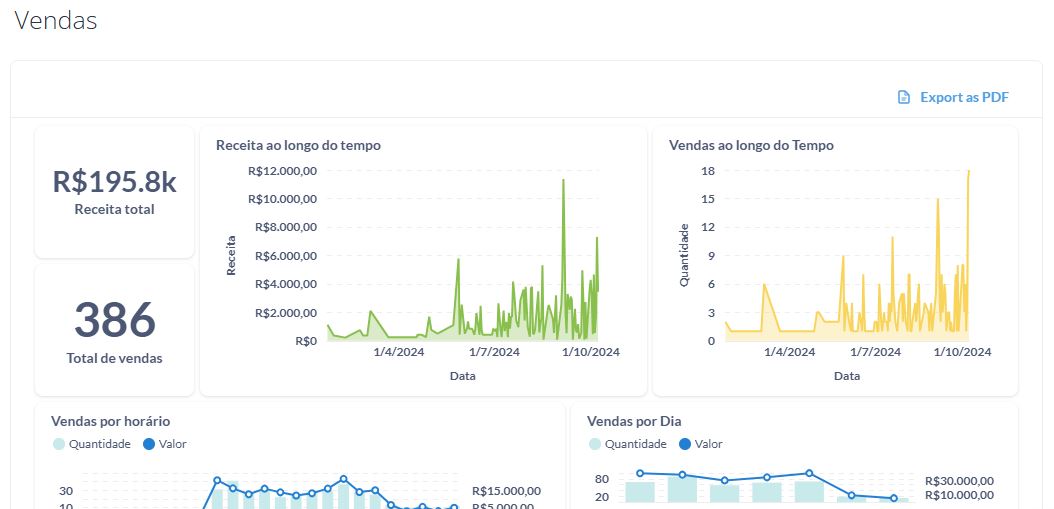
Practical example: By tracking the Even3 Analytics dashboard, you identify that registrations always increase after email blasts — information that helps optimize your promotion strategy and invest in the channels that actually convert.
4. Meta (Instagram and Facebook)
Meta offers one of the most complete tools for tracking engagement and ad data.
Through Meta Business, you can track:
- Information about your audience
- Posts with the highest reach
- Number of likes, shares, and engagement
- Ad results
- Cost per lead
- Ad conversion rate, etc.
In practice, this will help you check the results of your event’s promotional campaigns, measure the return on your ad investment, test different audiences, among other things.
Practical example: By testing two different audiences, you discover that professionals convert 3x more than students. As a result, you get a better sense of who your target audience really is.
5. RD Station
RD Station is a marketing automation and CRM tool. It centralizes lead data and allows for segmentation and automated email sending.
Here’s how it works:
- The attendee registers for the event
- The data is sent to the CRM
- You can create automatic communication flows
In practice, this lets you create well-segmented email marketing campaigns, use events to attract leads, nurture leads after the event, and track the results of these campaigns.
Real example: After several segmented email marketing campaigns, you notice that the student audience is more engaged than the researcher audience. Because of this, on the day of the event you can create different schedules to boost student engagement and encourage researchers.
6. HubSpot
Like RD, HubSpot is also a CRM and marketing automation platform that works in a similar way.
It stores data on event registrants, organizes contacts by segmentation, and lets you create automated email flows for leads.
In practice, you can use it like any other CRM tool: to build relationships, and to retain and keep customers loyal.
Practical example: After the event, you identify an attendee profile that interests your sponsors, so you send them specific materials.
Event
7. Check-in app
On the day of the event, one tool is essential: the check-in app.
Everyone knows it’s crucial for speeding up attendee check-in and making sure only registered people are attending the event.
But did you know it can show you valuable data? For example:
- Measuring the real attendance rate (show-up rate)
- Controlling access by activity
- Tracking the percentage of giveaways delivered
- Monitoring queue time at the event (essential for service improvements)
Practical example: In Even3’s check-in app, you can also mark whether support materials or giveaways were delivered at check-in time. Afterward, at the end of the event you can track the amount of materials delivered and possible improvements for future editions.
8. Mentimeter
Mentimeter lets you create polls and interactive questions displayed in real time during talks.
Because of that, it’s sometimes seen only as an interaction tool. But the data it generates can be important!
For example, with Mentimeter you can collect data about the audience’s opinion on specific topics as they’re happening.
You can also collect data about the audience profile, engagement level with the topics, and much more.
Practical example: After a talk, you use Mentimeter to create a questionnaire about the topic discussed and how it was received. This way, you can measure how well the content landed and the audience’s opinion about the activity.
Post-event
9. Event evaluation on Even3
At the end of the event, one of the biggest sources of data is the evaluation form.
But to avoid data loss or a lack of responses, it’s ideal to look for an events platform that already has native evaluation functionality.
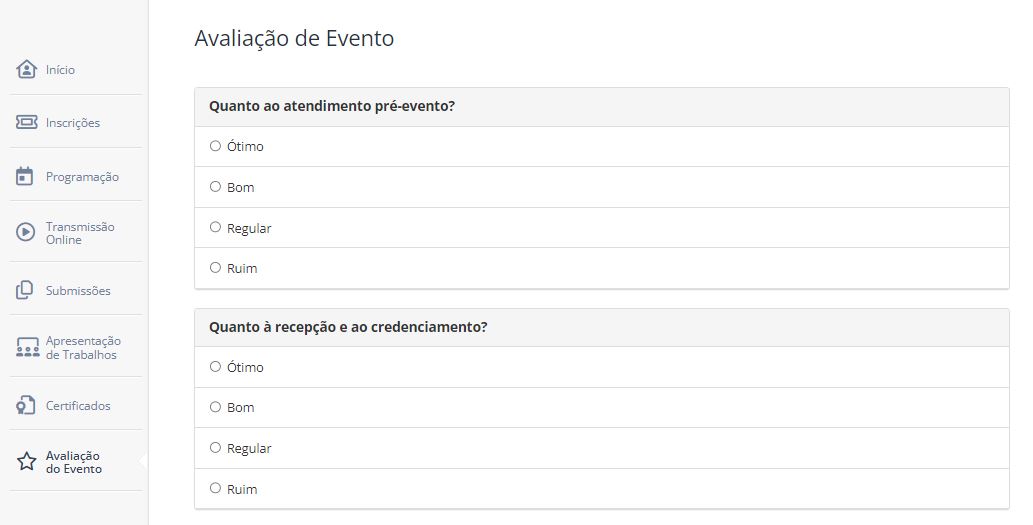
This way, your event’s most important data stays centralized in one place, and you can even link certificate delivery to the event evaluation.
In practice, you’ll use it to measure the event’s NPS, evaluate talks, identify areas for improvement, and listen to your audience.
Practical example: If the evaluation shows a low score for infrastructure but a high score for content, you know exactly where you need to invest for the next edition.
10. Google Looker Studio
Finally, Looker Studio is a data visualization tool.
In other words, it turns spreadsheets and reports into interactive dashboards.
That’s why it’s ideal for producing reports with event results, key indicators, and proof points for sponsors.
Practical example: You build a dashboard showing number of registrants by state, attendance rate, and satisfaction level: all in a single visual report.
Centralizing everything on a single platform
Although it’s possible to use several standalone tools, that can be time-consuming and risky, since the data ends up decentralized.
On the other hand, Even3 brings together, in one place:
- Customizable registration form
- Payment control
- QR code check-in
- Automatic certificates
- Satisfaction survey
- Report exports
Plus the possibility of integrating tools into the platform.
In practice, this means you collect data from the very first click all the way to the final feedback, without needing to switch between multiple tools.
So, how about simplifying this process and centralizing your metrics in a single environment?
Start structuring your event with data from the beginning: create your event on Even3.