Engaging attendees is one of the biggest concerns for organizers. But what if I told you there’s a way to start your event with engagement already built in?
That’s the power of a digital community!
With one, you can create a strategic space to attract leads, generate free and organic promotion for your event, build anticipation for future editions… There are so many possibilities!
That’s why I’m going to teach you some strategies. Learn more about it below.
What are digital communities?
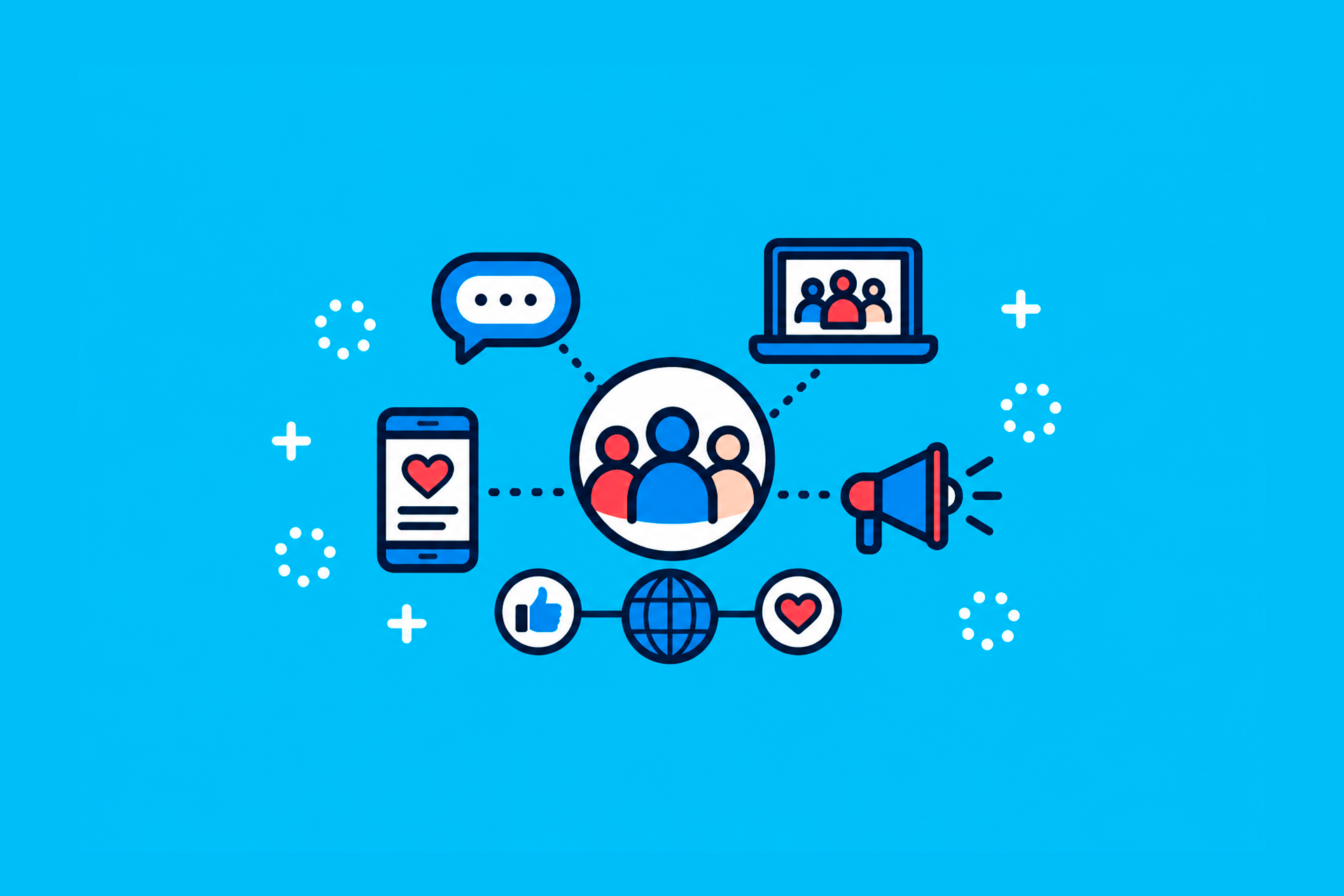
Basically, digital communities are groups of people who connect, interact, and exchange experiences through online platforms.
They can exist in forums, social media, messaging apps, dedicated platforms, or even within environments created by brands and event organizers.
But it’s not just about gathering people in a virtual space. When we talk about what digital communities are, we’re talking about:
- Continuous interaction, not just one-way communication
- A sense of belonging, where members recognize themselves as part of something bigger
- Exchange of value, whether knowledge, experiences, or opportunities
In other words, a well-built digital community doesn’t depend exclusively on the brand or the event to generate movement. In fact, the members themselves help keep it alive!
Is it worth creating a digital community for events?
The short answer is: it depends on the type of event and your goals.
But for most organizers, the answer tends to be yes (and the reasons are more practical than they seem).
When does it make sense to invest in a digital community?
Recurring events benefit the most from digital communities. In these cases, the community keeps the relationship with attendees alive between editions, reducing the effort needed to re-engage and promote each cycle.
Niche events or events with a very specific audience also gain a lot from digital communities.
After all, when attendees share a field of work or a very particular interest, it’s hard to find peers elsewhere. So the tendency for organic engagement is high.
Corporate and educational events benefit from digital communities to extend learning and connections that started in person.
This way, instead of the content “dying” on the day of the event, it becomes a starting point for ongoing exchanges.
Concrete benefits of creating a digital community for events
- Attendee loyalty: community members are up to 3x more likely to return for future editions than attendees without ongoing engagement;
- Free organic marketing: an active community generates spontaneous referrals, reducing your reliance on paid media to sell tickets;
- Demand thermometer: the community reveals what the audience wants to see in the next edition (speakers, formats, topics) before you even start planning;
- Direct communication channel: instead of relying on social media algorithms, you talk directly with people who have already shown interest in your event;
- Content generation: engaged members produce recaps, photos, questions, and discussions that organically feed your channels.
When might it not be worth it?
If your event is one-off, with no future editions planned, investing in a digital community may not be the best use of your time.
The same applies to a very broad, heterogeneous audience.
In that case, targeted relationship strategies, like segmented email marketing and temporary LinkedIn groups, can be more effective.
Examples of digital communities from brands
Several brands have already understood the power of digital communities, and their approaches can give us important insights, such as:
SXSW (South by Southwest)
The Technology, Music, and Culture Festival in Austin (USA) keeps an active digital community all year round. That’s part of why they’ve become so famous!
Beyond the annual event, they sponsor social initiatives, build strategic partnerships, and hold smaller events throughout the year.
They also invest in forum and social media discussions to keep their base engaged and eager for each new edition.
Rock in Rio
In Brazil, Rock in Rio built one of the most robust event digital communities in the country.
Through social media, its own app, and exclusive actions for members, the festival keeps its audience mobilized even in years when it doesn’t take place.
Nubank
Another example of a strong community in Brazil is Nubank, which has one of the most engaged digital communities in the financial sector.
Their community portal offers tips, FAQs, discussion spaces, and much more. The community’s success is certainly tied to Nubank having a strong, active, and memorable brand.
This makes Nubank an example of how a brand can use communities for support, product co-creation, and loyalty at scale.
Lego Ideas
Lego created a platform where fans propose and vote on new products. It’s a digital community that generates real value both for members (who feel like co-creators of the brand) and for the company (which validates demand before producing). Pretty cool, right?
Overall, the common thread among all these examples is clear: the community isn’t a sales channel — it’s a space for genuine exchange.
How to create digital communities for events?
1. Define the community’s purpose
Before choosing any platform, answer this: why should people be part of this community?
The purpose needs to be clear and valuable for the attendee, not just for the organizer.
For example, “Continue the conversations from the event” can be a start. But “exchange experiences about startup management with people who attended the Summit” is much more specific and appealing.
So, define your goal: networking? Learning? Professional development?
2. Choose the right platform
A digital community lives in an online environment, but you don’t need to be everywhere, right?
The choice of platform should follow your audience’s behavior. In other words, you need to know them and identify the social networks where they’re most active. Some common options:
- WhatsApp and Telegram: most commonly used, easier to attract people, but can be hard to moderate at scale;
- Discord: ideal for digital communities with thematic subgroups and younger or tech-focused audiences;
- Instagram: broadcast channels or close friends can create a sense of exclusivity, but don’t allow interaction between attendees. Not typically used for networking purposes;
- LinkedIn: works well for networking, professional development, and communities among professionals in specific fields;
- Facebook groups: still relevant for specific audiences, especially older ones.
3. Structure it before opening
Before inviting the first members, prepare the ground: create categories or themed channels, set community guidelines, produce some initial content, and recruit moderators (or ambassadors) who will help bring the space to life.
You can also create ad campaigns to attract more members at the start of your community, or launch it during an event and ride the momentum of the engagement happening there.
4. Activate the community during the event
As I mentioned, an in-person or online event is the best moment to launch or strengthen your digital community.
So during breaks in the event, encourage attendees to join the community, create activities that connect what’s happening at the event to the online space, and show in practice the value of being part of this select group.
It’s also a good idea to promote the community ahead of time to your registrants.
For example, on Even3, you can add a button linking to the event’s community both on the website and in the attendee’s registration confirmation.
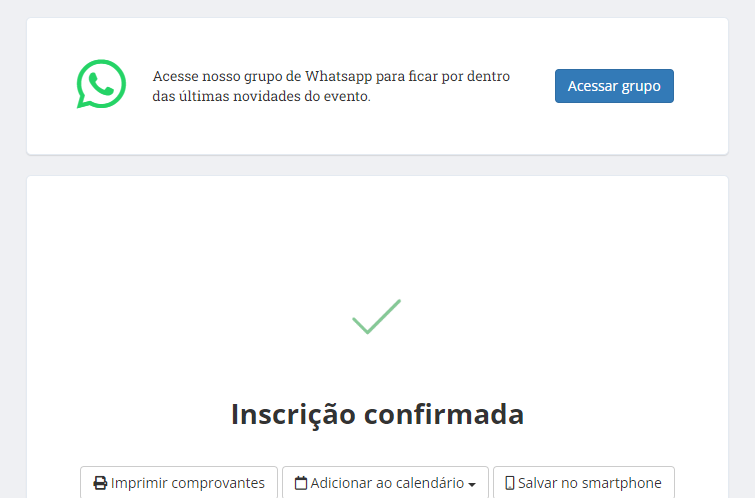
WhatsApp group link on Even3’s registration confirmation
This way, you can grow your digital community’s momentum even before the event starts.
In fact, this is a great moment to feed attendees with quality content, exclusives, and information that build excitement for the event.
5. Keep the pace after the event
Most digital communities fail after the event is over.
To avoid this, plan a cadence of content and interactions for the following weeks in advance: session recaps, Q&As with speakers, polls about the next edition, exclusive content for members.
Then keep the conversation going with industry news, valuable content, a newsletter with recent updates… once created, your community should always be part of your event’s marketing plan!
Best practices for digital communities
Finally, you’ve probably noticed by now that maintaining a digital community is hard, right?
The challenge is keeping it alive and engaged. That’s why it’s important to follow a few best practices, such as:
Have clear rules and enforce them
An unmoderated community can quickly turn into a space full of spam and misinformation. And nobody wants to waste time in a disorganized group!
That’s why you should define what’s allowed, what isn’t, and what happens when the rules are broken (and act consistently and quickly).
Prioritize quality over quantity
A digital community with 300 highly active members is worth much more than one with 10,000 silent members.
So focus on creating conditions for people to interact, not just growing the sign-up count.
Bring in professionals
Monitoring, engaging, and managing a community can be quite a lot of work! If you want to build a large, engaged community, it can sometimes be worth hiring someone dedicated to it.
That is, someone who will manage members, follow discussions, interact daily, and create exclusive content for the community.
Larger brands usually already have this professional, known as a Community Manager. Depending on the size of your event and community, it may be worth hiring one too.
Give members a voice
The best digital communities are the ones where the members themselves become the protagonists. So highlight contributions, invite members to create content, and make room for the community to influence event decisions.
Measure engagement, not just size
As mentioned, member count isn’t the most important metric to know whether your community is delivering results.
In this case, it’s more important to analyze response rate, posts per member, access frequency, and recurring attendance at events, and so on.
If your numbers on these indicators aren’t good, it might be time to improve your community or, in some cases, even end it.
Integrate the community into the event journey
Your digital community shouldn’t be a separate element from the event. On the contrary, it’s part of the full experience: in promotion, pre-event, during, and after.
So remember to bring the discussions from the event into your community!
Hold events frequently to keep the community warm
Finally, remember SXSW? One of the strategies the brand uses is holding smaller events beyond the annual one. And that’s not by chance!
Investing in simpler events, like livestreams, webinars, meetups, and networking rounds, is one of the most effective ways to boost engagement in digital communities.
After all, frequent events create rituals, renew members’ interest, and organically attract new attendees.
Plus, structuring recurring events like this isn’t hard, especially with the right tools!
With Even3, you can manage recurring events at scale, copy settings from past events, automatically create websites, get a portal with all the events you’ve organized, and much more.