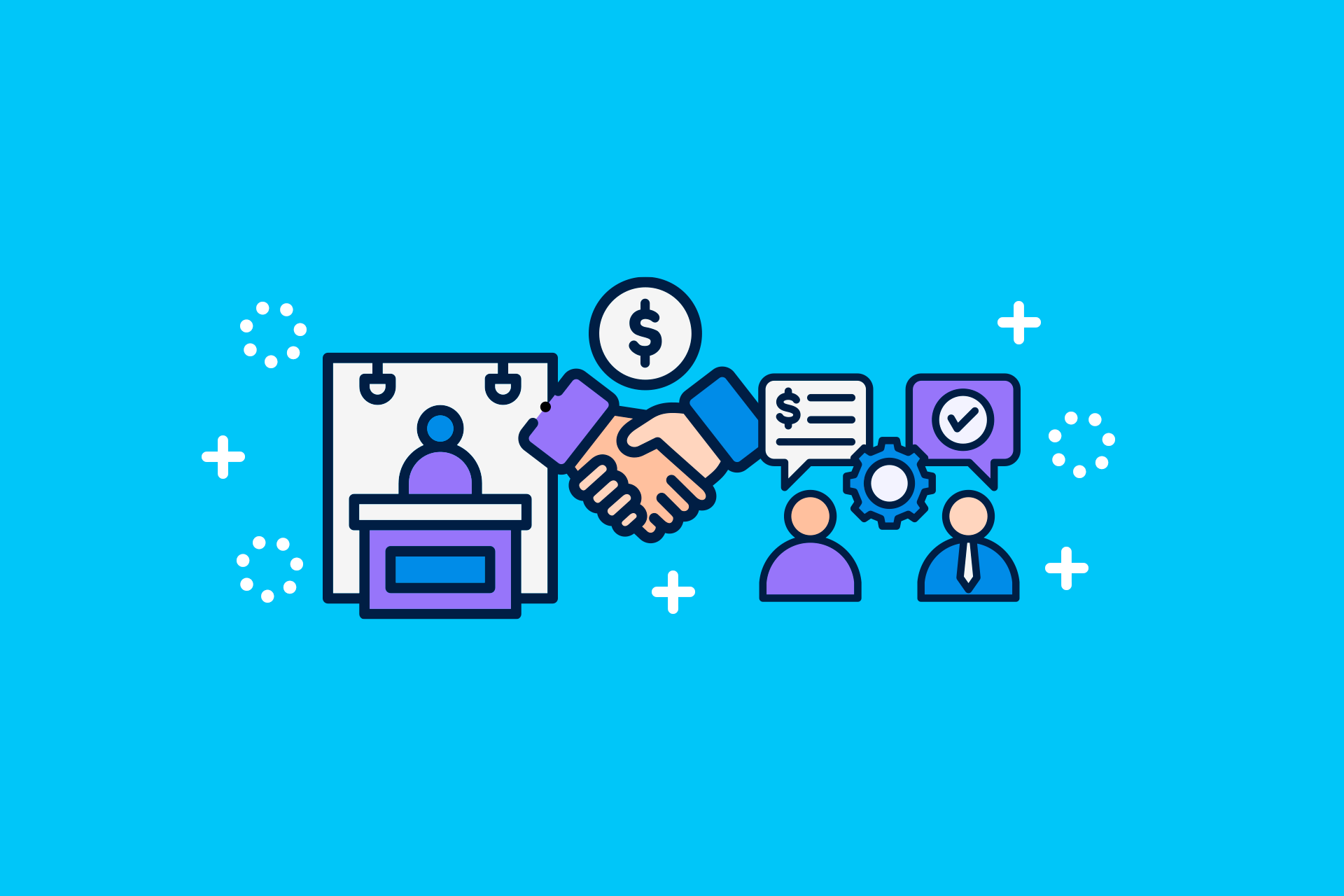
Attracting sponsors and managing exhibitors follows the same logic as any B2B sale. There’s prospecting, a proposal, negotiation, closing, and renewal, and each stage depends on well-managed relationships to produce results.
The problem is that most event organizers handle this process without any structure: contacts scattered across email, conversations on a personal WhatsApp, and spreadsheets nobody keeps updated. When the person responsible for sponsorship acquisition leaves the team, a large part of the history goes with them.
In this article, you’ll understand why this process needs more organization and how a CRM can help you manage sponsors and exhibitors without losing a single deal along the way.
Sponsors and exhibitors require their own relationship cycle
The relationship with sponsors and exhibitors doesn’t start and end with the contract. It has stages, and each one requires a different action from the organizer.
This cycle includes:
- Prospecting: identifying companies with a suitable profile to sponsor or exhibit at the event;
- Initial outreach: presenting the event, audience numbers, and the opportunities available;
- Negotiation: adjusting packages, benefits, and terms according to each company’s interest;
- Closing: formalizing the agreement and aligning the deliverables included in each package;
- Post-event: delivering reports, reach data, photos, and agreed-upon materials to the sponsor;
- Renewal: resuming contact for the next edition based on what was delivered.
In smaller events or with few partners, it’s still possible to manage this cycle from memory. In recurring events with dozens of sponsors and exhibitors involved, management needs to be more structured.
The most common challenges in managing event sponsors
When the process isn’t organized, problems show up at different points in the negotiation. The most common ones among event organizers are:
- ❌ Lost history: conversations scattered across email, WhatsApp, and personal notes cause important details to get lost along the way;
- ❌ Dependence on people: when someone leaves the team, information about each company, agreements made, and the status of negotiations often leaves with them;
- ❌ Lack of visibility: without a centralized place, the organizer doesn’t know what stage each sponsor is at — who received a proposal, who’s negotiating, who hasn’t responded yet;
- ❌ Renewal without a data trail: the conversation about the next edition starts with no concrete records of what was delivered in the previous one, which weakens the case for renewal;
- ❌ Irregular follow-up: without reminders or records, some sponsors go weeks without a response, which cools down the negotiation.
These challenges aren’t exclusive to large events. Any organization that depends on sponsorship to make its editions viable can run into them.
How a CRM helps organize sponsor and exhibitor acquisition
A CRM (customer relationship management system) is the tool that solves this kind of problem: centralizing information, organizing stages, and making sure no contact is forgotten.
Applied to sponsor and exhibitor management, a CRM lets you:
- Create a specific negotiation pipeline for each type of partner, with clear stages from initial prospecting to closing;
- Centralize each company’s history in one place, bringing together emails, meetings, proposals sent, and agreements closed;
- Set up automatic reminders to follow up on contacts that went unanswered or that need follow-up on a specific date;
- Record post-event deliverables in an organized way, building a concrete data trail for renewal conversations;
- Share the history with the whole team, so negotiation progress doesn’t stay concentrated in a single person.
With this, sponsor management stops depending on someone’s memory and starts following a process that works even when the team changes.
What to evaluate when choosing a CRM for sponsor management
Not every CRM is designed for teams that organize events, and that makes a difference when choosing one. A few points deserve attention:
- Ease of use: event teams aren’t career sales teams. The system needs to be simple enough to fit into the routine without requiring a lot of adjustment time;
- Local-language support: having documentation and support in your team’s language reduces the learning curve and makes solving day-to-day issues easier;
- Mobile access: during the event, much of the work happens outside the office. A mobile app helps keep records updated in real time;
- Email and WhatsApp integration: contact channels with sponsors vary. Good integration keeps information from getting fragmented across systems;
- Compatible cost: event organizations have varying cost structures. It’s worth checking the pricing model and what’s included in each plan before signing up.
CRM tools for managing event sponsors and exhibitors
With these criteria in hand, the next step is getting to know some of the options available on the market. Below, we list tools that fit well with the process of acquiring and managing event partnerships.
Agendor CRM + Agendor Chat
Agendor CRM is a Brazilian B2B sales platform with over 10 years in the market, built for teams that need to organize sales processes with multiple stages, relationship history, and structured follow-up.
For event organizers, this logic applies directly to sponsor acquisition: you can create a dedicated pipeline for each type of partner, with stages ranging from initial prospecting to renewal. In addition, proposals sent, meetings held, and terms agreed upon are recorded directly on each company’s record, keeping the entire history centralized and building a concrete data trail for renewal conversations in future editions.
Among the most useful features for this process are the required fields per pipeline stage, which ensure key information is recorded before moving forward in the negotiation, and follow-up automations, which prevent a contact from going cold due to lack of follow-up. The platform also offers a free mobile app for logging interactions in real time, including during the event itself.
For teams that use WhatsApp as their main contact channel with sponsors, Agendor Chat complements the ecosystem: it turns the company’s WhatsApp into a professional support channel, with multiple agents on a single number, organized history, and full visibility for the manager. Native integration between the two products connects Chat conversations directly to the CRM pipeline, keeping everything tracked in one place.
HubSpot CRM
HubSpot CRM is a US-based platform widely adopted by teams that need to integrate contact management, marketing automation, and communication in a single environment.
For event organizers with larger structures or that already use inbound tools, HubSpot offers advanced email sequencing and WhatsApp integration features, which makes it easier to follow up with sponsors over a longer negotiation cycle. The learning curve is steeper, and paid plans are costly for smaller teams.
Zoho CRM
Zoho CRM is a flexible, affordable solution, suited for teams that need to customize pipelines, fields, and workflows according to the dynamics of their acquisition process.
With local-language support and a free plan for small teams, it’s an interesting option for event organizations that are starting to structure their sales management without a large technology budget. The platform offers a good variety of integrations, although the mobile experience is less polished compared to other solutions on the market.
Atendare
Atendare is a CRM with local-language support and a focus on small and medium businesses. Besides contact and pipeline management, it offers WhatsApp and email integration, making it easier to centralize communication channels with sponsors in one place.
This article was written in partnership with Agendor, a CRM platform built to boost sales.