Have you ever been to an event where attendees barely interacted? Sometimes all you need is an icebreaker activity to break that awkward vibe!
Yes, it’s normal for events to have people who struggle to connect with one another, especially online.
But some icebreakers can break the shyness and keep your attendees engaged. They also encourage networking and make the experience more interactive and productive.
So, how about learning some options to put into practice at your events? Here are 13 icebreaker activities for academic, corporate, or social events.
Icebreakers: 8 Options for Events
1. Three-Legged Race
How It Works
First, organize subgroups of three players.
Then, put one player in the middle and tie their left leg to the left leg of the player on their left. Do the same with the right leg and the player on the right.
On the coordinator’s signal, the groups of three must run like this until they reach a marked finish line. Whoever gets there first wins.
In this case, it’s a nice touch to offer a prize, such as consulting sessions, giveaways, vouchers, or something of value related to your event.
If you prefer, you can tie hands or arms instead of legs.
Main Goals
- Bring attendees closer together;
- Build trust and collaboration.
2. Charades
Have you heard of this game? It can be a great team icebreaker!
But if you don’t have the board game, you can create an alternative version.
How It Works
To start, without anyone seeing, write down characters, actions, or objects to be acted out on slips of paper.
Then, fold the papers and shuffle them.
Split attendees into pairs. Then, each person must pick a slip of paper and act it out so their partner or the other groups can guess what’s written.
Finally, the pair with the most correct guesses wins.
Main Goals
- Bring attendees together;
- Develop creativity.
3. Event Venue Easter Eggs
How It Works
Hide objects, QR codes, or coupons in different spots around the event venue.
If you’d like, provide a map with hints for attendees and encourage them to search for the items.
Then, whoever finds them can win giveaways or other prizes.
Main Goals
- Encourage attendees to visit areas of the event that are usually less crowded;
- Cooperation and collaboration among attendees.
4. Challenge Game
How It Works
To start, without anyone seeing, write practical challenges on small slips of paper, fold them, and place them in a container.
Arrange attendees in a large circle and create teams with an equal number of people.
Then, pass the container with the slips from person to person around the circle.
To liven things up, you can play music during this part.
So, when the music stops or you give a signal, whoever is holding the container must pick one of the challenges for themselves.
They can choose to:
- Complete the challenge and earn 3 points for their team;
- Nominate someone from another team to complete the challenge and earn the points for that team instead;
- Pass the box along and drop out of the game, making their team lose 4 points.
In the end, the team with the most points after all the rounds wins.
Main Goals
- Integration and collaboration through a team activity;
- Motivation to face challenges.
5. Awards Night
An icebreaker can also be applied at the end of the event!
This helps integrate people who haven’t made as many connections as they could have.
It can also build anticipation for future editions. That’s a specialty of Awards Night.
How It Works
Create an online form or ballot boxes to let attendees vote for the best things at your event — activities, speakers, booths, and more.
You can also create your own awards, like most engaged attendee, best networker, best presentation… use your creativity and match it to your audience!
Main Goals
- Promote active participation at the event;
- Build attendee loyalty.
6. Escape Room
How It Works
Escape rooms are immersive challenges where attendees must solve puzzles and find clues to “escape” a room within a set time.
You can set up these spaces at in-person events.
Or create digital rooms for online events with tools like Genially or Room Escape Maker.
Main Goals
- Build teamwork and cooperation;
- Stimulate logical thinking.
7. Balloon Battle
How It Works
Split attendees into two teams.
Then, give each attendee 2 balloons and a string, and ask them to tie them to their waist.
After that, give a signal, and each attendee must try to pop as many balloons from the opposing team as they can, using only their hands.
Finally, the team that pops all of the other team’s balloons first wins.
Main Goals
- Generate healthy competitiveness;
- Encourage teamwork.
8. Food Battle
How It Works
How about trying some super creative team activities?
If possible, take groups of attendees to a kitchen and encourage them to create dishes together.
For example, ask them to make different, creative pizzas.
At the end, everyone can eat what they made and enjoy the moment as a coffee break.
Main Goals
- Bring attendees closer together and build connections;
- Promote hands-on activities in your event schedule.
7 Icebreakers for Corporate Events
1. Profile
How It Works
In this icebreaker, attendees write down, without their name, two characteristics about themselves and two of their quirks.
Then, the slips of paper are shuffled and handed out to the players.
When they open the paper, each player reads it aloud and tries to find the person they think matches those characteristics.
Main Goals
- Build closeness and rapport;
- Generate networking.
2. Yarn Web
How It Works
First, ask attendees to sit in a circle.
Give a ball of yarn to the first attendee, and ask them to say their name and a goal they want to achieve at work.
Then, that person should wrap part of the yarn around their finger and toss the ball to another person at random.
The new person then repeats the actions, and so on.
In the end, a large web is formed, and attendees must exit without losing the yarn wrapped around their finger.
Main Goals
- Build closeness and connection;
- Share experiences and network.
3. Puzzles
How It Works
At online events, use puzzle tools to launch questions in the middle of the event.
Encourage everyone to participate and look for answers in the event chat.
Main Goals
- Increase engagement;
- Test knowledge covered at the event.
4. Two Truths and a Lie
How It Works
In this icebreaker, you need to encourage your attendees to talk about themselves.
So, ask them to write down 3 truths and 1 lie about themselves.
Then, each attendee reads them out loud, and the rest must try to guess which one is the lie.
This icebreaker is ideal for bonding small groups.
Main Goals
- Increase integration and closeness;
- Encourage participation.
5. The 6-3-5 Method
How It Works
Basically, the 6-3-5 method works like this:
- Create groups of 6 people and give them a challenge to solve;
- Ask each person in the group to suggest 3 ideas;
- Each attendee has 5 minutes to write them down.
When time is up, the paper is passed among attendees, and the ideas can be improved on or new ones suggested.
Main Goals
- Develop problem-solving skills;
- Encourage creativity and collaboration.
6. Building Objects
How It Works
Group activities are great for breaking the ice.
But getting hands-on and doing something practical increases the chances of real bonding even more!
So, in this team activity, split attendees into groups and encourage them to build something together.
For example, making cardboard-and-glue dice, building paper towers, painting together, and so on.
To do this, provide the necessary materials and set a time limit.
When the time is up, groups should present their creations.
Main Goals
- Encourage creativity;
- Build problem-solving and conflict-resolution skills as a team.
7. Online Raffles
How It Works
Raffles are an interactive activity that automatically and transparently rewards attendees.
That’s why they can be used to break the ice at the start of presentations.
You can raffle off coupons, mentoring sessions, 1:1s, and more.
To do this, you can use the Even3 platform itself.
That’s because the platform offers a secure raffle system, without ever leaving the same place where you manage your entire event.
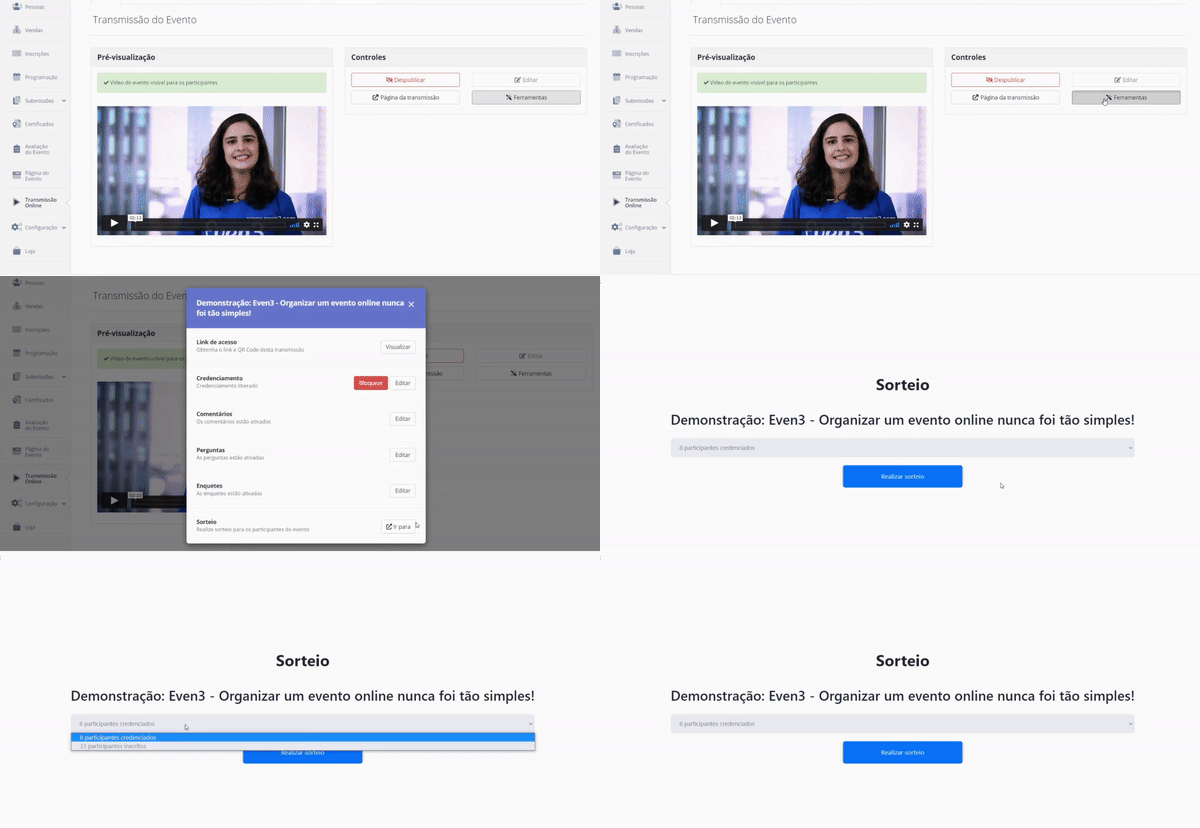
You can also choose to run the raffle only among attendees who are checked in on-site. In other words, only those who have checked in.
This check-in is also done through the Even3 platform, and both features are available for hybrid, in-person, and online events.
So it’s worth using an event platform to make organizing your event easier.
You can even manage and track every event held by your company on Even3.
Check your financial dashboard, create a portal with all your events, track data, and more.