
Did you know that the events industry created over 170,000 jobs in Brazil in 2024?
That number includes staff, vendors, speakers, and many people involved in organizing events.
Of course, putting real numbers on paper can be challenging. And I bet you’ve already asked yourself how much it costs to organize an event, right?
But here’s an even bigger challenge: do you know how to build an event budget that’s realistic, creates opportunities, and is still cost-effective?
In this article, I’ll teach you how, covering:
- The main factors that influence event costs;
- How to set your ticket price;
- Practical actions to cut costs without compromising quality.
Let’s get started?
How much does it cost to organize an event?
The most honest answer is: it depends. Every event is unique, so how much it costs to organize one depends on several factors that are important to map out.
To help with that, you can use Even3’s free spreadsheet to find out, on average, how much your event will cost.
Now, let’s go over the main points you should include in your budget:
1. Event type and size
Obviously, an online seminar with 50 people costs far less than an in-person congress with 500 attendees.
After all, the bigger and more complex the event, the more resources it requires. And that applies to every detail: from the venue to the size of your team.
So remember to list the cost of hiring staff and estimate the average number of attendees for your event. This will matter for defining other items, like giveaways, food, and more.
2. Venue and infrastructure
- Venue rental: If your event is in person, choosing the venue weighs heavily on the budget. That’s because auditoriums, convention centers, and universities have different price points. For example, in São Paulo, small rooms can cost R$2,000/day, while hotel auditoriums go up to R$7,000/day. On the other hand, large congress centers can exceed R$500,000 for multi-day events;
- Equipment: You won’t just deal with rental costs! So also map out expenses for lighting, chairs, microphones, projectors, internet, air conditioning, and even cleaning;
- Decoration: Simple or custom arrangements vary a lot and are optional for events. But if you decide to hire decorators, compare prices from different professionals.
3. Materials and services
Coffee breaks, badges, certificates, giveaways, simultaneous translation, filming… these are items many people forget to include in an event budget, but they make a difference both financially and for the attendee experience.
In these cases, it’s usually more practical to outsource the service to vendors, but nothing stops you from having your own team handle it too.
However, always remember to compare prices and see what’s worth it — without overloading your team!
4. Speakers and guests
Fees, travel, and accommodation for special guests need to be planned for.
But remember to build a list with several speaker options. This will make it easier to choose ones that fit your event’s financial reality.
Also, academic events often negotiate free participation, but always include a margin for unexpected costs and expense reimbursements.
5. Promotion
Beyond the costs above, spending on a website, social media, email marketing, and press relations is essential to attract your event’s audience, promotional tools, and editable visual assets in Canva.
6. Registration
Speaking of platforms, they’re extremely important to ensure secure ticket sales.
Usually, when someone asks “how much does it cost to organize an event?” they’re already thinking about these points!
But before you start charging for your tickets, research the main platforms and prioritize ones that offer more free features.
7. Team and vendors
You’ll need people for reception, technical support, customer service, security… on top of outsourced vendors. All of this should be included in your event budget spreadsheet.
How much should you charge for an event ticket?
To charge or not to charge? And how much? This is one of the most strategic decisions any organizer makes.
So here’s the tip: base the ticket price on your total costs and your event’s value proposition.
Let’s look at a practical example:
If your event’s total cost is R$10,000 and you expect 200 attendees, the base ticket price to cover your costs should be R$50. But careful: that’s just your break-even point.
If you want a safety margin or to reinvest in future editions, adjust that value by adding a profit margin.
It’s also worth considering:
- Tickets sold in different tiers (a cheaper early tier, for example);
- Discounted rates for students and seniors;
- Group registrations or bundles with short courses.
These strategies help you reach different audiences and increase your revenue.
How can you cut event costs?
Now that you know how much it costs to organize an event, let’s get to the good part: how to save money without losing quality. Here are some practical ideas:
Sell tickets in advance
First, consider selling tickets ahead of time.
This helps cover initial costs and also reduces financial risk. So you can offer discounts to early registrants or promotional ticket tiers.
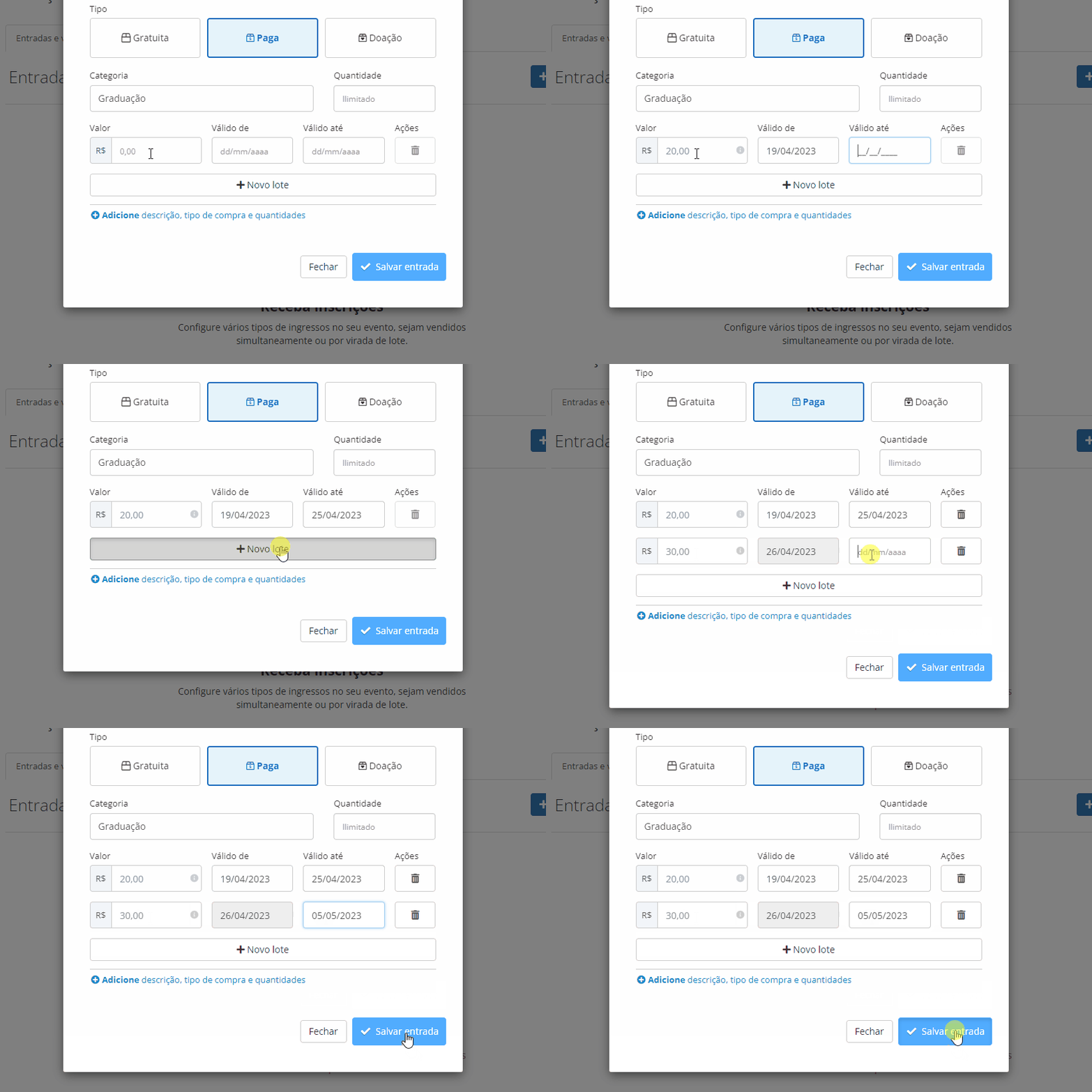
On Even3, you can set start and end dates for each ticket tier.
This way, you can create tiers that open and close automatically, making your sales process much more practical and secure.
Plan ahead
Research prices, negotiate with vendors, and avoid hiring services at the last minute.
Ideally, your contracts should be signed at least 2 months before the event date.
Look for sponsorships
Have you ever thought that your event could be an opportunity for other companies to reach potential clients?
So it’s time to look for companies in your segment that would be interested in reaching your audience.
But that’s not all! Sponsorships can go beyond financial support, offering giveaways, activations, printed materials, services, and more.
Partner with universities and institutions
If you’re a university professor, take advantage of your institution’s infrastructure to reduce costs on venue, promotion, and even support from student volunteers.
It’s also worth seeking partnerships with institutions that specialize in your event’s topics. They can provide good speakers and use the opportunity to promote their own research.
Use digital tools
We’ve finally finished mapping out the costs! Phew. But do you still feel like your event is going to have a lot of expenses?
Then it’s time to discover digital solutions!
Handling registrations, issuing certificates, and sending communications manually takes a lot of work and costs a lot. That’s where Even3 comes in!
With an event platform, your team can be smaller or better allocated.
With Even3, you can:
- Create a free, intuitive event website, no developers needed;
- Sell tickets online and manage registrations, without needing a huge on-site sales team;
- Create and issue automatic certificates, without designers;
- Check in attendees through an app, without lines and confusion;
- Save time (and money) with automation.
All in one place, with specialized support in case you still have questions.
So, do you want to organize your event more efficiently and cost-effectively? Discover Even3 and see for yourself how organizing events pays off.