
Have you ever wondered how to make your academic event stand out among so much information online? Event proceedings might be the answer!
They’re a way to record the academic output of an event, making it more accessible.
They also attract a lot of attendees! That’s because proceedings can be added to a researcher’s CV, count toward academic evaluations, and promote scientific dissemination.
So, how about publishing proceedings for your event and using them to your advantage? There’s a much simpler way to do all this! Keep reading to learn more:
- What are academic event proceedings?
- Why are proceedings important?
- How do you publish an event’s proceedings?
- 3 tips for publishing proceedings more easily
What are academic event proceedings?
Basically, event proceedings are a collection of scientific papers published in the context of an event. Each edition represents the year the event takes place.
These can be congresses, conferences, seminars, and other academic events.
The publication can include short abstracts, extended abstracts, or full papers. It all depends on the event’s submission rules!
The document will also include the names of authors, reviewers, and attendees who contributed in some way to producing the proceedings.
That’s why it works as a record of academic output, and having your name on it really matters!
But why call it “proceedings”?
The term comes from the idea of formally recording what “proceeds” or takes place at an event, capturing the knowledge generated in a given year.
That’s why the term represents the scientific output of each edition of the event, which is usually annual.
Its roots trace back to Ancient Rome. Cicero (De Oratore, ii. 12. 52) states that since the earliest periods, it was common for the Pontifex Maximus, the chief priest, to display a small white tablet in a public place listing the notable events that occurred during the year.
Nowadays, though, proceedings are simply known by that name in academic publishing.
In other words, all the content generated, discussed, produced, and presented at an event. By now you can probably already picture their importance? Let me explain further!
Why are event proceedings important?
Imagine filing away research that took years to complete in a drawer somewhere… That won’t do!
That’s why publishing is so encouraged in academia.
After all, it’s only through review by other scientists that you’ll see the relevance of your work and learn how to improve it!
In that sense, proceedings are highly valued in academia because they represent a legitimate form of publication.
Events also tend to accept submissions more easily. That makes them the first experience for many early-career scientists.
Research shows that most researchers take 1 to 2 years to publish articles in scientific journals. Journals also usually require more experience.
So most people start their scientific output at events! They’re major drivers of academic careers.
But there are still other benefits to event proceedings, such as:
- They preserve and immortalize the scientific knowledge produced at that edition of the event
- They boost researcher participation in the event
- They bring early-career researchers closer to established conference attendees
- Papers published in proceedings bring visibility to authors
- Event proceedings add experience to an academic CV and can count points in selection processes
- They can be added to a researcher’s official academic record
- They publicize the country’s scientific output and make it more accessible
- They offer quick, practical access, plus a summary of the event’s content for those who couldn’t attend
- They generate visibility and authority for the event
How do you publish an event’s proceedings?
Editorial board
First, you’ll need an editorial board.
That is, a team responsible for organizing and managing the quality of your event’s proceedings.
An editorial board is responsible for:
- Choosing reviewers for the papers submitted to the event
- Setting the submission rules
- Formatting papers and standardizing them for publication in the proceedings
Paper formatting on Even3
Formatting papers is one of the hardest and most meticulous parts of publishing proceedings.
That’s because it requires adding watermarks, laying out pages, creating a cover…
For that reason, many editorial boards prefer to outsource this work, seeking help from professionals.
This service can be offered by publishers or event platforms like Even3.
On Even3, you can manage every stage of the event, plus get full support for publishing proceedings. All without leaving the platform!
Cataloging record
Another service you can count on with Even3 is creating the cataloging record for your event’s proceedings.
This is one of the most important parts of a publication.
That’s because a cataloging record works like an “ID card.” It shows the most important details of the work and makes it easier to catalog.
That’s why they’re usually required by libraries or to issue identifiers.
Publisher prefix
Speaking of identifiers, they’ll help distinguish your event’s proceedings from other materials online.
In fact, this is a way to make it stand out among so much digital information.
It also ensures the content is a reliable source of information.
So, for your publication to be officially registered, you need to request an identifier. They are:
ISSN
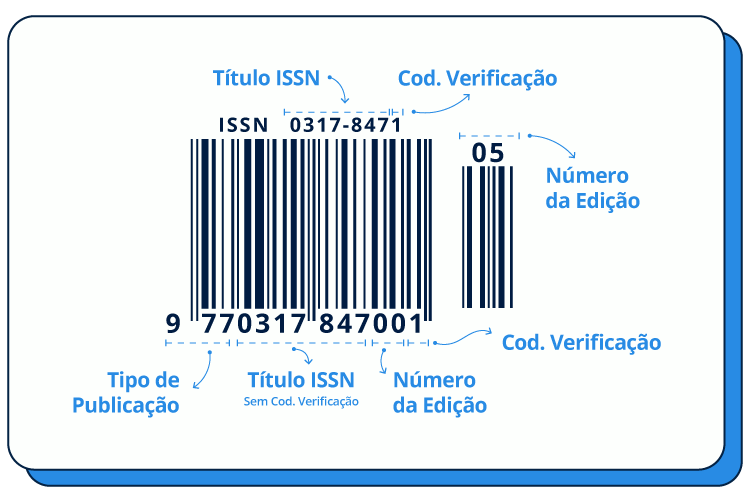
The ISSN is a code that identifies serial publications, such as proceedings published periodically.
In other words, it should be used for recurring events, since the proceedings will represent different editions of the same event each year.
The ISSN changes a few digits with each publication, making it unique and essential for each edition.
ISBN
The ISBN, on the other hand, is a code that identifies official publications that aren’t periodic. Its number is unique and never repeated.
It’s usually assigned to one-off event proceedings or to the first edition of an event’s proceedings, since initially that’s a standalone publication. From the second edition onward, it can switch to an ISSN.
DOI
Although not mandatory, the DOI is an identifier that guarantees the authenticity of any document published online.
It also makes it easier for content to be found, cited, and have its citations tracked.
It’s also a unique combination of numbers and letters, never repeated, and it carries great value in academia, since it’s the best way to ensure a publication’s authenticity.

Where to publish
To publish your event’s proceedings, it’s essential to ensure universal access to your publication.
This fulfills the goal of scientific dissemination inherent to any academic event.
That’s why printed formats have become increasingly obsolete.
After all, they keep the proceedings exclusively among event attendees, making it harder for researchers elsewhere to access them.
Because of that, the most popular option has become publishing event proceedings online.
They can be published on university portals, event websites, or event platforms specialized in paper submissions, like Even3.
In this last case, you get a website for your event and a proceedings portal indexed on Google.
That way, anyone in the world can access the content generated by your event.
3 tips for publishing event proceedings more easily
1. Clearly define your submission rules
To start, here’s a tip that will change your life: focus on your submission rules!
This can make organizing the papers for your event’s proceedings much easier.
After all, you’re the one who’ll have to edit all the submissions into the same format, not to mention the headache of reviewing everything according to formatting standards!
So prioritize defining your submission rules before you start receiving papers. You should determine:
- The template papers must be written in
- Layout requirements for papers
- Whether there are character limits
- The required writing style, such as APA
- The paper’s format
- The number of papers allowed per author
- The maximum number of authors per paper
- Thematic tracks
- Evaluation criteria
- The submission timeline
2. Pay close attention to paper review
Speaking of submissions, one of the most important parts of this process is paper review.
After all, that’s what will ensure the quality of your event’s proceedings.
That’s why it’s ideal to provide transparency and security in the review process.
First, make sure you use a secure review methodology, such as double-blind peer review.
To make this easier, you can use an event platform like Even3.
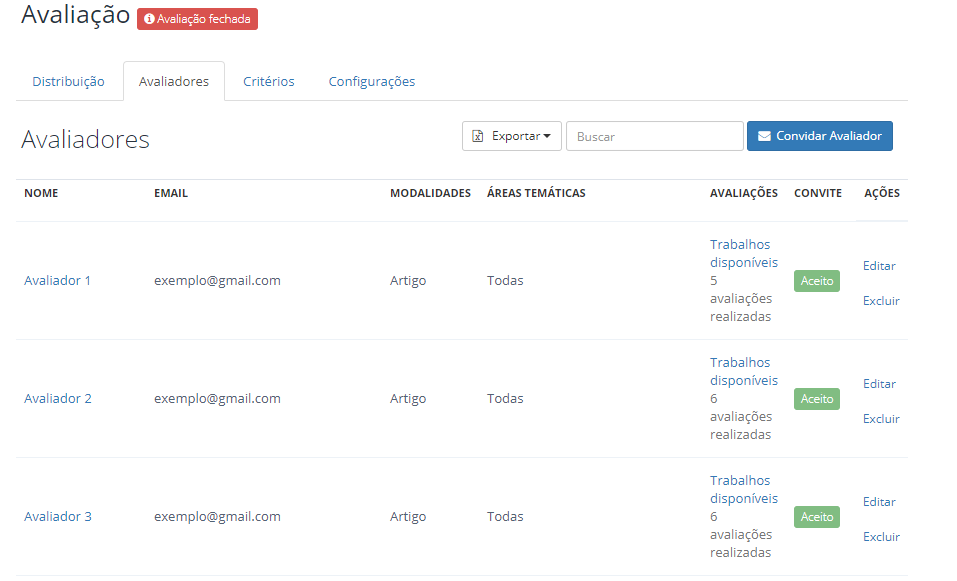
That’s because it lets you distribute papers among multiple reviewers without leaving the platform.
In other words, without needing to download files, send and receive papers by email, and risk losing them.
Plus, your reviewers can also correct papers and issue their assessment directly within Even3’s tool.
3. Use an event platform
Finally, choosing to produce and publish your event’s proceedings through a platform can massively reduce the effort involved!
For example, on Even3 you can count on the help of a team of publishing specialists.
The platform also gives academic papers wide visibility, reaching a global audience interested in the event’s specific field.
Even3 offers an intuitive interface, simplifying paper submissions and making peer review easier.
That way, you can publish your event’s proceedings in record time!
So, have you ever imagined wrapping up an event and publishing the proceedings right away? Now it’s possible!