Choosing music for events isn’t an easy task, but it can spark the right feelings and lead your audience to positive actions. Have you thought about that? Learn how to put it into practice!
You’ve probably noticed that ambient music has the power to change how a venue is perceived, right? Studies show that music has several benefits, like increasing productivity, motivating people, aiding concentration, and boosting creativity.
Now, have you thought about how valuable these benefits could be for your events? By playing music at the right moments, you can encourage your attendees to do what you want.
But there are some rules for doing this, like respecting copyright. So, if you want to know whether it’s worth using music at events, check this out:
Benefits of music for events
- Creates a feeling of comfort and well-being in the environment;
- Increases how long attendees stay;
- Strengthens the event’s branding;
- Generates feelings that encourage action.
How to use music at events?
To start using music at events, you basically need to consider three things: the type of feeling you want to evoke, your audience, and the music’s copyright.
Following these steps will help you find the ideal music to positively impact your audience.
Types of music for each goal
First, there are types of music that evoke well-defined feelings, and you can rely on them with confidence. That’s the case with calmer classical music, which is ideal for creating relaxation and a laid-back mood.
On the other hand, rock or electronic music can encourage movement and energy — ideal feelings for the end of an event or gamification environments. We’ll give practical examples further ahead.
To help you understand the feelings triggered by music, researchers at UC Berkeley created a map with 13 emotional experiences and the music that evokes each one. However, the researchers state that these feelings can vary depending on each person’s culture and profile. That’s why studying your event’s audience is so important!
Know your audience
You probably already have a target audience or a defined persona at this stage of the event. These are essential steps in planning.
Choosing music is no different! Your attendees’ data and audience profile will help you choose the most appealing type of music for them.
For example, national rock music could be a good choice to close out an event with a young audience, but it could feel out of place in very formal settings. If you want to create a sense of energy and excitement for that audience, instrumental music might be a better bet.
That’s why profiling your audience is essential to define the types of music, and even bands, that best match their style. For that, you can ask questions about hobbies, style, and behavior in an audience survey, like the free material created by Even3.
Tips for creating a good playlist
Whether with recorded sound or live music, when deciding what will play at your event:
- Avoid repeating songs too often;
- Pay attention to volume and don’t play it too loud;
- Opt for paid music app subscriptions to avoid ads and songs outside your playlist.
Pay attention to copyright
Although many organizers don’t know it, they can face penalties for using third-party music at events! For example, videos can be taken down on YouTube, or organizers of in-person events may have to pay music licensing fees to the entity responsible for collecting and distributing copyright royalties in their country.
So, any for-profit event should pay applicable royalty fees if it uses copyrighted national or international music. These fees vary depending on the size of the event, how often it’s held, ticket prices, the type of music performance, and more.
But don’t worry! If you don’t want to pay royalty fees, you can use royalty-free music instead. There are several libraries with great free options, like Bensound and YouTube’s Audio Library.
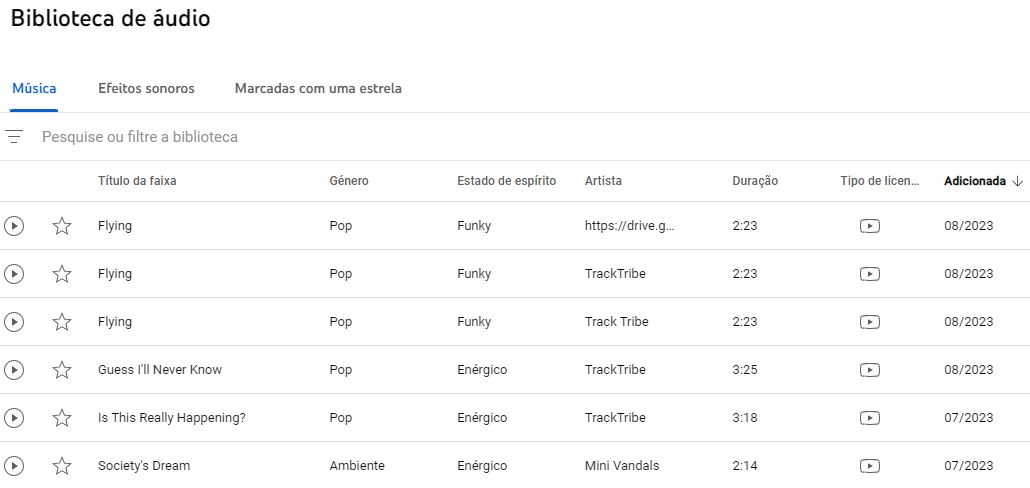
YouTube’s Audio Library
There, you can even filter tracks by genre, mood, and license type.
Examples of music for events
Now, how about getting some practical inspiration? See practical examples of using music at events:
Music for corporate events
At more formal events, like corporate ones, music should blend into the environment without drawing too much attention. It’s common for it to be used to add calm and focus, relying on instrumentals, MPB, or blues.
A good idea is to use music during breaks, room transitions, and coffee breaks. Of course, your soundtrack will depend on your audience, but you can rely on Even3’s playlist.
Music for motivational events
Motivational events, like talks, are another type of event that rely heavily on music. That’s because music is essential to create the emotion the event needs.
So, you can control moments based on the feeling the music creates, or invite singers for live performances. To help, Even3 created a playlist ideal for moments of inspiration and focus.
Trade shows
It’s hard to imagine trade shows without music! This type of event usually brings a lot of people together, generates movement, and showcases different attractions. Among them, music is usually a way to invite even more people to take part in the event!
So, you can invest in live music moments and interaction with artists. Just remember about royalty fees, and invite acts that will engage and energize your audience.
At event arrival
Make a good first impression at your event! A good idea is to use calm but upbeat music, like MPB or jazz. This way, you can energize your attendees and get them excited.
Coffee break
Music is a safe bet for interaction moments. During these times, choose something that helps people relax and start conversations, but don’t choose loud music!
Otherwise, it will get in the way of the coffee break’s main purpose, which is talking and networking. Many events tend to use instrumental versions of classic songs during this time.
Happy hour
Some events use happy hour moments for relaxation. In these cases, it’s also a good idea to invite bands and hire professional artists for original or cover performances.
This can be an ideal moment to relax and make friends — also valuable at events. No work talk or serious conversations!
When should you start choosing music for events?
Although it’s a complex choice, you can define the ideal music for your event even during the planning stage.
After all, if you rely on an event platform to automate your tasks, you’ll have more time to handle other matters. Imagine not having to worry about spreadsheets or manually activating batch price changes?
You can also build websites in minutes and send certificates with just one click — this will save you double the time when organizing an event!
With Even3, you can also centralize your entire event’s organization in one place. All of this for free! See how it works!