Do you know what a happy hour is? If you’ve never organized one, now’s the time!
Although many people think it’s just an informal gathering with coworkers, it can actually be a really important corporate event!
It can be part of your company’s calendar, promote networking moments, and much more. Also, if you own a bar, restaurant, or other business, happy hour is an event that can help boost your sales.
So, to make it a success and achieve its purpose, we’ll teach you how to organize one!
What is a happy hour?
Basically, “happy hour” is an English term that means exactly that — a “happy hour.”
And you know what the happiest hour of the day is, right? Quitting time! For that reason, happy hour is an informal celebration held at the end of a workday.
This is a common event in many parts of the world, and for some time it’s been adapted by businesses and even by workplaces themselves. So, what used to be just an informal celebration has taken on a new shape, becoming a more relaxed moment promoted by companies.
At bars and restaurants, happy hour usually means a time window when food and drinks are a bit cheaper, specifically to attract more people looking to unwind after a workday.
Did you know?
According to some authors, happy hour originated in the 1920s in the United States Navy. The term was used as slang to describe an entertainment break in the middle of sailors’ work.
They would organize time on board for boxing matches to relieve stress and fight monotony. Later, the expression started being used in civilian life starting in 1959.
Why hold a happy hour at work?
As mentioned, happy hour has gone through a transformation. What used to be an informal event among coworkers is now used even as a corporate event.
That’s because these relaxed moments bring some benefits to the workplace, such as:
- Greater team bonding;
- Reduces pressure in the workplace and creates a healthier environment;
- Turns employees into promoters of their own workplace, spreading the word organically;
- Thanks to a positive company image, attracts more qualified professionals aligned with the role’s expectations;
- It’s proven that relaxed, fun moments help increase productivity.
How to organize a corporate happy hour
1. Plan ahead
When happy hour is a corporate event, it’s essential to plan it in advance. Ideally, choose the happy hour dates on the corporate calendar and set them from the beginning of the year or semester.
This way, everyone can plan ahead and check whether they’ll be able to attend or not. This is a good practice for any corporate event!
That’s because your guests and attendees will usually be busy with work demands, and you don’t want your event to get in the way, right? Also, the anticipation around the event can be a great way to boost attendance and a sense of community.
What time should happy hour be?
When planning your happy hour, you’ll probably run into the question: what time should it be? It can vary depending on location, the event’s purpose, and the venue, but remember it’s always a time slot after work hours.
So, a good tip is to start your corporate happy hour when most employees finish work. Usually, this is around 6 PM, but you should define it based on what makes the most sense for your company.
2. Create an appealing schedule
Now, beyond the usual care needed when organizing a corporate event, your happy hour needs an appealing schedule!
That’s because this type of event isn’t necessarily a company obligation, so it’s recommended that attendance not be mandatory. This means you’ll need to grab attention so everyone wants to participate and interact.
Also, if the company isn’t used to holding relaxed events, you have an even bigger job attracting attendees. Among the common activities are:
- Games with prizes;
- Snack and drink moments;
- A talk with a well-known, respected speaker among the team;
- Themed gatherings;
- Extracurricular activities, like cooking, embroidery, or pottery-making.
Finally, remember: a happy hour should feel more relaxed than corporate, so it’s worth using your imagination!
3. Don’t forget the satisfaction survey
Speaking of the schedule, only a satisfaction survey will tell you whether your planning worked or not. It’s always essential!
So, after the event, don’t forget to listen to feedback. It will help you organize a happy hour with elements that are genuinely appealing to your audience.
Also, for recurring events, the satisfaction survey is what can give you insights into what to improve, which content to cover in future editions, and how the audience has received the event.
4. Use an events portal
Finally, an events portal is among the essential tools for successful corporate events. These are pages that contain all of a company’s events.
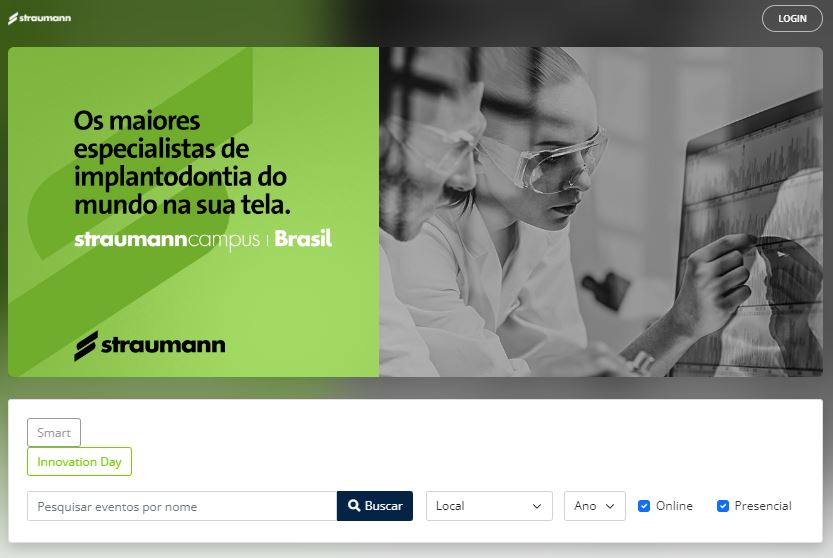
Straumann’s events portal on Even3
This way, employees and interested attendees can follow, register for, and plan around events, all in one place! This is essential for people who need to combine their work schedule with event schedules.
On Even3, event portals are also great for organizers themselves. That’s because they let you track all the events the company held during the year, along with metrics, number of attendees, attendance confirmations, and other reports.
With a corporate event management platform, your marketing team’s work becomes easier, and most processes are automated.
Even3 also has consultants available to give you the best tips for a successful event. Want to know more?