In 2019, 85% of business leaders believed events were essential to their company’s success, according to data from Bizzabo.
And it’s not limited to companies — events can be beneficial for teachers, students, small business owners, and much more.
Despite this, few people actually know how to create an event. With the growth of the sector, driven by the rise of the hybrid model, the possibilities for organizing a successful event have tripled.
So this is the best time to learn and get up to date. Here’s what we’ll cover:
- Main advantages of holding an event;
- How to create an event in 3 steps;
- Key technologies for successful events.
Main advantages of holding an event
First, regardless of its goal, an event is likely to provide knowledge sharing and connection between people. But it goes even further! Among the main advantages of holding events, you’ll find:
- Authority gain for the brand or institution;
- Visibility for the organizer, turning them into a reference in the field;
- Helps with lead generation;
- Provides networking opportunities;
- Encourages the creation of communities and relationships around a brand;
- Contributes to professionals’ experience and résumés.
How to create a complete event? 3 steps to success
Step 1: Pre-event
First, know this: an event doesn’t start on its opening day! Planning is a step that should begin months before the official event date. This will ensure everything runs correctly. That’s why planning is divided into essential steps, such as:
Know your audience
Before creating anything for your event, you should ask yourself who you’re creating it for. After all, your audience’s profile will define the most appealing choices for them.
So, it’s important to answer questions like: what’s the age range, interests, and profession of the person you communicate with most easily? These questions will help you create an attractive and genuinely useful event.
There are several ways to gather this information, such as competitor analysis, satisfaction surveys from past editions of the event, or audience research forms.
Define the theme, the event’s guide
Now it’s time to define your event’s guide, that is, its theme. It’s responsible for winning over suppliers and sponsors, and also for attracting a good audience.
That’s why it’s defined during the event’s planning phase and should take into account trends in the segment, relevance, and audience interest.
Choose dates, times, and format
Depending on your audience’s profile, this can change how your event unfolds. For example, events aimed at professionals commonly happen at night, since that’s after their work hours, or online, making it easier for people with tight schedules to attend.
So, when defining information like date, time, and format:
- Take your target audience into account, thinking about their routine and preferences;
- Avoid holidays and Sundays;
- Provide the structure needed to meet the specific requirements of what will be presented;
- Avoid dates close to other events in the same niche, since that can split the audience.
Select your team
Organizing an event is an activity that should be done as a team. So, carefully choose those who’ll be part of your organizing committee.
Ideally, you’ll have support in your event’s key functions, like customer service and check-in. Another tip is to invest in people with different profiles and benefit from a diverse team.
Plan your finances
Even though a good part of an event’s budget usually comes from registrations, it’s necessary to estimate costs in advance. This way, you’ll have control over all the expenses involved in the event.
Typically, you’ll start with promotion costs, hiring staff and speakers. But in-person events also need quotes for the venue, transportation for speakers and staff, electricity, food, and other factors.
After getting these quotes, you’ll be able to assess whether the event will need external sponsors or other investments.
Choose your speakers wisely
Choosing the speaker for your event will depend on three characteristics: audience, teaching ability, and topic. They should add value to your audience’s experience, offering what they’re looking for.
Above all, though, they need to know how to teach and deliver the content in the best possible way.
Start selling your tickets
You’re definitely ready to launch your event now! It’s time to open registrations and welcome attendees.
This happens through a registration form that should collect the key data from registrants. It’s important that it’s short, to avoid people giving up on filling it out, and that it includes standard questions, like name and email.
Forms also secure ticket ownership, whether tickets are free or paid. For paid tickets, sponsorships and partnerships are also ways to ensure profits and lower the ticket price.
Promote your event
With registration open, you need to reach potential attendees. How about relying on a digital marketing strategy for events?
In other words, apply a set of actions to promote your event across digital channels. For example:
- An event website to sell tickets online;
- Using emails to attract registrants;
- Promoting your event on social media, like Instagram;
- Advertising your event on Google.
But pay attention: some actions cost more than others! So keep your target audience in mind and choose the option that communicates best with them and fits your budget.
Step 2: During the event
Finally, the day of the event has arrived! This is a challenging moment for many organizers, so it’s important to focus on the key points to create a good experience for attendees.
In this case, an event platform like Even3 can automate most of your tasks and help you focus on what really needs your attention. For example, on the day of the event, you’ll deal with new registrants, check-in, presentation logistics — situations that can be easily automated with the help of a platform.
End the waiting lines
Speaking of check-in, this is usually the biggest focus point on the day of the event. That’s because any issue at this stage can create a very negative experience, like long lines and long wait times.
That’s why many organizers choose to handle check-in online through event platforms, like Even3. With solutions like QR code and app-based check-in, you can speed up attendee entry and track attendance for each activity — saving your team manual work and increasing event security.
Create networking spaces
When organizing an event, try to leave free time in the schedule for relaxed moments and networking. This ensures your attendees don’t get too worn out by the schedule and can better retain the content presented.
Networking moments are also one of the most valuable parts of an event, generating the interaction and contact exchange everyone is looking for. To do that, you can invest in coffee breaks, activation spaces, and decompression rooms — and use the opportunity to gather information about your audience.
Pay attention to your attendees’ experience
During the event, you should pay attention to your attendees. Make sure signage is clear, customer service is fast and effective, event environments are comfortable and accessible, and attendees have room to give feedback and suggest improvements.
Step 3: Post-event
Allow for feedback
Speaking of feedback, this is one of the most important parts of the post-event phase. That’s because satisfaction forms or surveys are usually sent after the experience for a more general evaluation.
On Even3, for example, at the end of each event, a satisfaction survey pops up on the attendee’s screen so they can vote before leaving. But you can also opt for feedback during the event and other satisfaction survey models, like the free one our specialists created.
This way, you’ll be able to know whether everything you planned was well executed.
Offer certificates
Finally, it’s time for the certificate! It’s one of the most valuable things about your event. After all, many attendees look for events to improve their résumés, and the certificate is the official document that proves their learning.
That’s why it should include important information, such as: attendee name, event and sponsor logos, hours of duration, signature, and activity type.
However, creating certificates manually is one of the biggest headaches for organizers. Imagine having to write this information for each attendee, sending it individually by email, and still offering support in case of doubts or errors in the process — not exactly feasible, right?
That’s why event technology has evolved, and platforms like Even3 offer automatic filling and sending of certificates, plus secure cloud storage.
Key technologies for successful events
Besides certificate technology, these are the trends for successful events:
Event app
Dedicated event apps have become increasingly common, since they add originality and convey authority. They’re also highly sought after by attendees, since they make it easier to access activity tickets and the schedule.
For this reason, an app increases the value of your event, including for sponsors, who get another space to promote their brand.
Self-check-in kiosks
To avoid lines even further, the trend among events is to invest in self-check-in kiosks! In practice, this works as follows: on the day of the event, kiosks with digital devices, like tablets, are connected to an automatic check-in portal.
Usually, this portal is a link provided by the event platform, which allows attendees to enter their own data and complete check-in themselves, with no human involved!
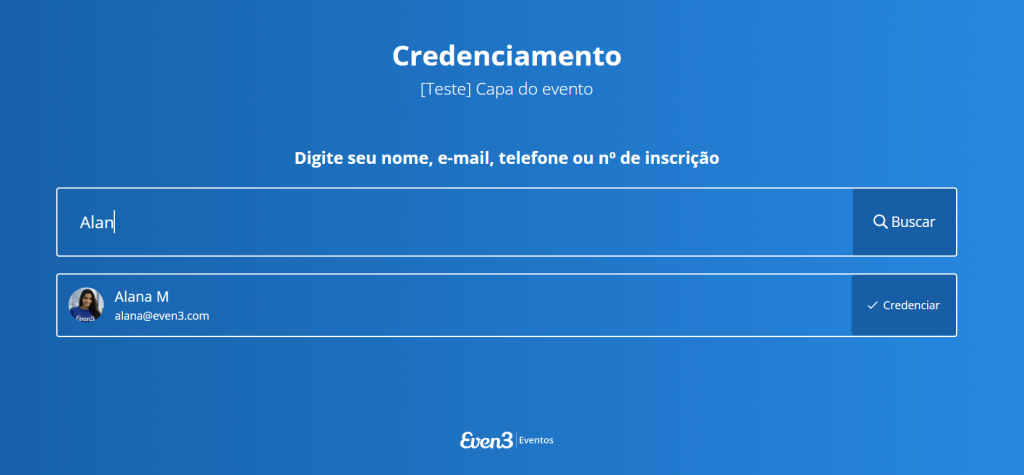
Self-check-in screen on Even3
Attendee notifications
Notifying attendees basically means sending emails to your attendees directly from the event platform. This way, you can put your email marketing strategy into practice simply and automatically.
Some platforms also already offer auto-fill options and audience segmentation. Pretty neat, right?
Virtual hall
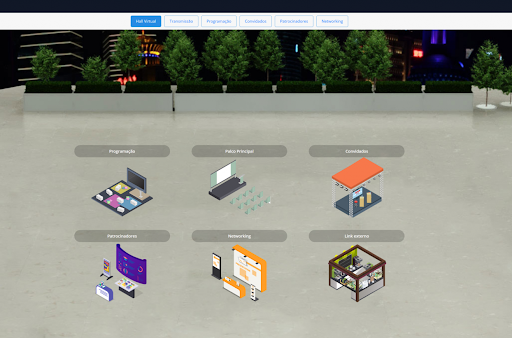
Example of a 2D virtual hall on Even3
With the growth of online and hybrid events, new solutions have emerged to bring beloved in-person elements into the digital world. Among them is the hall, or exhibit area — the space where booths are displayed and attendees can visit them, like a trade fair.
Usually, each booth has its own visual identity and is quite valuable for sponsors who want to showcase their brand. That’s why the virtual hall solution recreates the physical space and lets attendees keep wandering and exploring these areas at your event.
Chatbot support
Finally, the artificial intelligence trend couldn’t be left out of events! Event chatbots are software used to quickly and automatically answer attendees’ main questions.
As a result, the event’s support team can focus more directly on complex cases and offer a much more efficient service, without leaving the essentials behind.
After all, chatbots won’t help much if you don’t have an accessible venue for your event, right?
So, how about a little help organizing all of this? Our team of specialists prepared a checklist with the key points for your organization. Download this material now and don’t leave anything important behind!